
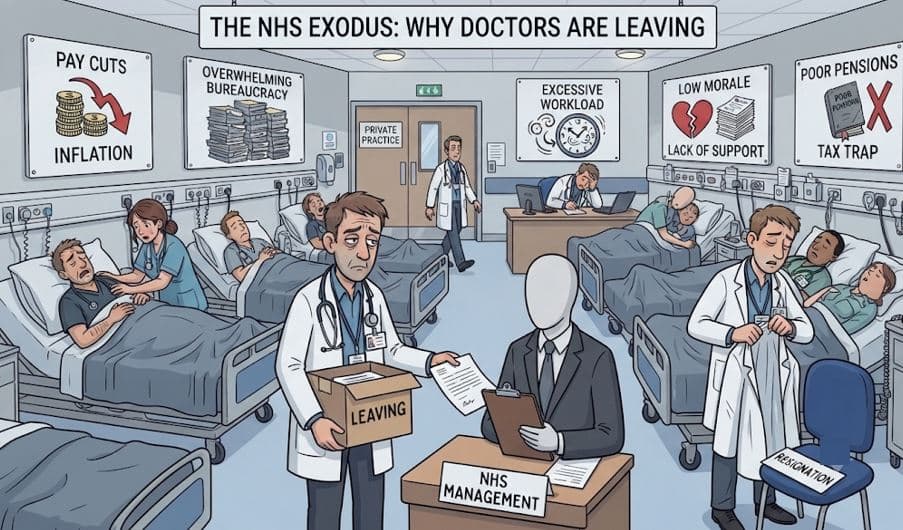
Why Doctors Are Leaving the NHS (UK)
Doctors are leaving the NHS due to a combination of real-terms pay erosion, unsafe workloads from rota gaps, burnout, limited training progression, and better work–life balance and pay overseas. The issue reflects a system-wide workforce retention crisis rather than individual dissatisfaction alone.
Key Facts & Figures (High Yield)
Pay & financial pressure
- Junior doctor pay has fallen by ~25–30% in real terms since 2008 (BMA estimates)
- Training costs per doctor to the NHS: ~£200,000–£250,000+
- Many report:
- unpaid overtime
- exam + portfolio costs
- rising cost of living in UK cities
Workforce shortage
- NHS has ~100,000+ vacancies across all staff groups (varies yearly)
- Consultant and GP shortages increasing pressure on juniors
- Some departments run with persistent rota gaps weekly
Migration trends
- Significant proportion of UK-trained doctors consider working abroad
- Most common destinations:
- 🇦🇺 Australia
- 🇳🇿 New Zealand
- 🇨🇦 Canada
Reported reasons:
- higher pay (often 1.5–2× UK salary equivalent)
- safer staffing ratios
- better work-life balance
Burnout indicators
- High rates of:
- emotional exhaustion
- depersonalisation
- moral injury (working below safe standards due to system pressure)
Push vs Pull Factors
Explanation
Doctors don’t leave for one reason — it’s a combined decision model:
Push factors (UK NHS)
- Pay erosion
- Burnout
- Unsafe staffing levels
- Training bottlenecks
- Poor work-life balance
- Administrative burden
Pull factors (abroad)
- Higher salary
- Safer workloads
- Better staffing ratios
- Predictable schedules
- Faster career progression
“Vicious Cycle” of NHS Workforce Loss
Key Mechanism (VERY IMPORTANT for interviews)
Step-by-step cycle:
- Staff leave →
- Rota gaps increase →
- Remaining doctors work harder →
- Burnout increases →
- More doctors leave →
🔁 cycle repeats
Why are doctors leaving?
1. Real-terms pay erosion
- Pay has not kept pace with inflation
- Cost of living in UK cities has increased significantly
- Perception: “More responsibility, less relative reward”
fairness + justice in resource distribution
2. Burnout & moral injury
Burnout is driven by:
- long shifts (nights/weekends)
- high patient load
- emotional stress (critical decisions daily)
- inability to provide “ideal care” due to system limits
Moral injury = “knowing the right thing but being unable to deliver it”
3. Unsafe staffing & rota gaps
- Chronic understaffing in hospitals
- Doctors cover extra wards
- Missed breaks and unpaid overtime
- Increased clinical risk
Key interview phrase:
“Workload becomes unsustainable and impacts both staff wellbeing and patient safety.”
4. Training bottlenecks
- Competitive specialty training posts
- Limited progression opportunities
- Some doctors stuck in non-training roles (FY/SHO equivalent years)
5. Workplace culture issues
- Administrative burden (“tick-box medicine”)
- Lack of autonomy early in career
- Hierarchical tensions in some settings
- Feeling undervalued despite responsibility
6. Better opportunities abroad (pull factors)
Countries like Australia offer:
- higher pay (often 1.5–2×)
- better staffing ratios
- more predictable hours
- lifestyle improvement
Decision Model (Why a Doctor Leaves)
Ethics Angle
1. Justice (fair distribution of workforce)
- Is it fair that UK taxpayers fund training, but doctors leave?
2. Autonomy
- Doctors have the right to choose where they work
3. Non-maleficence
- Leaving increases pressure on remaining staff and patients
4. System responsibility
- Is it individual choice or systemic failure?
Solutions
- Increase staffing and training places (long-term)
- Improve rota design and safe staffing ratios
- Enhance flexible working options
- Reduce administrative burden
- Improve retention incentives in high-pressure specialties
- Expand multidisciplinary team roles
Questions and Answers
Q1.
“Why are so many doctors leaving the NHS?”
Answers
Firstly, push factors include real-terms pay erosion, high workload from rota gaps, and increasing burnout. Many doctors report working in understaffed environments where they often miss breaks and experience moral injury from not being able to deliver ideal care.
Secondly, there are strong pull factors abroad, particularly in countries like Australia and New Zealand, where doctors report higher pay, better staffing ratios, and improved work-life balance.
Importantly, this reflects a systemic workforce issue rather than individual dissatisfaction. The NHS is under pressure from rising demand and workforce shortages, which creates a cycle of burnout and attrition.
From a systems perspective, solutions would involve improving retention through better staffing, training capacity, and wellbeing support rather than relying solely on international recruitment.
MODEL ANSWER STRUCTURE
Use: Identify → Analyse → Balance → Conclude
Q2: Is it fair doctors leave?
A strong answer includes:
- ✔ Autonomy: doctors have right to choose where to work
- ✔ Justice: UK invests in training, so loss is concerning
- ✔ System issue: retention failure is not purely individual responsibility
- ✔ Global health perspective: international mobility benefits healthcare exchange
Q3: Impact on NHS
Key points:
- increased waiting times
- rota gaps → staff pressure increases
- cancelled operations
- higher risk of burnout in remaining staff
- reduced continuity of care
Link to: patient safety + system strain
Q4: Solutions
High-scoring suggestions:
- improve retention (not just recruitment)
- better rota design and safe staffing levels
- flexible working patterns
- reduce administrative burden
- improve career progression pathways
- expand MDT roles (pharmacists, physios, ACPs)
Q5: Personal motivation question
Strong answer includes:
- awareness of challenges
- realistic understanding of NHS pressures
- resilience and commitment to patient care
- interest in teamwork and MDT medicine
- willingness to work within a changing system
Top Band Answer shows
- clear understanding of NHS workforce crisis
- balanced argument (not blaming doctors)
- awareness of system vs individual responsibility
- ethical reasoning (autonomy vs justice)
- calm, structured communication
- patient-centred thinking
Common Mistakes
- “Doctors are selfish for leaving”
- blaming individuals only
- ignoring system issues
- no mention of patient impact
- no solutions offered
- emotional/one-sided answers
Conclusion
Doctors are leaving the NHS due to a reinforcing cycle of workload pressure, burnout, and relative under-reward, combined with better working conditions and pay abroad, making retention a key systemic challenge rather than an individual issue.
Useful Links
GMC (most important for interviews)
https://www.gmc-uk.org/news/news-archive/doctors-under-pressure-from-workload-and-burnout
NHS workforce & staffing data
https://www.england.nhs.uk/statistics/statistical-work-areas/workforce-statistics/
https://www.health.org.uk/news-and-comment/charts-and-infographics/nhs-workforce-trends
BMA (doctor retention, pay, workload)
https://www.bma.org.uk/pay-and-contracts/pay
The King’s Fund (very high-yield analysis)
https://www.kingsfund.org.uk/insight-and-analysis/reports/nhs-workforce
https://www.kingsfund.org.uk/projects/nhs-in-a-nutshell/nhs-workforce
Nuffield Trust (workforce + retention crisis)
https://www.nuffieldtrust.org.uk/topic/workforce
https://www.nuffieldtrust.org.uk/news-item/nhs-workforce-shortages-are-getting-worse
Health Foundation (burnout, morale, retention)
https://www.health.org.uk/news-and-comment/charts-and-infographics/nhs-workforce-and-burnout