
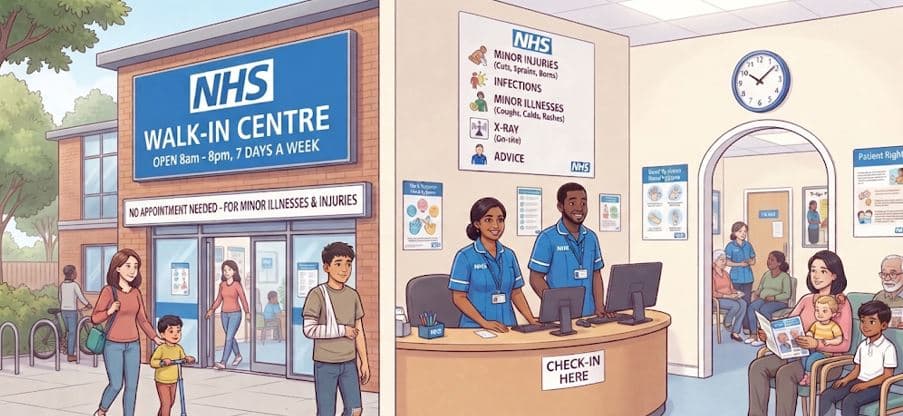
Walk-In Clinics in the NHS
Introduction
Walk-in clinics are an important component of the NHS urgent and primary care system. They provide assessment, advice, and treatment for minor illnesses and injuries without requiring patients to book an appointment in advance. These services were developed to improve access to care, reduce pressure on GP practices, and divert appropriate patients away from Accident & Emergency (A&E) departments.
As healthcare demand continues to increase due to an ageing population, rising chronic disease burden, and workforce shortages, walk-in clinics play a significant role in supporting patient flow across the NHS.
Conditions Commonly Managed in Walk-In Clinics
Walk-in clinics typically manage:
- Minor infections (sore throat, urinary tract infections, ear infections)
- Minor injuries (sprains, strains, minor burns)
- Skin conditions and rashes
- Minor eye problems
- Wound assessment and dressing changes
- Simple musculoskeletal complaints
- Health advice and signposting
Patients with serious illness or emergencies are redirected to appropriate urgent or emergency services.
Benefits of Walk-In Clinics
1. Improved Access to Healthcare
One of the major strengths of walk-in clinics is accessibility. Patients can receive medical assessment without waiting days or weeks for a GP appointment.
This is particularly important for:
- Working adults
- Students
- Visitors to an area
- Patients unable to access their usual GP
Improved access can lead to earlier diagnosis and treatment.
2. Reducing Pressure on Emergency Departments
A significant proportion of patients attending A&E have conditions that could be managed in primary care settings.
Walk-in clinics help:
- Divert non-emergency cases
- Reduce overcrowding in emergency departments
- Improve patient flow
- Reduce waiting times for critically ill patients
This contributes to overall healthcare system efficiency.
3. Supporting General Practice
The NHS is facing substantial GP workforce challenges. Walk-in clinics provide an alternative route for patients requiring urgent but non-emergency care.
Benefits include:
- Reduced pressure on GP appointments
- Improved capacity for chronic disease management
- Better utilisation of healthcare resources
4. Enhancing Patient Experience
Patients often value:
- Convenience
- Flexible access
- Rapid assessment
- Shorter waiting times compared with routine appointments
Improved patient satisfaction is an important outcome measure.
Challenges Facing Walk-In Clinics
1. Continuity of Care
One of the major concerns is lack of continuity.
Patients may:
- Be seen by different clinicians
- Have fragmented care
- Experience communication gaps between providers
This can be particularly problematic for patients with multiple long-term conditions.
2. Workforce Pressures
Like many NHS services, walk-in clinics face:
- Staff shortages
- Recruitment difficulties
- Increased patient demand
Sustainable workforce planning remains essential.
3. Clinical Risk and Triage
Walk-in services must effectively identify:
- Patients requiring urgent intervention
- Red flag symptoms
- Safeguarding concerns
Robust triage systems and escalation pathways are critical for patient safety.
4. Cost and Resource Allocation
Healthcare resources are finite.
Decision-makers must balance:
- Accessibility
- Workforce availability
- Financial sustainability
- Service effectiveness
Walk-in clinics should complement rather than duplicate existing services.
The Role of MDT Working
Walk-in clinics increasingly utilise multidisciplinary teams including:
- General practitioners
- Advanced nurse practitioners
- Emergency nurse practitioners
- Pharmacists
- Physiotherapists
- Healthcare assistants
MDT working enables patients to be assessed by the most appropriate professional while improving efficiency and patient outcomes.
Future of Walk-In Clinics
Future developments may include:
Digital Integration
- Online booking systems
- Video consultations
- Electronic patient records
Better Integration with NHS 111
- Direct referral pathways
- Improved patient navigation
Community-Based Care
- Closer collaboration with GP practices
- Integration within Integrated Care Systems (ICS)
Prevention and Public Health
- Health promotion
- Vaccination programmes
- Screening and early intervention
Ethical Considerations
Several ethical principles apply:
Beneficence
Providing timely care to improve patient outcomes.
Non-Maleficence
Ensuring safe triage and avoiding delays in treatment.
Justice
Providing equitable access to healthcare services.
Autonomy
Supporting informed patient choice regarding where and how care is delivered.
Conclusion
Walk-in clinics are an important part of the NHS healthcare landscape. They improve access to urgent primary care, support emergency departments and GP services, and contribute to a more patient-centred healthcare system. However, their success depends on effective integration, workforce sustainability, robust clinical governance, and maintaining continuity of care. As demand on healthcare services continues to grow, walk-in clinics are likely to remain a key component of NHS service delivery.
Twelve Questions and Answers
1. What is a walk-in clinic?
Answer:
A walk-in clinic is a healthcare facility that provides assessment and treatment for minor illnesses and injuries without requiring a pre-booked appointment. Walk-in clinics improve access to care, reduce pressure on GP services, and help divert appropriate patients away from emergency departments.
2. What role do walk-in clinics play in the NHS?
Answer:
Walk-in clinics provide timely care for non-emergency conditions and form part of the NHS urgent care pathway. They help improve patient access, reduce waiting times, support primary care services, and alleviate pressure on Accident & Emergency departments.
3. What are the advantages of walk-in clinics?
Answer:
The advantages include:
- Improved access to healthcare
- No appointment required
- Reduced pressure on GPs and A&E
- Early diagnosis and treatment
- Increased patient convenience
- Support for healthcare system efficiency
4. What are the disadvantages of walk-in clinics?
Answer:
Potential disadvantages include:
- Reduced continuity of care
- Duplication of services
- Communication challenges between providers
- Increased demand leading to waiting times
- Difficulty managing patients with complex long-term conditions
Good integration with primary care can help address many of these issues.
5. How do walk-in clinics reduce pressure on emergency departments?
Answer:
Many patients attend A&E with minor conditions that could be managed elsewhere. Walk-in clinics provide an alternative setting for these patients, allowing emergency departments to focus on more serious and life-threatening cases. This improves patient flow and resource utilisation.
6. What types of patients are suitable for walk-in clinics?
Answer:
Suitable patients include those with:
- Minor infections
- Minor injuries
- Simple skin conditions
- Minor eye complaints
- Mild musculoskeletal problems
- Wound care needs
Patients with serious symptoms such as chest pain, stroke symptoms, severe breathlessness, or major trauma should be directed to emergency services.
7. What challenges do walk-in clinics face?
Answer:
Challenges include:
- Workforce shortages
- Increasing demand
- Maintaining continuity of care
- Effective triage
- Ensuring communication with GP practices
- Financial and operational pressures
These challenges require effective leadership and service integration.
8. What is the role of MDT working in walk-in clinics?
Answer:
Walk-in clinics often use multidisciplinary teams consisting of doctors, advanced nurse practitioners, pharmacists, physiotherapists, and healthcare assistants. MDT working improves efficiency, allows patients to see the most appropriate professional, and enhances patient outcomes.
9. How would you manage an angry patient who has been waiting at a walk-in clinic?
Answer:
I would:
- Remain calm and professional
- Listen actively to their concerns
- Acknowledge their frustration
- Explain the triage process and waiting times
- Assess whether their condition has worsened
- Escalate concerns if clinically necessary
Good communication and empathy are essential.
10. How can walk-in clinics be improved?
Answer:
Potential improvements include:
- Better integration with GP services
- Improved electronic record sharing
- Enhanced staffing and workforce planning
- Stronger links with NHS 111
- More efficient triage systems
- Increased public awareness about appropriate service use
11. "If you were leading a walk-in clinic, what would your priorities be?"
Answer:
My priorities would be:
- Patient safety
- Timely access to care
- Workforce wellbeing
- Effective MDT working
- Strong communication with primary and secondary care
- Quality improvement and audit
- Efficient use of resources
I would use patient feedback and performance data to drive continuous improvement.
12."How would you balance accessibility with limited resources in a walk-in clinic?"
Answer:
I would focus on clinical prioritisation through robust triage systems, ensuring patients with the greatest need are seen first. Resources should be allocated fairly and transparently while maintaining patient safety and quality of care. Effective signposting to alternative services can also help manage demand appropriately.
"Walk-in clinics are a valuable part of the NHS urgent care system. They improve access, support primary care, and reduce pressure on emergency departments. Their continued success depends on effective integration, multidisciplinary working, patient safety, and sustainable workforce planning."
Key Themes Examiners Like to Hear
- Patient-centred care
- Accessibility
- Continuity of care
- MDT working
- Patient safety
- Clinical governance
- Workforce challenges
- NHS service integration
- Quality improvement
- Resource allocation
Useful Links
- https://www.nhs.uk/nhs-services/urgent-and-emergency-care-services/
- https://www.nhs.uk/nhs-services/urgent-and-emergency-care-services/when-to-use-111/
- https://www.england.nhs.uk/urgent-emergency-care
- https://www.england.nhs.uk/long-read/nhs-long-term-workforce-plan/
- https://www.england.nhs.uk/integratedcare/
- https://www.england.nhs.uk/publication/next-steps-on-the-nhs-five-year-forward-view/
- https://www.england.nhs.uk/primary-care/
- https://www.bma.org.uk/advice-and-support/gp-practices
- https://www.rcgp.org.uk