
University of Leeds Medicine
University of Leeds Medicine: The Complete Applicant's Guide
A Cambridge Clinical admissions guide
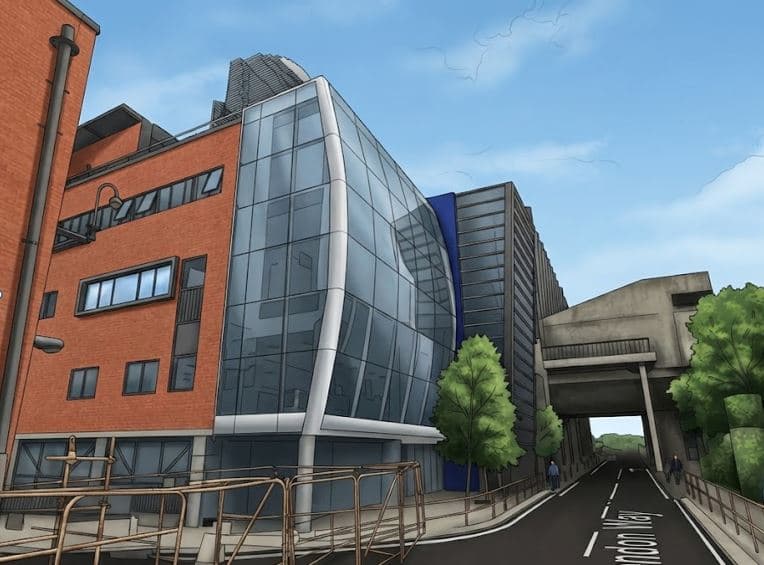
The University of Leeds School of Medicine runs the Medicine and Surgery MBChB (A100), a five-year course based in the Faculty of Medicine and Health across the Worsley Building, Leeds General Infirmary, St James's Campus and Chapel Allerton Hospital, with clinical placements spanning four NHS Hospital Trusts, GP surgeries, hospices and community organisations across the wider West Yorkshire region.
Leeds's process is worth understanding precisely because it differs from several other UK medical schools in one specific way: rather than shortlisting on UCAT alone, or on UCAT plus a separately-scored personal statement, Leeds combines your academic grades (achieved and predicted) with your UCAT score into a single overall ranking — meaning a stronger academic profile can genuinely offset a weaker UCAT score, and vice versa.
This guide covers entry requirements, how the combined academic/UCAT ranking works, the face-to-face MMI format, the Access to Leeds contextual scheme, and the Gateway Year to Medicine widening-access route.
Quick facts
Course | Medicine and Surgery MBChB (A100), plus Gateway Year to Medicine (A101) |
Location | Leeds, West Yorkshire, England |
Admissions test | UCAT — mandatory for every applicant; no alternative test (e.g. BMAT, GAMSAT) accepted |
Interview format | Face-to-face MMI, 4–6 January 2027 for 2027 entry; online for overseas applicants |
Shortlisting | Achieved/predicted academic grades combined with UCAT score into one overall ranking — no fixed UCAT cut-off, and no separately scored personal statement |
UCAS deadline | 15 October — strict, with no UCAS Extra and no late applications accepted |
Why applicants consider Leeds
Leeds builds clinical placements in from day one of Year 1, rather than delaying clinical exposure to later years, and the course is organised around four integrated strands — Fundamentals of Medicine, Clinical Practice, Professional Practice, and Student Choice — running in parallel through all five years rather than a single linear curriculum. Students can intercalate after Year 2, 3 or 4 for an additional degree, and the final year includes a six-week overseas elective, with past students placed in countries including Australia, Samoa, Nepal, Japan and Tanzania. Leeds is ranked in the top 100 in the world for Life Sciences and Medicine (QS World Rankings by Subject 2026) and has featured in the UK's top 10 most-targeted universities by leading graduate employers for over ten years running.
Entry requirements
A-level: AAA including Chemistry and Biology. An A* cannot compensate for a B elsewhere — Leeds will not accept A*A*B in place of AAA — and taking a fourth A-level provides no advantage, since only three subjects are scored. EPQs aren't considered in scoring either. Certain subject combinations are specifically not acceptable alongside Chemistry and Biology: Human Biology, Sports Science, or Critical Thinking as the third subject.
GCSE: A minimum of six GCSEs at grade 6 or above, including Maths, English Language, and Biology and Chemistry (or Dual Science). Leeds is explicit that applicants offering only this minimum are unlikely to be shortlisted, since scoring is actually based on eight GCSEs — so a broader spread of strong grades matters more than clearing the stated floor. All Level 2 qualifications must be completed by the point of application.
Resits: From 2026 entry onward, Leeds accepts one resit attempt per Level 3 (A-level) and per Level 2 (GCSE) qualification without needing mitigating circumstances — a genuinely more permissive position than schools barring resits outright. A third attempt at any qualification is only considered with documented mitigating circumstances that explain why the required grade wasn't achieved on the second attempt.
International Baccalaureate: 36 points overall, with 6,6,6 at Higher Level including Chemistry and Biology. If English and Maths aren't offered at GCSE, they must be taken at Standard Level with a minimum grade of 5.
Scottish Highers/Advanced Highers: AAAAB at Higher, plus AA at Advanced Higher in Chemistry and Biology specifically.
Irish Leaving Certificate (Higher Level): H2H2H2H2H2H2, including Chemistry, Biology and Mathematics.
Cambridge Pre-U: Three Distinctions (D3) in three Principal subjects, including Chemistry and Biology.
Access to HE Diploma (Medicine): 60 credits total — 45 from graded Level 3 units (all at Distinction) and 15 from ungraded Level 2/3 units — plus at least six GCSEs at grade 4, including English Language, Mathematics and Dual/Double Science (or Chemistry and Biology). Distance-learning Access diplomas aren't accepted, and Leeds won't consider applicants who scored below a 2:1 in a previous degree unless they can show substantial subsequent experience in a healthcare or comparably demanding career.
T-Levels: Not accepted for this course.
Graduate/mature applicants: A minimum 2:1 Honours degree in any discipline, awarded within the last three years, plus three A-levels at ABB including Chemistry and Biology (one at grade A) or the equivalent international qualification, plus six GCSEs at grade 5 or above including Maths, English Language, Biology and Chemistry (or Dual Science). A partly completed degree doesn't count in place of these requirements, and your full academic history — not just the most recent qualification — factors into shortlisting.
Dental graduates: Entry directly into Year 3 may be possible for dentists registered with the General Dental Council who hold Part 1 of the MJDF or MFDS and have completed at least one year in an approved hospital post. This route still goes through UCAS and still requires the UCAT.
English language: IELTS 7.5 overall, with no less than 7.5 in Spoken English specifically — a notably higher spoken-component bar than the 6.5–7.0 range typical at many other UK medical schools.
Work experience: Not generally a requirement for applying, per Leeds's own guidance — a distinctly different position from schools that treat evidenced clinical exposure as essential.
How shortlisting actually works: combined academic + UCAT ranking
Every applicant meeting Leeds's academic thresholds is required to sit the UCAT, taken in the year of application; Leeds does not accept BMAT, GAMSAT or any other test in its place. What makes Leeds distinctive is what happens next: rather than ranking purely by UCAT (as at Glasgow) or applying a separate SJT band exclusion (as at Manchester), Leeds's Understanding UCAT page explains that achieved and predicted academic grades are combined with the UCAT score into one overall ranking score used for interview shortlisting — meaning a high academic score can genuinely compensate for a lower UCAT score, and vice versa.
There is no pre-determined UCAT cut-off, and because Leeds only began using UCAT for 2024 entry, it has limited historic threshold data compared with longer-established UCAT users — worth bearing in mind if you see older cut-off figures quoted elsewhere.
Leeds states plainly that personal statements are not formally part of the shortlisting process for either the standard MBChB or the Gateway Year — though they remain worth preparing carefully, since Leeds also says they're an essential part of preparing for interview, where you're expected to draw on what you've written. If you have mitigating circumstances affecting your academic performance, these need to be documented in your personal statement and academic reference at the point of application, not raised afterward.
Access to Leeds and contextual admissions
Access to Leeds is Leeds's contextual admissions scheme for applicants from low-income households, those who are the first generation in their immediate family to apply to higher education, applicants whose studies have been disrupted, or those living in a neighbourhood with low progression to higher education. The typical Access to Leeds offer for Medicine is ABB at A-level (Chemistry and Biology required, with an A in one of them), alongside adjusted GCSE, Scottish Highers, IB and Cambridge Pre-U thresholds. You need to submit your Access to Leeds application at the same time as your UCAS application for it to be considered — it isn't something you can add retrospectively.
Leeds also runs a Gateway Year to Medicine (A101), a six-year foundation-plus-MBChB route for applicants from widening participation backgrounds who don't currently meet the standard entry requirements, designed to build the scientific knowledge and skills needed to progress into the five-year MBChB. You can only apply for the Gateway Year or the standard MBChB in a given cycle, not both.
The interview: face-to-face MMI
For 2027 entry, MBChB interviews take place face-to-face on 4th, 5th and 6th January 2027, with overseas applicants interviewed online, using a Multiple Mini Interview format to assess non-academic qualities. Leeds is explicit and somewhat distinctive on one point: the decision to make an offer after interview rests entirely on interview performance, not on your predicted or achieved academic grades or your UCAT score — those factors have already done their job getting you to the interview stage and don't carry forward into the final decision.
Leeds doesn't provide individual interview feedback given the volume of applications, but it does typically run a waitlist (contacted after the June UCAS decision deadline) for applicants who narrowly missed an offer at interview — Medicine doesn't usually enter Clearing directly, though this is subject to change.
If you apply to more than one vocational course within the School of Medicine, only one will be considered, and Leeds states that showing motivation or insight for a different vocational course (e.g. Nursing or Dentistry) elsewhere in your application will result in rejection without further consideration — so keep your personal statement and any related applications tightly focused on medicine specifically.
Application process
Applications go through UCAS using course code A100 by the standard 15 October deadline; Leeds does not accept late applications and does not participate in UCAS Extra for Medicine. As with all UK medicine applications, you're limited to four medical school choices, and applying to more than one course within Leeds's own vocational programmes narrows you down to a single one automatically. Successful applicants must pass an Enhanced DBS check and occupational health screening before beginning clinical placements. Gap-year applicants are welcome and should explain their plans in the personal statement; deferred entry can be requested up until you make your firm and insurance UCAS choices. UK tuition fees for 2027/28 are confirmed at £10,050; international fees are yet to be confirmed for 2027 entry. Additional costs include the UCAT fee (£70, with a full widening-participation bursary available) and criminal record checks (£53 for home students).
Tips
Because Leeds combines academic performance and UCAT into a single ranking rather than screening on UCAT alone, a genuinely outstanding academic record is worth leaning into if your UCAT practice scores are middling — this is a different strategic calculus from schools where UCAT is the sole shortlisting lever.
Check your intended third A-level subject against Leeds's specific list of unacceptable combinations (Human Biology, Sports Science, or Critical Thinking alongside Chemistry and Biology) well before results day — this is an easy trip-up for otherwise strong applicants.
If any part of your qualification history depends on a resit, Leeds's 2026-entry-onward policy of accepting one resit per Level 2/3 qualification without mitigating circumstances is more forgiving than many schools, but a third attempt still needs documented mitigating circumstances, so keep evidence ready.
Since the offer decision after interview depends purely on interview performance, treat interview preparation as high-leverage all the way to the day itself — a strong UCAT score or academic record won't carry you through if the MMI doesn't go well.
How Cambridge Clinical can help
We help Leeds applicants build a strategy around the combined academic/UCAT ranking specific to Leeds, alongside face-to-face MMI coaching calibrated to a purely interview-driven offer decision.
If you'd like a hand with any stage, visit cambridgeclinical.co.uk to find out more about our UCAT tuition and Leeds-specific interview coaching.
Entry requirements, UCAT thresholds, and application deadlines can and do shift between application cycles. Always confirm current requirements against The University of Leeds's official Medicine and Surgery MBChB course page before finalising your application.