
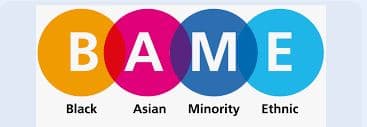
Understanding BAME Staff in the NHS
Key Facts
Representation in the NHS (vs. working-age population)
Ethnic Group | % of NHS Staff | % of Working-Age Population |
Asian (exc. Chinese) | 10.0% | 7.2% |
Black | 6.1% | 3.4% |
White | 79.2% | 85.6% |
Among Doctors
- Asian doctors make up 29.7% of all doctors (higher than population share).
- Senior vs. junior roles:
- White and Asian doctors are more likely to be senior.
- Black, Chinese, Mixed, and Other groups are overrepresented in junior roles.
Discrimination Data (2019)
- 29.8% of BAME staff reported abuse from patients/relatives/public.
- 15.3% reported abuse from a manager or team leader.
- 4.8% reported abuse from colleagues.
UCAT tip: Disparities between these figures suggest non-clinical managers may be more likely to show discriminatory behaviour than clinical staff.
Senior vs Junior Doctor Inequality
Ethnicity | Senior doctors % | Junior doctors % | Interpretation |
Asian | 31.0 | 28.7 | Strong presence overall |
Black | 3.5 | 6.2 | Underrepresented in senior roles |
Chinese | 1.9 | 3.4 | Lower senior progression |
Mixed | 2.4 | 4.1 | Underrepresented in senior roles |
White | 57.0 | 53.0 | Dominant in senior leadership |
Other | 4.2 | 4.6 | Stable |
Key inequality pattern
“The NHS shows diversity at entry level, but a persistent ‘glass ceiling’ in senior leadership.”
- Core problems (what examiners want)
Career progression inequality
- Lower promotion rates into:
- Consultant posts
- Board roles
- Linked to mentorship + bias + networking gaps
- Workplace discrimination
- Higher reports of:
- Bullying / harassment
- Microaggressions
- Unequal disciplinary action
- Systemic bias (subtle but high scoring point)
- “Fair to refer” concerns
- Unequal feedback quality
- Lack of representation in decision-making
COVID-19 inequality
- Higher risk exposure among BAME staff
- Highlighted structural inequalities in PPE and frontline deployment
Solutions
Structural fixes
- Increase ethnic diversity in leadership boards
- Transparent promotion criteria
- Accountability for disparities
Cultural fixes
- Anti-discrimination training (continuous, not one-off)
- Improve speaking-up culture
- Stronger reporting systems
Workforce strategy
- Widening participation in medicine
- Mentorship programmes
- Retention strategies for minority staff
How COVID-19 Affected BAME Staff
- BAME staff died at higher rates than white colleagues.
- Possible contributing factors (useful for SJT reasoning):
- Lower access to PPE in some areas
- More likely to be placed in frontline roles
- Underlying workload inequalities
What Is Being Done?
- COVID-19 guidance including ethnicity in risk assessments
- £4M+ research into ethnicity and COVID-19
- Bespoke health and wellbeing packages for BAME staff
- Staff networks to report issues
- Widening participation schemes to improve senior-level diversity
Benefits of a Diverse NHS Workforce (useful for ranking justifications)
- Recruits the best staff
- Brings lived experience of diverse health needs
- Improves financial management
- Enhances patient experience and public trust
Barriers BAME Staff Face
- Board inequality: Mostly white decision-makers
- Feedback inequality: Less honest feedback for BAME doctors (e.g., "Fair to Refer" issue)
- Culture of blame: BAME staff more likely to be scapegoated
How to Structure Answers
Define:
“There are ethnic disparities in NHS workforce progression…”
Explain:
“While minority groups are well represented in entry roles, they are underrepresented in senior leadership…”
Impact:
“This can reduce trust, limit diversity in decision-making, and contribute to staff dissatisfaction…”
Solution:
“This can be addressed through leadership reform, mentoring, and stronger anti-discrimination policies…”
Example UCAT-Style SJT Scenarios
Scenario 1
A BAME junior doctor tells you they feel they receive less useful feedback than white colleagues. They are considering not reporting it.
How appropriate is it to encourage them to report it via the NHS staff network?
- Very appropriate – formal channels exist to address such inequality.
Scenario 2
A manager says quotas for BAME board members would be unfair to white applicants.
How appropriate is it to argue that quotas may be justified to address systemic underrepresentation?
- Appropriate – quotas are one of several possible measures to improve diversity at senior levels.
UCAT Decision Making: Interpreting Data
You may be given a table like the one above and asked:
"A trust has 40% BAME junior doctors but only 10% BAME senior doctors. Which of the following is most strongly supported?"
- Correct answer: BAME doctors are disproportionately underrepresented in senior roles.
Avoid overgeneralising – e.g., do not conclude "BAME staff are treated worse in all trusts" without evidence.
Ten Questions and Answers
1. What do you understand by health inequalities affecting ethnic minority communities?
Answer:
Health inequalities are unfair and avoidable differences in health outcomes between different groups. Ethnic minority communities may experience disparities in access to healthcare, disease prevalence, health outcomes, and patient experience. These differences are often influenced by social determinants of health, including deprivation, education, housing, employment, language barriers, and discrimination.
2. Why is diversity important in the NHS?
Answer:
Diversity strengthens the NHS by bringing different perspectives, experiences, and skills to patient care. A diverse workforce is better able to understand and respond to the needs of diverse patient populations. It promotes innovation, cultural awareness, inclusion, and ultimately improves patient outcomes.
3. How would you care for a patient from a different cultural background?
Answer:
I would provide patient-centred care by treating the individual with respect, exploring their beliefs and preferences, and avoiding assumptions. I would communicate clearly, use interpreters when needed, involve family appropriately, and ensure decisions are made collaboratively while respecting cultural values and maintaining clinical standards.
4. What are some barriers ethnic minority patients may face when accessing healthcare?
Answer:
Potential barriers include:
- Language difficulties
- Health literacy challenges
- Cultural differences
- Socioeconomic disadvantage
- Distrust of healthcare systems
- Digital exclusion
- Previous experiences of discrimination
Recognising these barriers helps clinicians provide more equitable care.
5. What is equality, diversity, and inclusion (EDI)?
Answer:
- Equality means ensuring fair opportunities and access for everyone.
- Diversity refers to valuing differences among individuals and groups.
- Inclusion means creating an environment where everyone feels respected, valued, and able to contribute.
Together, EDI helps improve staff wellbeing, patient experience, and organisational performance.
6. What would you do if you witnessed discrimination in the workplace?
Answer:
I would address the situation professionally and prioritise the wellbeing of those affected. Depending on the circumstances, I would challenge inappropriate behaviour respectfully, support the individual involved, document concerns if necessary, and escalate through appropriate channels such as a supervisor or HR. The NHS has a responsibility to provide a safe and inclusive working environment.
7. Why are health inequalities a concern for the NHS?
Answer:
Health inequalities can lead to poorer outcomes, increased demand on services, and inequitable access to care. Addressing inequalities improves population health, supports fairness, and helps the NHS use resources more effectively.
8. How can healthcare professionals help reduce health inequalities?
Answer:
Healthcare professionals can:
- Deliver culturally sensitive care
- Improve communication and health literacy
- Use interpreter services appropriately
- Promote preventive healthcare
- Identify vulnerable patients early
- Work with community organisations
- Advocate for equitable access to services
9. What did the COVID-19 pandemic teach us about health inequalities?
Answer:
The pandemic highlighted significant disparities in health outcomes among different ethnic and socioeconomic groups. It demonstrated the importance of addressing social determinants of health, improving public health messaging, and ensuring equitable access to healthcare services and preventive measures.
10. How does inclusive leadership benefit healthcare teams?
Answer:
Inclusive leadership encourages participation, values diverse perspectives, improves staff engagement, and creates a culture of psychological safety. This leads to better teamwork, innovation, staff retention, and ultimately safer patient care.
"The NHS serves one of the most diverse populations in the world. As healthcare professionals, we have a responsibility to promote equality, embrace diversity, challenge discrimination, and provide culturally sensitive care. Addressing health inequalities is essential for improving patient outcomes and ensuring fair access to healthcare for all."
Useful Links
NHS & Government
https://www.england.nhs.uk/about/equality/equality-hub/
https://www.england.nhs.uk/long-read/nhs-equality-diversity-and-inclusion-improvement-plan/
https://www.gov.uk/government/publications/advancing-our-health-health-equity-and-prevention
https://www.gov.uk/government/collections/health-disparities
Health Inequalities
https://www.england.nhs.uk/about/equality/health-inequalities/
https://www.health.org.uk/topics/health-inequalities
https://www.kingsfund.org.uk/projects/inequalities-in-health
https://www.instituteofhealthequity.org
NHS Workforce Race Equality Standard (WRES)
https://www.england.nhs.uk/about/equality/equality-hub/equality-standard/
https://www.england.nhs.uk/about/equality/equality-hub/wres/
Equality, Diversity & Inclusion
https://www.nhsconfed.org/long-reads/equality-diversity-and-inclusion-nhs
https://www.gmc-uk.org/professional-standards/promoting-excellence
https://www.gmc-uk.org/ethical-guidance/good-medical-practice
Reports & Evidence
https://www.nuffieldtrust.org.uk/topic/health-inequalities
https://www.kingsfund.org.uk/publications/what-are-health-inequalities
https://www.health.org.uk/publications/long-reads/health-equity-in-england