
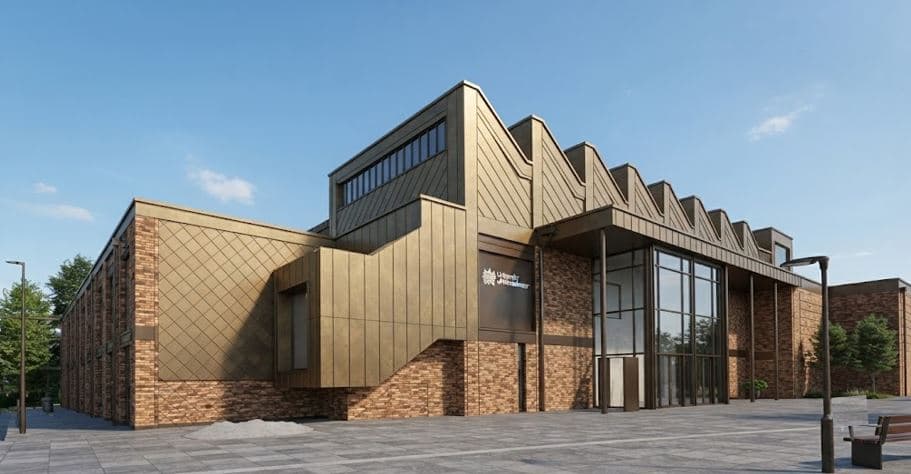
Three Counties Medical School (University of Worcester)
Three Counties Medical School (University of Worcester): The Complete Applicant's Guide A Cambridge Clinical admissions guide
Three Counties Medical School (TCMS), based at the University of Worcester, is one of the newest medical schools in the UK — its first cohort of 44 students started in 2023, growing to 62 for 2024 entry. It's a graduate-entry-only programme, deliberately set up as part of a government initiative to widen access to medicine, and named for the three counties it exists to serve: Gloucestershire, Herefordshire and Worcestershire. Like Pears Cumbria and Swansea, it's part of a genuinely new wave of UK medical schools built around regional need and widening participation rather than the traditional Russell Group model.
This guide covers entry requirements, how UCAT and GAMSAT are actually used, the interview process, and TCMS's distinctive holistic preference criteria for applicants with genuine ties to the region.
Quick facts
Course | MBChB Medicine, Graduate Entry (4-year, A101) |
Location | Health and Wellbeing Campus, University of Worcester |
Serves | Gloucestershire, Herefordshire and Worcestershire |
First cohort | 2023 (44 students); growing year on year |
Admissions test | UCAT or GAMSAT (your choice) — no published hard cut-off |
Interview format | Multiple Mini Interviews plus panel interviews |
Additional test | CASPer (online situational judgement test), for shortlisted applicants only |
Why applicants consider Three Counties
TCMS is built around a genuinely community-first model of medical education: students spend much of their training learning medicine in the community alongside patients, working closely with primary care teams, consultants and allied health professionals across general practice, outreach clinics, community hospitals and care facilities, rather than being based primarily in a single large teaching hospital. Clinical placements can take place anywhere across Gloucestershire, Herefordshire and Worcestershire, giving students unusually broad exposure to different care settings from early in the course.
The school's brand-new Health and Wellbeing Campus gives students access to high-quality simulation and visualisation facilities, including hospital and GP simulation and a dedicated Anatomy Skills room — genuinely current infrastructure rather than older, inherited teaching space. Being interdisciplinary by design, TCMS also trains alongside students from other health professions, and Worcester's own student community includes a dedicated Medicine Society (MedSoc) alongside around 25 other student societies and 35 sports clubs.
Entry requirements
To be considered, you need to hold, or be expected to achieve in your year of application:
- A 1st or 2:1 undergraduate degree in any subject, or
- A 2:2 undergraduate degree plus a Master's or Doctoral degree
GCSEs: Grade C/4 or above in Mathematics and English Language, for all applicants. If your degree is in a non-science subject, you'll also need grade C/4 or above in two science subjects at GCSE (Mathematics doesn't count as a science for this purpose).
International applicants: IELTS 7.0 overall, with 7.0 in the speaking component and at least 6.5 in all other components, for applicants whose first language isn't English.
Not eligible: Applicants who have previously commenced a medical degree, in the UK or overseas, are not considered — TCMS is explicit that this route is for genuine first-time medical applicants at graduate level.
A-levels are not considered at all, since every entrant must already hold a degree — this is a purely graduate-entry course with no undergraduate route into TCMS specifically.
Deferred entry: Not currently being accepted.
How UCAT and GAMSAT are actually used
TCMS accepts either UCAT or GAMSAT — your choice — and is explicit that it does not operate a hard, published cut-off score for either test; instead, the effective threshold depends on the shape of that year's applicant distribution. As a useful guide rather than a fixed target, most shortlisted applicants have scored above roughly 50 on GAMSAT (out of a maximum 73) or above roughly 1870-1900 on UCAT. Because there's no fixed number, don't treat either guide score as a safe minimum — aim comfortably above it, since the real bar moves with the strength of each year's applicant pool.
If your application progresses beyond the initial academic and test screening, you'll be required to sit CASPer, an online situational judgement test administered independently of UCAT or GAMSAT. This is only given to shortlisted applicants — you won't need to arrange it until TCMS confirms you're eligible to take it, after you've applied through UCAS.
The interview
TCMS's interview process combines Multiple Mini Interview stations with panel interviews, assessing motivation for studying medicine, understanding of the profession, communication skills, and ethical reasoning, alongside personal qualities including empathy, teamwork, leadership, and the ability to cope with stress. As at most graduate-entry schools, interviewers are used to candidates drawing on life and career experience well beyond a single work placement, so it's worth being ready to speak to your fuller journey toward medicine, not just clinical shadowing specifically.
Holistic, region-linked preference criteria
This is one of the most distinctive features of TCMS's process, and it's worth understanding in detail if you're weighing up whether to apply here. In the final stage of selecting which shortlisted, interviewed candidates receive an offer, TCMS uses a genuinely holistic approach that gives preferential weight to applicants meeting one or more of the following:
- Substantial geographical links to the area — for example, a childhood parental address or current address within Three Counties postcodes
- Being a Worcester graduate
- Being the first in your family to attend university
- Current residence in POLAR quintiles 1 or 2 (a measure of how likely young people from your area are to enter higher education)
- Working in, or having significant knowledge of, the NHS
- Refugee status
If you don't have a personal connection to the Three Counties region, this doesn't rule you out, but it's a genuine factor in the final offer decision — so, similarly to Pears Cumbria's regional focus, it's worth being ready to speak credibly about why you specifically want to train and work in this part of the country, rather than assuming the decision rests purely on your test scores and interview performance.
A route in without a degree yet: the Biomedical Science BSc
If you're a school-leaver rather than a graduate, you can't apply to TCMS directly — but the University of Worcester's own Biomedical Science BSc (Hons) offers a concrete bridge. Graduates of this BSc who go on to meet the standard Graduate Entry Medicine requirements (degree classification, admissions test, and GCSEs) are guaranteed an interview for the MBChB. This makes it a genuinely useful UCAS fifth-choice option for school-leavers applying to conventional undergraduate medicine elsewhere, since it builds relevant biomedical knowledge and — usefully, given the preference criteria above — natural geographical and academic links to the Three Counties area during your degree.
Course structure
The four-year MBChB is split into two phases. Phase 1 (Years 1–2) follows a problem-based learning curriculum starting from the problems patients actually bring to clinicians, combining classroom-based lectures and practical sessions with regular placements in community and hospital settings from early on. Phase 2 (Years 3–4) is primarily dedicated to extensive clinical placements across primary care and specialist hospital departments, applying earlier learning directly in real clinical environments. The course includes a final-year elective, and is developed against the GMC's Outcomes for Graduates (2018).
On graduating and completing the two-year Foundation Programme, TCMS graduates can apply for specialty posts through either the West Midlands South Foundation School (covering Herefordshire and Worcestershire) or the Severn Deanery Foundation School (covering Gloucestershire), depending on placement.
Fees
For 2027/28 entry, published tuition fees were £10,050 per year, in line with the UK government's regulated fee cap, with fees generally increasing year on year with inflation. For UK students, published 2025/26 funding support required students to cover the first £3,571 of the fee themselves, with an available tuition fee loan (not means-tested) covering the remaining balance, alongside a separate living-costs loan of up to £10,544 — though exact figures for 2027/28 hadn't been confirmed at the time of writing. Always check Worcester's own funding pages for the current-year figures before applying.
Tips
- Because TCMS has no fixed UCAT or GAMSAT cut-off, treat the widely quoted guide scores (roughly 50+ on GAMSAT, or around 1870-1900+ on UCAT) as a rough sense of scale rather than a safe target — the real bar shifts with each year's applicant pool.
- The region-linked holistic preference criteria are a genuine, concrete factor in final offer decisions, not a minor tie-breaker — if you have any authentic connection to Gloucestershire, Herefordshire or Worcestershire, make sure it comes through clearly in your application and interview.
- If you're not yet a graduate but want a strategic route toward TCMS specifically, Worcester's own Biomedical Science BSc is worth serious consideration as a UCAS fifth choice, given the guaranteed interview it unlocks.
- Because TCMS is so new, don't assume a highly specific "expected" profile from forum chatter — as the cohort size grows year on year, the shape of the applicant pool (and therefore the effective UCAT/GAMSAT bar) is still likely to shift.
How Cambridge Clinical can help
We help graduate applicants choose between UCAT and GAMSAT based on their strengths, and prepare for TCMS's combined MMI-and-panel interview format, with particular attention to building a genuine, well-evidenced case for their connection to the Three Counties region where relevant.
If you'd like a hand with any stage, visit cambridgeclinical.co.uk to find out more about our UCAT and GAMSAT tuition and Three Counties-specific interview coaching.
Three Counties Medical School is a very new medical school, and thresholds, interview format, and holistic selection criteria are more likely to shift year to year here than at longer-established schools. Always confirm current entry requirements and process against Three Counties Medical School's official course page before finalising your application.