
The moral perspective: conflict between medicine and success
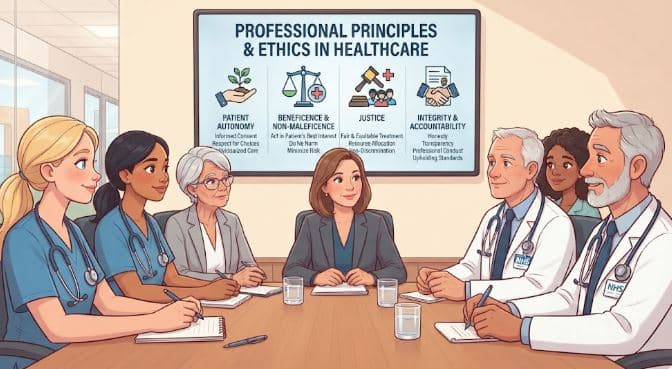
Professional Principles and Ethics in Healthcare
Healthcare practitioners must practice according to professional principles: all they do must be primarily driven in accordance with the health and best interests of their patients.
Personal ambitions of professional or financial gain must always be tempered by the need to have the best interests of the patient at heart.
In medicine, it is often the case that the relationship between doctor and patient is unequal: the patient does not necessarily have the technical understanding of his or her illness, let alone the necessary perspective from which to make a balanced decision concerning his or her care. This places the patient in a comparatively weak position, where their needs are often not able to be met without significant advice from their doctor.
Most patients believe what their doctor tells them, and they effectively delegate or entrust their care to their doctor. This places great responsibility on the person – the doctor – who has the power and, if ‘delegated’, the authority to make such decisions. Some doctors take advantage of this imbalanced relationship for personal (usually financial) or professional gain.
The majority of developed countries, therefore, have enacted legislation that is designed to protect patients, as the vulnerable party in the relationship. Practicing medicine and related healthcare occupations in an ethical manner is required by law, with laws in most countries setting minimum standards of conduct. While laws cannot account for every situation that every healthcare practitioner might encounter, they do require the professional to adopt and practice appropriate ethical approaches in all situations. They are required to maintain higher standards of behaviour and conduct than the general public.
It is not just clinical work that is governed by such ethical expectations, however, and all aspects of a professional’s life are expected to be guided by moral imperatives and a duty of accountability. This is why healthcare professionals are liable to be disciplined for any activity that might bring the profession – and, therefore, the relationship of trust between professional and patient – into disrepute.
In many other walks of life, the pursuit and acquisition of reward, affluence, entitlement and power, etc., define the extent of one’s success. For healthcare professionals, while these aims are not prohibited per se, they must be measured carefully against ethical expectations. And this may be an even harder measure for today’s intake of students, given the seemingly ever-increasing pressure on cost-of-living.
Any individual professional who neither understands nor accepts this ethical duty is at risk of violating the principle of honouring and protecting the patient and is in danger of compromising the health of their patients as well as risking their career.
For those willing to accept the ethical and moral responsibilities that are expected, medicine and allied professions can be extremely rewarding careers, bringing with them many professional and personal benefits.
Summary
1. Healthcare Professionals Must Put Patients First
- All healthcare practitioners must act according to professional and ethical principles.
- Their decisions should always be guided by the health, welfare, and best interests of the patient.
- The primary duty of a healthcare professional is to provide safe, effective, and compassionate care.
2. Patient Welfare Comes Before Personal Gain
- Personal ambitions, such as:
- Financial profit
- Career advancement
- Professional recognition
- must never take priority over patient care.
- Every clinical decision should benefit the patient rather than the healthcare professional.
3. The Doctor–Patient Relationship Is Unequal
- Doctors possess specialised medical knowledge and experience.
- Patients usually:
- Do not fully understand their illness.
- Lack medical expertise.
- May struggle to make informed healthcare decisions.
- This creates an imbalance of power between doctor and patient.
- Patients often depend on doctors for guidance and advice.
4. Trust Creates Responsibility
- Most patients trust their doctors and believe the information they provide.
- Patients effectively delegate responsibility for their care to their doctor.
- Doctors therefore have:
- Significant authority.
- Great responsibility.
- A duty to use their knowledge honestly and responsibly.
- This trust must never be abused.
5. Abuse of Professional Power
- A small number of healthcare professionals misuse their position by:
- Seeking financial gain.
- Pursuing personal or professional advantage.
- Exploiting vulnerable patients.
- Such behaviour is unethical because it places the doctor's interests above the patient's.
6. Laws Protect Patients
- Most developed countries have laws that:
- Protect patients from unethical practice.
- Set minimum standards of professional behaviour.
- These laws recognise that patients are often the more vulnerable party in the healthcare relationship.
- Healthcare professionals are legally required to practise ethically.
7. Ethical Behaviour Goes Beyond the Law
- Laws cannot cover every possible situation.
- Healthcare professionals must therefore use:
- Ethical reasoning.
- Professional judgement.
- Moral principles.
- They should make decisions that are fair, honest, respectful, and in the patient's best interests, even when there is no specific law governing the situation.
8. Higher Standards of Conduct
Healthcare professionals are expected to maintain standards that are higher than those expected of the general public because they:
- Hold positions of trust.
- Care for vulnerable people.
- Have access to confidential information.
- Make decisions that can significantly affect patients' lives.
9. Professional Behaviour Applies Outside Clinical Practice
- Ethical expectations extend beyond treating patients.
- Healthcare professionals must also behave responsibly in:
- Their personal lives.
- Public behaviour.
- Professional interactions.
- Social media use.
- Actions that damage public confidence in the profession may lead to disciplinary action.
10. Maintaining Public Trust
- Public confidence is essential for effective healthcare.
- Unethical behaviour can:
- Damage the reputation of the profession.
- Reduce patient trust.
- Harm the doctor–patient relationship.
- Maintaining honesty, integrity, and accountability preserves trust in healthcare.
11. Rewards of an Ethical Career
For those who accept these responsibilities, healthcare careers offer:
- The opportunity to improve patients' lives.
- Professional satisfaction.
- Personal fulfilment.
- Respect from patients and society.
- Meaningful and rewarding long-term careers.
Key Terms
- Professionalism: Acting according to the standards, responsibilities, and values expected of healthcare professionals.
- Ethics: Moral principles that guide decisions about what is right and wrong.
- Patient-centred care: Placing the patient's needs, preferences, and wellbeing at the centre of all decisions.
- Duty of care: A legal and ethical obligation to provide safe, competent, and appropriate care.
- Accountability: Being responsible for one's actions and decisions.
- Integrity: Acting honestly and consistently according to ethical principles.
- Trust: The confidence patients place in healthcare professionals to act in their best interests.
Summary
Healthcare professionals have a legal and ethical duty to prioritise patients' wellbeing above personal interests. Because patients often rely on doctors' expertise and trust them to make informed decisions, healthcare professionals must act with honesty, integrity, compassion, and accountability. Ethical behaviour extends beyond clinical practice into all aspects of professional life, helping to maintain public confidence in the healthcare profession.