
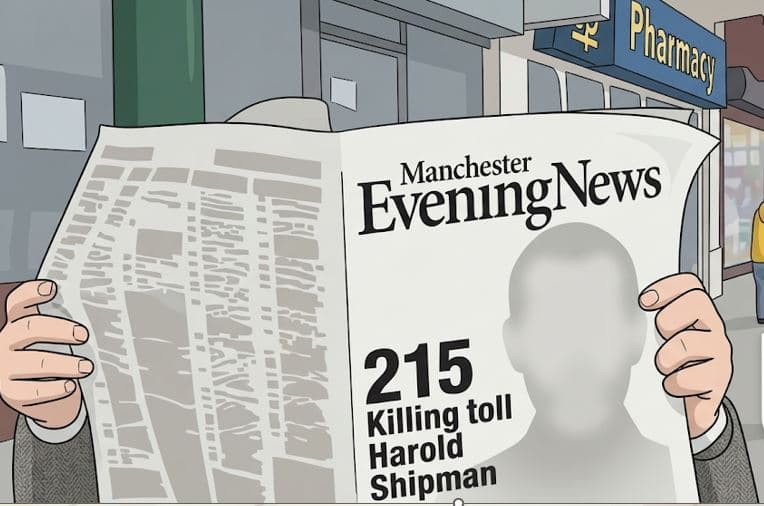
The Harold Shipman Case
The Harold Shipman Case
Overview of the Case
Harold Shipman, often referred to as “Doctor Death,” was a general practitioner working in Greater Manchester who was convicted in 2000 of murdering 15 patients, although subsequent investigations concluded that he had likely killed at least 218 patients, with estimates possibly exceeding 250.
Most of his victims were elderly women under his care as a GP. He commonly administered lethal doses of diamorphine and then falsified medical records to conceal his crimes.
The case became one of the most significant scandals in the history of the NHS and fundamentally changed medical regulation, prescribing oversight, death certification, and patient safety systems in the UK.
Background
Early Life and Career
Shipman was born in Nottingham and was considered academically bright. He later studied medicine at University of Leeds Medical School.
A significant event during his adolescence was the death of his mother from lung cancer. During her illness, he observed the administration of morphine for pain relief, something commentators later speculated may have influenced his later behaviour, although no direct causal link can be proven.
During his medical career:
- he developed an addiction to pethidine,
- forged prescriptions for personal use,
- and was convicted of drug offences in the 1970s.
Despite this conviction, he was allowed to continue practising medicine after treatment and monitoring.
Nature of the Crimes
What Did Shipman Do?
Shipman murdered patients over many years while working as a GP in Hyde, Greater Manchester.
His typical pattern involved:
- visiting elderly patients at home,
- administering lethal doses of diamorphine,
- certifying death himself,
- and falsifying medical records to suggest natural deterioration.
Many deaths initially appeared unsurprising because:
- the victims were elderly,
- Shipman was highly trusted,
- and deaths often occurred in community settings without post-mortem examination.
How Was He Caught?
Raising Concerns
Suspicion emerged when:
- unusually high death rates among Shipman’s patients were noticed,
- local undertakers identified patterns,
- and a fellow GP raised concerns.
One major turning point involved:
Kathleen Grundy, whose daughter discovered that her mother’s will had allegedly been altered to leave money to Shipman.
Further investigation revealed:
- forged records,
- abnormal prescribing patterns,
- and forensic evidence of diamorphine poisoning.
Conviction and Death
Trial Outcome
In January 2000:
- Shipman was convicted of 15 murders and one count of forgery,
- sentenced to life imprisonment,
- and later struck off the medical register.
Importantly, he never demonstrated remorse or accepted responsibility for his crimes.
In 2004, he died by suicide in prison.
The Shipman Inquiry
Why It Was Important
The Shipman Inquiry, chaired by Dame Janet Smith, investigated:
- how Shipman was able to kill patients for so long,
- failures in regulation,
- weaknesses in monitoring systems,
- and lessons for patient safety.
The inquiry concluded that major systemic failings contributed to delayed detection.
Key NHS and Regulatory Changes After Shipman
The case led to major reforms across UK healthcare.
1. Stronger GMC Oversight
The General Medical Council gained:
- greater investigatory powers,
- stronger fitness-to-practise procedures,
- and increased emphasis on revalidation and appraisal.
2. Introduction of Revalidation
Doctors are now required to undergo regular:
- appraisal,
- clinical governance review,
- and revalidation processes.
This helps ensure:
- ongoing competence,
- reflective practice,
- and professional accountability.
3. Prescribing Monitoring Systems
Systems were introduced to:
- monitor controlled drug prescribing,
- detect unusual prescribing patterns,
- and improve pharmacy oversight.
Electronic prescribing and prescribing audits became increasingly important.
4. Death Certification Reform
Changes were introduced to:
- improve scrutiny of death certification,
- strengthen coroner involvement,
- and reduce the ability of one doctor to certify deaths without oversight.
5. Clinical Governance and Patient Safety
The case accelerated wider NHS developments in:
- clinical governance,
- incident reporting,
- patient safety culture,
- and safeguarding.
It reinforced the importance of:
- transparency,
- audit,
- escalation of concerns,
- and multidisciplinary oversight.
Ethical Principles in the Shipman Case
The case is frequently discussed in relation to the four pillars of medical ethics.
1. Autonomy
Patients trusted Shipman and believed they were receiving legitimate medical care.
He fundamentally violated patient autonomy through deception and manipulation.
2. Beneficence
Doctors have a duty to act in the patient’s best interests.
Shipman completely betrayed this principle by intentionally harming patients instead of helping them.
3. Non-Maleficence
\text{Primum non nocere (First, do no harm)}
This is perhaps the most profoundly violated principle in the case.
Shipman deliberately caused death and suffering while abusing the trust placed in him as a physician.
4. Justice
The case also raised concerns regarding:
- protection of vulnerable patients,
- fairness within healthcare systems,
- and the responsibility of regulators to ensure safe practice.
Wider Ethical and Professional Lessons
Trust in Medicine
The Shipman case profoundly damaged public trust in the medical profession.
However, it also reinforced the importance of:
- accountability,
- transparency,
- governance,
- and ethical leadership.
Importance of Speaking Up
One key lesson is the importance of raising concerns early.
Healthcare professionals must feel empowered to:
- escalate unusual patterns,
- challenge unsafe practice,
- and use whistleblowing mechanisms without fear.
Systems vs Individual Responsibility
The case also demonstrates that patient safety depends on both:
- ethical individual clinicians,
- and robust systems capable of detecting abnormal practice.
No healthcare system can rely solely on personal trust.
8 Questions and Model Answers
Question 1. Who was Harold Shipman, and why is his case important?
Model Answer
Harold Shipman was a UK general practitioner who was convicted in 2000 of murdering multiple patients and is believed to have killed over 200 people during his career. His actions represented a profound breach of medical ethics and public trust.
The case is important because it led to major reforms in healthcare regulation, including stronger monitoring of deaths, improvements in clinical governance, and changes to the revalidation and appraisal processes for doctors.
What interviewers want
Basic knowledge of the case
Understanding of patient trust
Awareness of healthcare reforms
Question 2. What lessons should healthcare professionals learn from the Shipman case?
Model Answer
The key lesson is that trust must be accompanied by accountability. While doctors need professional autonomy, robust systems are necessary to identify unusual patterns of practice and protect patients.
Healthcare professionals should maintain high ethical standards, practise transparently, welcome scrutiny, and report concerns appropriately. Patient safety should always be prioritised.
Key themes
Accountability
Transparency
Patient safety
Professional integrity
Question 3. How did the Shipman case change the NHS?
Model Answer
The case led to significant reforms following the Shipman Inquiry.
Include:
Strengthened death certification procedures
Greater oversight of controlled drugs
Enhanced clinical governance
Introduction of doctor revalidation
Improved systems for identifying unusual clinical patterns
These measures aimed to reduce the risk of similar events occurring in the future.
Question 4. Does the Shipman case mean doctors should not be trusted?
Model Answer
No. Trust remains fundamental to the doctor–patient relationship. The overwhelming majority of doctors practise ethically and provide excellent care.
However, the case demonstrates that trust should be supported by effective regulation and oversight. A healthcare system should both trust professionals and have mechanisms to detect problems early.
Why this is a strong answer
It avoids extreme positions and demonstrates balanced reasoning.
Question 5. If you suspected a colleague was behaving unethically, what would you do?
Model Answer
Patient safety would be my first priority. I would gather factual information rather than making assumptions, seek advice from a senior colleague or supervisor, and follow local reporting procedures.
If concerns remained significant, I would escalate them through appropriate channels in line with GMC guidance. It is important to raise concerns professionally and confidentially while ensuring patients are protected.
Interview themes
Duty of candour
Raising concerns
Whistleblowing
Professionalism
Question 6. Why is clinical governance important?
Model Answer
Clinical governance provides a framework for maintaining and improving the quality and safety of healthcare.
The Shipman case showed that relying solely on individual professionalism is insufficient. Systems such as audits, appraisal, incident reporting, and peer review help identify problems and promote continuous improvement.
Question 7. How would you respond to a patient who says, “After Shipman, how can anyone trust doctors?”
Model Answer
I would acknowledge their concern and explain that what happened was a tragic and exceptional event. Since then, healthcare regulation and oversight have been strengthened considerably.
I would reassure them that modern healthcare includes multiple safeguards, such as multidisciplinary working, clinical governance, appraisal systems, and regulatory oversight designed to protect patients.
The most important thing is to listen respectfully and address concerns rather than dismissing them.
Question 8. Challenging Follow-Up Question
"Could something like Shipman happen again today?"
Model Answer
No system can eliminate risk completely, but it would be much harder today because of the safeguards introduced since the inquiry. These include stronger monitoring systems, revalidation, improved prescribing oversight, multidisciplinary care, and enhanced scrutiny of deaths.
The goal of modern patient safety systems is to detect concerns much earlier and reduce opportunities for harm.
Useful Links:
Official inquiry (most important)
https://webarchive.nationalarchives.gov.uk/ukgwa/20130105193829/http://the-shipman-inquiry.org.uk/
Government / NHS summaries
https://www.nhs.uk/using-the-nhs/about-the-nhs/shipman-inquiry/
https://www.nationalarchives.gov.uk/help-with-your-research/research-guides/shipman-inquiry/
Legal / regulatory context
https://www.gmc-uk.org/-/media/documents/shipman-case-summary_pdf-33347267.pdf
https://www.gmc-uk.org/about/how-we-work/history/shipman-case
Background reading (good for interviews)
https://en.wikipedia.org/wiki/Harold_Shipman
https://www.bbc.co.uk/news/uk-england-manchester-35403446
https://www.theguardian.com/uk/shipman