
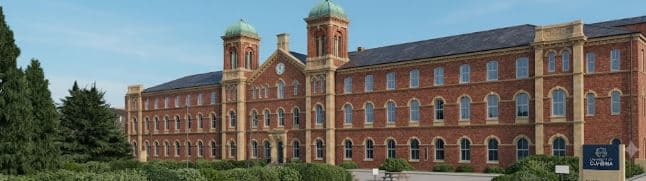
Pears Cumbria School of Medicine
Pears Cumbria School of Medicine: The Complete Applicant's Guide A Cambridge Clinical admissions guide
The Pears Cumbria School of Medicine (PCSM) is one of the newest additions to UK medical education — a bespoke, graduate-entry-only programme delivered in Carlisle by the University of Cumbria in partnership with Imperial College London. Students study locally in Cumbria but graduate with an MBBS awarded by Imperial, one of the world's leading medical schools. The whole programme is built around a single mission: training doctors who will stay and work in Cumbria and the wider North West.
Because it's so new — the first cohort started in September 2025 — there's limited multi-year admissions data to draw on, and thresholds are likely to move as the school settles into its longer-term shape. This guide covers entry requirements, how UCAT and GAMSAT are actually used, the interview format, and what makes this course structurally different from almost every other route into medicine in the UK.
Quick facts
Course | MBBS Medicine, Graduate Entry (4-year, A102) |
Location | University of Cumbria, Fusehill Street campus, Carlisle, with placements across North and South Cumbria |
Delivered by | The Pears Cumbria School of Medicine (University of Cumbria) |
Degree awarded by | Imperial College London |
Eligibility | Home (UK) students only |
Admissions test | UCAT or GAMSAT — minimum threshold score required in one |
Interview format | MMI, in person in Carlisle |
Why applicants consider Pears Cumbria
This isn't a standard undergraduate medical school, and it isn't trying to be. It's a graduate-entry-only course built specifically to address doctor shortages in Cumbria and the North West, co-created with regional NHS partners and structured around a strong community and primary-care focus from year one. Students are taught partly by Imperial staff and partly by local clinical experts, get early and repeated exposure to placements across both North and South Cumbria, and graduate with a degree from an institution ranked among the very best medical schools in the world — all while training somewhere that has explicitly built its curriculum around a specific regional need rather than a generic national one.
It's genuinely a different kind of medical school experience from a large city-based Russell Group course: smaller cohorts, a strong personal development and tutoring structure, and a curriculum designed around retaining doctors in the region after graduation.
Entry requirements
Because this is graduate entry only, there are no GCSE or A-level requirements at all. This is a deliberate widening-access decision by PCSM, intended to open the course to strong graduates regardless of their school-level academic history.
Degree requirement: A 2:1 (upper second-class) or above in a bioscience or allied healthcare degree. PCSM publishes a broad list of accepted subject areas, including Biology, Biochemistry, Biomedical/Healthcare Science, Nursing, Midwifery, Physiotherapy, Paramedic Science, Pharmacy, Psychology, Radiography, Occupational Therapy, Dentistry, and Veterinary Science, among others. The list is explicitly non-exhaustive — if your degree title isn't listed, or was awarded outside the UK, PCSM's admissions team will assess suitability on request rather than auto-rejecting you.
A 2:2 is not accepted, regardless of postgraduate qualifications gained afterwards.
Student status: Applications are currently only open to applicants who qualify as home students for fee purposes.
How UCAT and GAMSAT are actually used
Unlike most UK medical schools, PCSM accepts either UCAT or GAMSAT — you don't need both, and you choose whichever you're better placed to sit or perform well in. The GAMSAT must have been taken within the two years prior to your UCAS submission; the UCAT must be taken in the same year as your application.
For 2026 entry, the published thresholds were:
- UCAT — 1960 for home applicants, 1910 for contextual applicants (out of a maximum 2700, following the removal of the abstract reasoning section from that year's test)
- GAMSAT — 59 for home applicants, 53 for contextual applicants
These are genuine minimum thresholds rather than informal guide scores, so falling below them is a harder barrier here than at UCAT-ranking schools like Norwich or Bangor, where a lower score simply reduces your relative chance rather than excluding you outright. Because this is only PCSM's second or third admissions cycle at the time of writing, treat these exact numbers as a useful benchmark rather than a fixed target — they may move from year to year as the school gathers more applicant data.
Contextual applicants — those meeting Imperial's contextual admissions criteria — are assessed against a lower threshold in either test, as part of PCSM's explicit widening-access mission.
The interview: MMI
Interviews are Multiple Mini Interviews, held in person at the Carlisle campus (not online). Stations assess:
- Commitment to medicine and understanding of the doctor's role
- Potential to contribute to the medical school and the region
- Teamwork and leadership
- Ethics
- Empathy
- Resilience and adaptability
Work experience with service-users is strongly recommended and is explicitly assessed at interview, alongside information drawn from your personal statement — so unlike Norwich, where the personal statement is checked only for subject accuracy, at PCSM it's treated as a genuine source of material for the interview panel.
One distinctive point worth preparing for specifically: candidates without existing links to Cumbria are assessed on their understanding of, and genuine interest in, improving health outcomes for people in the region. PCSM's admissions policy is explicitly not restricted to Cumbrian residents and welcomes applicants from anywhere in the UK — but if you don't have a personal connection to the area, be ready to speak credibly about why you want to work there and what you understand about its healthcare challenges, rather than assuming your application will be judged purely on academic and test merit.
Course structure
The four-year MBBS is organised around three phases:
- Year 1 introduces medical sciences and clinical knowledge together from the start, alongside early clinical placements and simulation across North and South Cumbria.
- Year 2 deepens medical science teaching, increases clinical placement time in primary and secondary care, and includes a group project on a healthcare delivery topic of your choosing.
- Years 3–4 focus on preparation for practice as a Foundation doctor, including rotations across clinical specialties in hospital and community settings, a pre-foundation assistantship with a defined clinical role, and an elective period that can be based in the UK or abroad.
Placements will require travel and, at times, temporary accommodation across the Cumbria region — worth factoring in if you're weighing this course against a more geographically compact one. Assessment throughout is pass/fail rather than graded, using a mix of written, clinical, and oral examinations alongside workplace-based assessments.
Health, fitness to practise, and vaccinations
If offered a place, you'll need to complete a vaccination programme (which can take up to eight months, so early action is advised) and undergo blood tests for hepatitis B, hepatitis C, and HIV before being cleared for direct surgical experience. A positive result for any of these doesn't prevent you from qualifying or practising — it restricts you from surgical or other exposure-prone procedures specifically.
Imperial's fitness to practise policy can be applied where significant concerns are raised about a student's behaviour, including before admission. As with other UK medical schools, disclosing disabilities or specific learning difficulties early — ideally on your UCAS form — allows PCSM and the University of Cumbria to put support in place from the outset rather than reactively.
Mitigating circumstances
PCSM's position here is stricter than many schools: mitigating circumstances affecting your undergraduate degree performance are not something PCSM itself adjusts for — those should be raised with the institution that awarded your degree. Mitigating circumstances relating to your UCAT or GAMSAT sitting should be raised with the relevant test body. Mitigating circumstances at interview stage, however, can be raised directly with PCSM's Admissions Officer and may be taken into account for borderline candidates — but claims must be made promptly, with supporting evidence; late claims without a clear reason won't be considered.
Application process
Applications go through UCAS, in the same competitive cycle as other UK medicine courses. Once you accept an offer, first-year accommodation is guaranteed provided you select PCSM as your first choice and submit an accommodation application by 30 June — a useful practical detail given the amount of placement-related travel the course involves.
Tips
- Because PCSM accepts either UCAT or GAMSAT, work out early which test suits your strengths — this is a genuinely different strategic decision from most UK medical schools, where you're locked into whichever single test the school requires.
- The published UCAT and GAMSAT thresholds are hard minimums here, not soft ranking guides — falling short isn't a disadvantage, it's a disqualifier, so leave yourself a safety margin rather than aiming to just scrape the number.
- If you don't have a personal connection to Cumbria, don't leave your interest in the region to chance at interview — read into local healthcare challenges and workforce needs specifically, since this is explicitly assessed for candidates without existing local links.
- With no GCSE or A-level requirements at all, your entire pre-interview academic case rests on your degree classification and subject — make sure your degree title clearly falls within (or can be credibly argued to fall within) PCSM's accepted subject list before you invest time in an application.
How Cambridge Clinical can help
Because PCSM is graduate-entry only and so new, generic medicine-admissions advice often doesn't map cleanly onto it — the dual UCAT/GAMSAT choice, hard test thresholds, and region-specific interview focus are all things a standard mock MMI won't cover well. We help graduate applicants decide between UCAT and GAMSAT based on their actual strengths, and run interview preparation that specifically covers the "why Cumbria" line of questioning non-local candidates should expect.
If you'd like a hand with any stage, visit cambridgeclinical.co.uk to find out more about our UCAT and GAMSAT tuition and PCSM-specific interview coaching.
Pears Cumbria School of Medicine is a very new medical school, and thresholds, interview practice, and application windows are more likely to shift year to year here than at longer-established schools. Always confirm current entry requirements and process against The Pears Cumbria School of Medicine's official course page before finalising your application.