
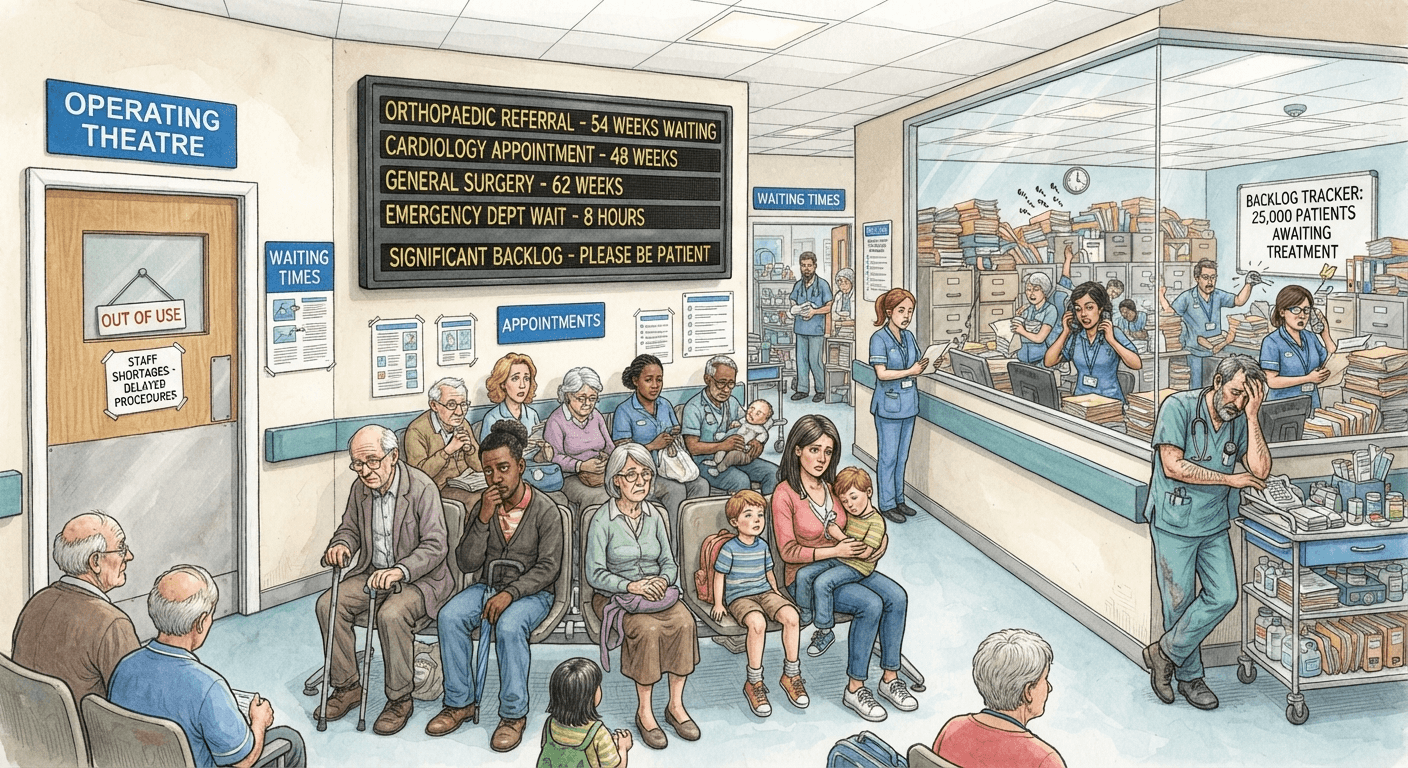
NHS Waiting Lists and Backlogs
1. What is the NHS Backlog?
The NHS backlog refers to the large number of patients waiting for:
- appointments
- investigations
- operations
- specialist treatment
In recent years, NHS waiting lists have reached record highs, with millions waiting for treatment.
2. What are NHS Waiting Lists?
An NHS waiting list is essentially a queue of patients waiting for NHS care.
Patients may be waiting for:
- referrals to be processed
- outpatient appointments
- scans/tests
- surgery
- follow-up treatment
3. Types of NHS Care
Elective Care
Elective care is:
Planned, non-emergency treatment.
Examples:
- Hip replacement
- Cataract surgery
- Knee replacement
- Bariatric surgery
Purpose:
Usually improves:
- quality of life
- mobility
- pain
- long-term outcomes
Urgent Care
Urgent care involves:
Acute problems requiring rapid treatment but not immediately life-threatening.
Examples:
- Serious infections
- Asthma exacerbations
- Mental health crises
- Acute injuries
NHS Waiting List Growth
Key trend:
Waiting lists rose sharply:
- pre-COVID pressures already existed
- pandemic massively worsened delays
5. Largest Areas of Backlog
Biggest backlog:
Trauma & Orthopaedics
Examples:
- Hip replacements
- Knee replacements
Why?
- High demand
- Ageing population
- Mostly elective procedures
6. Referral-to-Treatment (RTT) Targets
Non-urgent care
Target:
18 weeks
From:
GP referral → treatment start
Urgent suspected cancer pathway
Historically:
2-week wait
Now evolving into:
28-day Faster Diagnosis Standard
Goal:
- diagnosis or all-clear within 28 days
7. Why Are NHS Waiting Lists So Long?
This is one of the MOST IMPORTANT interview questions.
👵 A. Ageing Population
Older patients:
- need more procedures
- have multiple conditions
- stay in hospital longer
B. Workforce Shortages
Problems include:
- doctor shortages
- nurse shortages
- burnout
- poor retention
C. COVID-19 Pandemic
Elective care was paused during the pandemic.
This caused:
- cancelled operations
- delayed appointments
- slower diagnostics
D. Underfunding & Capacity Problems
Issues include:
- insufficient beds
- outdated infrastructure
- limited theatre capacity
- limited diagnostic equipment
E. NHS Strikes
Strikes caused:
- operation cancellations
- delayed clinics
- reduced service activity
Balanced UCAT point:
Strikes contributed,
BUT backlog existed long before industrial action.
8. What is the “Hidden Backlog”?
Very high-yield concept.
The hidden backlog refers to:
Patients who have NOT yet presented to healthcare services.
Reasons:
- fear of burdening NHS
- delayed presentation after COVID
- access barriers
Concern:
Patients may present later with:
- more advanced disease
- worse prognosis
9. Impact on Patients
Physical effects
- Disease progression
- Delayed diagnosis
- Worse outcomes
- Increased pain/disability
Mental health effects
Patients may experience:
- anxiety
- stress
- depression
- uncertainty
Financial/social impact
- inability to work
- loss of income
- carer burden
10. Ethical Issues (MMI GOLD)
Justice
How should limited appointments be allocated fairly?
Prioritisation
Patients triaged based on:
- urgency
- clinical need
- risk of deterioration
Equity
Private healthcare access creates inequality.
Non-maleficence
Delays may unintentionally harm patients.
11. Rise of Private Healthcare
As waiting lists increase:
- more patients pay privately
- more seek treatment abroad
Ethical concern:
Creates a potential:
“two-tier healthcare system”
Where wealth influences access speed.
12. Government Solutions
Elective Recovery Plans
- more funding
- increased theatre capacity
- surgical hubs
Community Diagnostic Centres
Separate “scan hubs” to:
- increase MRI/CT access
- speed diagnosis
Workforce Expansion
- more medical school places
- international recruitment
- retention strategies
Technology
- telemedicine
- AI-assisted triage
- digital appointments
13. How to Answer MMI Questions on NHS Backlog
Use this structure:
1. Define the issue
“NHS waiting lists are…”
2. Explain multifactorial causes
- ageing population
- workforce shortage
- COVID
- funding pressures
3. Discuss patient impact
- physical deterioration
- mental health burden
- reduced quality of life
4. Ethical analysis
- fairness
- prioritisation
- inequality
5. Balanced solutions
“No single solution exists…”
Questions and Answers
NHS Waiting Lists – Interview Questions & Model Answers
1. What are NHS waiting lists, and why are they important?
Answer:
NHS waiting lists refer to patients awaiting outpatient appointments, investigations, procedures, or surgery. They are an important measure of healthcare access and system performance. Long waiting times can affect patient outcomes, quality of life, and public confidence in healthcare services.
2. What factors have contributed to the increase in NHS waiting lists?
Answer:
Several factors have contributed:
- Increased demand from an ageing population
- Workforce shortages across healthcare professions
- Backlogs following the COVID-19 pandemic
- Rising prevalence of chronic diseases
- Limited capacity in theatres, clinics, and diagnostic services
- Delayed presentations leading to more complex conditions
3. How do long waiting lists affect patients?
Answer:
Long waits can lead to:
- Deterioration of physical health
- Increased pain and disability
- Anxiety and psychological distress
- Delayed diagnosis and treatment
- Reduced quality of life
- Potential worsening of clinical outcomes
4. How do waiting lists affect healthcare professionals?
Answer:
Healthcare professionals may experience:
- Increased workload
- Pressure to increase productivity
- Moral distress when patients face delays
- Burnout and reduced morale
- Challenges in prioritising limited resources fairly
5. What measures could help reduce NHS waiting lists?
Answer:
Potential solutions include:
- Increasing workforce capacity
- Expanding diagnostic services
- Improving theatre utilisation
- Better use of community services
- Digital and virtual clinics where appropriate
- Enhanced triage systems
- Preventive healthcare to reduce future demand
A combination of short-term and long-term strategies is required.
6. How would you prioritise patients on a waiting list?
Answer:
Patients should be prioritised according to clinical need, urgency, risk of deterioration, and national guidelines. Decisions should be fair, transparent, evidence-based, and free from bias. Regular review is important to identify patients whose condition may have worsened while waiting.
7. What ethical principles apply to managing waiting lists?
Answer:
Key principles include:
- Justice: fair allocation of healthcare resources
- Beneficence: acting in patients' best interests
- Non-maleficence: minimising harm from delays
- Autonomy: involving patients in decisions about their care
Balancing these principles is essential when resources are limited.
8. What would you do if a patient complained about a long waiting time?
Answer:
I would:
- Listen actively and empathetically
- Acknowledge their concerns
- Assess whether their condition has changed
- Escalate concerns if urgent review is needed
- Explain the process honestly and transparently
- Signpost available support and information
Good communication is crucial in maintaining trust.
9. How can technology help reduce waiting lists?
Answer:
Technology can support:
- Virtual consultations
- Electronic triage systems
- Better appointment scheduling
- Remote monitoring
- Improved communication between services
- More efficient use of clinical capacity
Technology should complement rather than replace high-quality clinical care.
10. What role does the MDT play in reducing waiting lists?
Answer:
MDTs can improve efficiency by ensuring patients are assessed by the most appropriate professional, avoiding duplication, improving discharge planning, and facilitating timely decision-making. Collaborative working can help optimise patient pathways and resource use.
11.Scenario Question
A patient awaiting hip replacement tells you they can no longer cope with the pain and have been waiting for months. What would you do?
Answer:
I would:
- Listen empathetically and acknowledge their distress.
- Reassess symptoms and functional impact.
- Identify any signs of deterioration or new red flags.
- Review pain management and support options.
- Discuss escalation pathways if clinical urgency has increased.
- Liaise with senior colleagues and the surgical team if needed.
- Ensure the patient knows when and how to seek urgent help.
This approach prioritises patient safety while recognising system pressures.
12.If you were a clinical leader, how would you help tackle waiting lists?
Answer:
I would focus on:
- Improving pathway efficiency
- Expanding MDT working
- Supporting workforce wellbeing and retention
- Using data to identify bottlenecks
- Enhancing diagnostic capacity
- Promoting community-based care where appropriate
- Ensuring equitable prioritisation of patients
Reducing waiting lists requires both operational improvements and long-term workforce planning.
High-Yield One-Liners
Definition
“The NHS backlog exists because demand exceeds healthcare capacity.”
Ethics
“Long waiting times raise concerns about fairness, prioritisation, and health inequality.”
Patient impact
“Delayed treatment may worsen both physical and mental health outcomes.”
Private healthcare
“Increased private healthcare use risks creating a two-tier system.”
Useful Links:
- NHS England – Referral to Treatment Waiting Times
- The NHS Constitution
- British Medical Association – NHS Pressures
- NHS Long Term Workforce Plan