
NHS Healthcare System Differences in Wales, England, Scotland, and Northern Ireland
Healthcare System Differences in Wales, England, Scotland, and Northern Ireland
One UK: Four NHS Systems
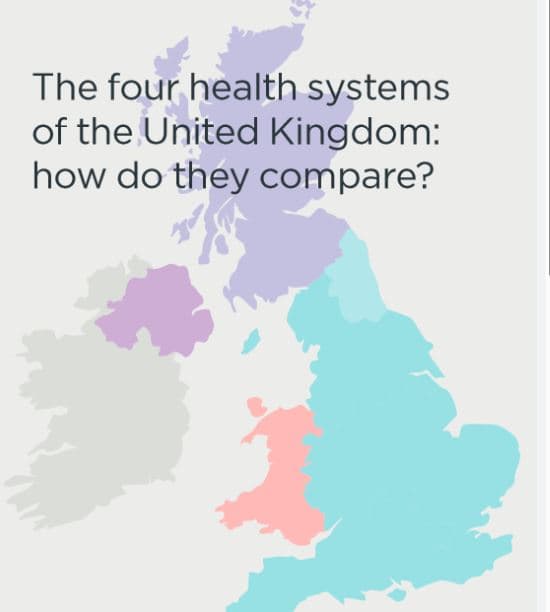
Since devolution in 1999, the United Kingdom has no longer had a single National Health Service. Instead, it has four distinct healthcare systems:
- NHS England
- NHS Scotland
- NHS Wales
- Health and Social Care Northern Ireland (HSCNI)
While all four share the founding principle of being free at the point of delivery, they have diverged significantly in funding, organisation, patient charges, waiting times, and clinical priorities. For prospective doctors, understanding these differences is essential for interviews, personal statements, and choosing where to train and work.
1. NHS England
Overview
England is the largest system, covering approximately 84% of the UK population. It is the most complex, demand-driven, and urbanised system.
Governance & Organisation
- Recent Change (March 2025): NHS England is being abolished, with functions merging back into the Department of Health and Social Care (DHSC) to reduce bureaucracy and bring the NHS under direct ministerial control.
- Current structure: Services are planned and commissioned by Integrated Care Systems (ICSs) – partnerships between NHS organisations, local councils, and other partners.
- Providers: NHS Trusts deliver secondary and tertiary care. GP practices are independently contracted.
Patient Charges
- Prescription charges: £9.90 per item (2025) – unique among the four nations.
- This creates interview-relevant discussion points around health inequalities and the "postcode lottery."
Waiting Times
- Varies significantly by region. The North-South divide affects not only health outcomes but also access to elective care.
Key Population Health Context
Issue | Detail |
North-South divide | Life expectancy gap of 2+ years between affluent South East and post-industrial North/Midlands. |
Urbanisation | 84% urban – inner-city challenges include air pollution (asthma/COPD), knife crime trauma centres, homelessness. |
Obesity | 64% of adults overweight or obese – sheer population volume drives high diabetes burden. |
What This Means for Medical Students
- You will see high-volume, high-acuity urban medicine.
- Exposure to health inequalities is unavoidable.
- Placement pressures reflect high demand and workforce strain.
2. NHS Scotland
Overview
Scotland has taken a distinctly different path from England, emphasising centralisation, prevention, and removing financial barriers.
Governance & Organisation
- Centralised model with no internal market. Hospitals do not compete for funding.
- No split between purchaser and provider. The same health boards plan and deliver care.
- Funding is based on population need, not activity levels.
- Emphasis on collaboration, long-term planning, and continuity of care.
Patient Charges
- Free prescriptions for all – a deliberate policy to reduce financial barriers to healthcare access.
Waiting Times
- Varies significantly between the densely populated Central Belt and remote Highlands/Islands.
Key Population Health Context
Issue | Detail |
The "Glasgow Effect" | Lowest life expectancy in UK and Western Europe – disproportionately high deaths from drugs, alcohol, and suicide. |
Drug deaths | Highest drug-related death rate in Europe – addiction medicine and psychiatry are critical priorities. |
Extreme rurality | Highlands and Islands require retrieval medicine (helicopters/planes) and strong generalist doctors who can manage anything in remote settings. |
Policy Highlights
- "Realistic Medicine" framework – encourages shared decision-making and reduces unnecessary interventions.
- Minimum unit pricing for alcohol – Scotland often pilots preventative strategies first.
What This Means for Medical Students
- You are more likely to experience telemedicine, rural rotations, and helicopter services.
- Addiction medicine and public health are prominent.
- Community hospitals and GP-led care feature more than in England.
3. NHS Wales
Overview
Wales has diverged by abolishing the internal market and adopting a "prudent healthcare" philosophy, though it faces significant waiting time challenges.
Governance & Organisation
- No internal market. Abolished purchaser-provider split.
- Local Health Boards (LHBs) are integrated bodies responsible for all local care (planning and delivering).
- Focus on "Prudent Healthcare" – doing only what is necessary, shared decision-making, and better use of resources (Bevan Commission).
Patient Charges
- Free prescriptions for all – aligned with Scotland and Northern Ireland, contrasting with England.
Waiting Times
- Historically longer waiting times than England, especially for elective care and diagnostics.
- Significant capacity-demand imbalance – a key interview topic.
Key Population Health Context
Issue | Detail |
Older, sicker population | Older average age than England. Legacy of mining/steel industry drives higher rates of respiratory disease, arthritis, and disability. |
Rural access issues | Large parts of Mid and West Wales have poor transport links – telemedicine and mobile clinics are vital. |
Obesity | Approximately 62-63% overweight/obese, linked to higher poverty rates in former industrial valleys. |
Additional Features
- Bilingual services (Welsh and English) – highlights the importance of cultural and linguistic competency in healthcare.
What This Means for Medical Students
- You will manage a high burden of chronic disease and disability.
- Understanding prudent healthcare prepares you for resource-conscious practice.
- Welsh language skills are valuable but not mandatory.
4. Health and Social Care Northern Ireland (HSCNI)
Overview
Northern Ireland operates the most structurally unique system in the UK, integrating health and social care under a single framework.
Governance & Organisation
- Integrated Health and Social Care system – health and social services are delivered together (similar to Scandinavian models).
- Encourages close cooperation between doctors, social workers, and community teams.
- Political instability is a recurring challenge – periodic suspension of the Northern Ireland Assembly slows healthcare reforms and decision-making.
Patient Charges
- Free prescriptions for all – aligns with Scotland and Wales.
Waiting Times
- Often the longest waiting lists in the UK for elective procedures (e.g., years for routine orthopaedic surgery).
- Linked to political instability and severe workforce shortages.
Key Population Health Context
Issue | Detail |
Mental health crisis | Highest prevalence of mental health problems in the UK (estimated 25% higher than England) – linked to intergenerational trauma from "The Troubles." High antidepressant prescription rates. |
Worst waiting lists | Political collapses (Stormont Assembly) halt decision-making, compounded by lack of workforce. |
Rural isolation | Significant rural population west of the Bann – GP access and ambulance response times are major political issues. |
Cross-Border Cooperation
- CAWT (Cooperation and Working Together) partnership with the Republic of Ireland.
- Shared cancer services, emergency transfers, and specialist care pathways.
What This Means for Medical Students
- You will gain unique insight into how politics directly shapes healthcare provision.
- Mental health and trauma-informed care are central.
- Experience in cross-border healthcare cooperation is valuable.
Social Care
Northern Ireland’s integration point becomes even stronger if you contrast it directly with England.
System | Social Care Relationship |
England | Health and social care remain structurally separate despite ICS integration efforts |
Northern Ireland | Fully integrated health and social care model |
That is a sophisticated comparison interviewers love.
Interview Gold: Sophisticated Comparative Insight
A particularly impressive insight you could include:
“Although the NHS is often discussed as a single institution, devolution effectively turned the UK into four natural experiments in healthcare policy.”
That is exactly the kind of sentence that elevates an answer.
You can then explain:
- England → market mechanisms
- Scotland → prevention
- Wales → prudent resource use
- Northern Ireland → integration
Interviewers tend to remember applicants who frame systems analytically rather than descriptively.
Comparison Table: Six Key Differences at a Glance
Dimension | England | Scotland | Wales | Northern Ireland |
Prescription charges | £9.90 per item | Free | Free | Free |
Governance model | ICSs (merging into DHSC) | Centralised, no internal market | Local Health Boards | Integrated Health & Social Care |
Waiting times | Variable by region | Variable (rural challenges) | Longest in UK (generally) | Often longest in UK |
Unique challenge | North-South divide, urban pressure | Glasgow Effect, drug deaths | Older, sicker population | Political instability, mental health crisis |
Rural medicine | Minimal (84% urban) | Extreme (Highlands/Islands) | Significant (Mid/West Wales) | Significant (west of Bann) |
Key philosophy | Demand-driven, competition (historically) | Realistic Medicine, prevention | Prudent Healthcare | Integration of health & social care |
14 Questions and Answers
Question 1. “How many NHS systems are there in the UK?”
Answer
There are four separate healthcare systems in the UK due to devolution in 1999:
- NHS England
- NHS Scotland
- NHS Wales
- Health and Social Care Northern Ireland
Although they all follow the founding NHS principle of being free at the point of delivery, they differ in organisation, prescription charges, public health priorities, and approaches to healthcare delivery.
Question 2. “What are the biggest differences between the four systems?”
Answer
One major difference is prescription charging.
England still charges patients for prescriptions, currently around £9.90 per item, whereas Scotland, Wales, and Northern Ireland provide prescriptions free of charge.
Another major difference is organisation:
- England historically used more market-style structures and commissioning systems.
- Scotland and Wales largely removed the internal market.
- Northern Ireland uniquely integrates health and social care.
The systems also face different population health challenges, such as drug deaths in Scotland or long elective waiting lists in Northern Ireland.
Question 3. “What is meant by the ‘postcode lottery’ in healthcare?”
Answer
The “postcode lottery” refers to differences in healthcare access or outcomes depending on where someone lives.
For example:
- Waiting times differ between UK nations and even between regions within England.
- Access to specialist services, mental health support, or elective surgery can vary significantly.
- Prescription charges exist in England but not elsewhere in the UK.
This raises ethical questions about equality and fairness within a healthcare system intended to provide universal care.
Question 4. “What challenges does NHS England face?”
Answer
NHS England faces several pressures:
- High patient demand due to England’s large population
- Workforce shortages
- Long waiting lists in some regions
- Significant health inequalities between affluent and deprived areas
England is also highly urbanised, meaning hospitals frequently manage issues such as:
- major trauma,
- homelessness,
- air pollution-related illness,
- and chronic diseases like diabetes and cardiovascular disease.
Question 5. “What is unique about healthcare in Scotland?”
Answer
NHS Scotland focuses strongly on prevention and collaborative care.
Scotland abolished prescription charges and largely dismantled the internal market model used historically in England.
It also faces unique public health issues, including:
- high drug-related death rates,
- alcohol-related harm,
- and poorer life expectancy in areas such as Glasgow, sometimes called the “Glasgow Effect.”
Scotland’s geography also means rural medicine is extremely important, especially in the Highlands and Islands where retrieval medicine and telemedicine are commonly used.
Question 6. “What is the ‘Glasgow Effect’?”
Answer
The “Glasgow Effect” describes poorer health outcomes and lower life expectancy in Glasgow beyond what would be expected from deprivation alone.
Contributing factors include:
- alcohol misuse,
- drug addiction,
- smoking,
- poor housing,
- unemployment,
- and long-term social inequality.
It highlights how social determinants of health can profoundly affect population outcomes.
Question 7. “What is Prudent Healthcare in Wales?”
Answer
Prudent Healthcare is a philosophy promoted in NHS Wales that focuses on:
- doing only what is necessary,
- avoiding wasteful interventions,
- using healthcare resources carefully,
- and involving patients in shared decision-making.
The aim is to improve outcomes while managing limited resources responsibly.
It reflects the idea that sustainable healthcare depends not only on treating illness, but also on prevention and efficient use of services.
Question 8. “Why are waiting times often discussed in relation to Wales and Northern Ireland?”
Answer
Both Wales and Northern Ireland have experienced significant elective care backlogs and diagnostic delays.
In Northern Ireland especially, political instability and workforce shortages have contributed to severe waiting time pressures.
In Wales, challenges include:
- an older population,
- high chronic disease burden,
- and limited healthcare capacity in some areas.
These issues demonstrate how healthcare performance is influenced by workforce planning, funding, geography, and political structures.
Question 9. “What makes Northern Ireland’s healthcare system different?”
Answer
Health and Social Care Northern Ireland uniquely integrates health and social care into one system.
This means healthcare professionals, social workers, and community teams work more closely together compared with other UK nations.
Northern Ireland also has:
- significant rural healthcare challenges,
- long waiting lists,
- and high rates of mental health problems linked partly to intergenerational trauma from “The Troubles.”
This integrated model is often seen as a potential strength because health and social needs are closely connected.
Question 10.“How does politics affect healthcare?”
Answer
Healthcare is strongly influenced by political decisions because governments determine:
- funding,
- workforce planning,
- public health policy,
- and healthcare structure.
For example:
- Scotland introduced minimum alcohol pricing.
- England retained prescription charges.
- Northern Ireland’s periodic Assembly suspensions have slowed healthcare reform and investment decisions.
This shows that healthcare outcomes are shaped not only by medicine, but also by policy and governance.
Ethical & Discussion Questions
Question 11. “Do you think prescription charges are fair?”
Answer
There are arguments on both sides.
Supporters of prescription charges argue they generate revenue and discourage unnecessary medication use.
However, critics argue charges may discourage poorer patients from collecting important medications, potentially worsening health inequalities.
The fact that Scotland, Wales, and Northern Ireland abolished charges while England retained them shows there are different views on balancing access and sustainability.
Personally, I think affordability should never become a barrier to essential treatment, especially for chronic disease management.
Question 12. “Should healthcare systems prioritise prevention or treatment?”
Answer
Ideally, both are important, but prevention is often more sustainable long term.
Scotland’s emphasis on prevention through policies like minimum alcohol pricing reflects this idea.
Preventing disease:
- improves quality of life,
- reduces hospital admissions,
- and lowers long-term healthcare costs.
However, healthcare systems must still maintain strong acute and emergency services because patients will always require treatment.
The challenge is balancing immediate demand with long-term public health investment.
Personal Reflection Questions
Question 13. “Where in the UK would you most like to work?”
Answer
I would value experience in different systems because each offers unique learning opportunities.
For example:
- England offers exposure to large tertiary centres and major trauma.
- Scotland provides experience in rural and retrieval medicine.
- Wales offers strong experience in chronic disease management and community care.
- Northern Ireland provides insight into integrated health and social care.
At this stage, I am most interested in environments where I can develop broad clinical skills while understanding how healthcare systems influence patient outcomes.
Question 14. “Why is it important for doctors to understand healthcare systems?”
Answer
Doctors work within healthcare systems, so understanding how systems operate helps us advocate effectively for patients.
Healthcare structure influences:
- access to treatment,
- waiting times,
- continuity of care,
- and health inequalities.
Understanding policy and population health also helps doctors think beyond individual diseases and appreciate wider determinants of health.
Ultimately, good medicine is not only about clinical knowledge, but also about understanding the system patients navigate.
Useful Links
1. England – NHS England
2. Scotland – NHS Scotland
3. Wales – NHS Wales
4. Northern Ireland – Health and Social Care (HSC NI)