
NHS - GP 8am Rush in the NHS
GP 8am Rush in the NHS
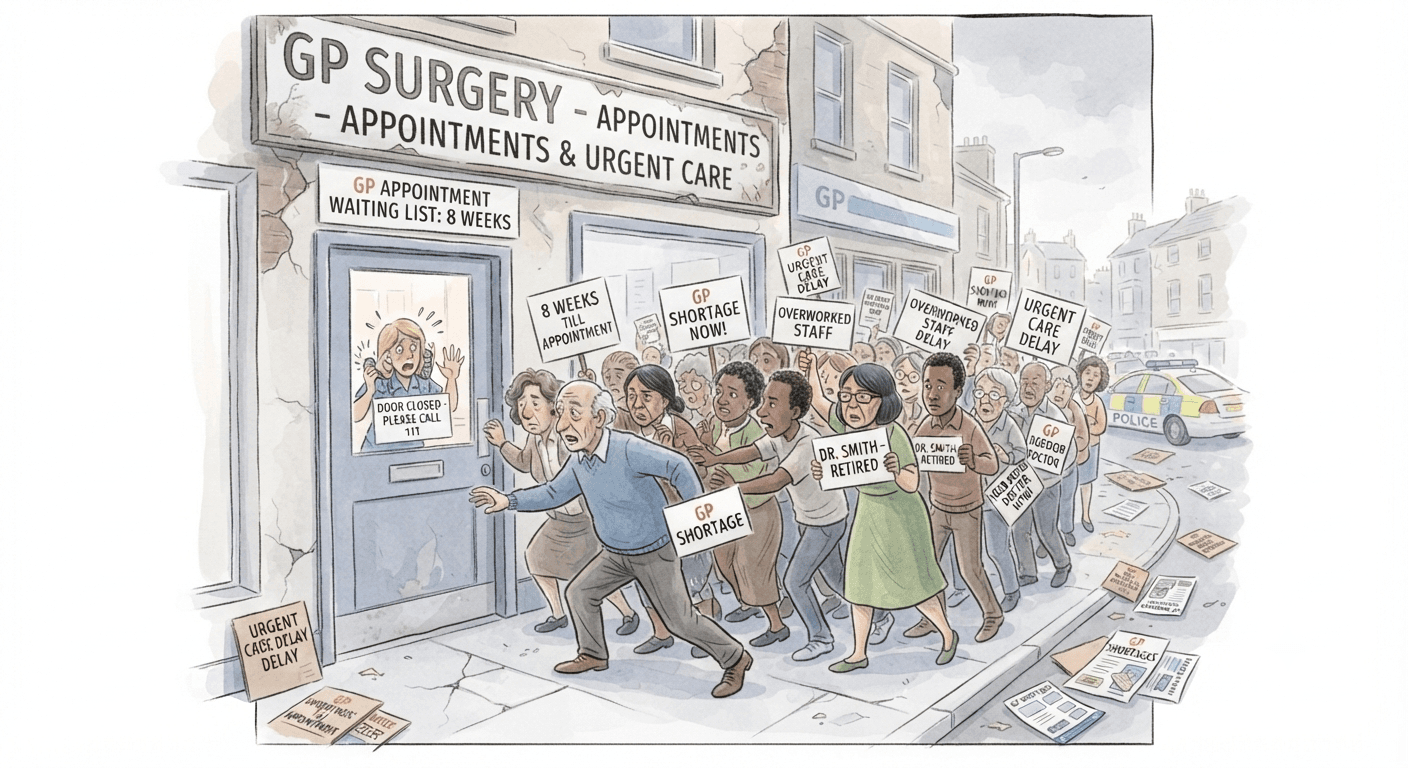
The GP 8am rush refers to the large surge of patients contacting GP surgeries as soon as phone lines open at 8am in order to secure limited same-day appointments.
It highlights wider NHS pressures including:
- GP workforce shortages
- Increasing patient demand
- Limited appointment capacity
- Administrative burden on primary care
- Health inequalities in access to care
The issue contributes to:
- Patient dissatisfaction
- Delayed diagnoses and treatment
- Pressure on A&E departments
- Staff burnout
- Reduced continuity of care
Key NHS responses include:
- Online triage systems
- Pharmacy First
- Telemedicine
- Care navigation
- Increased GP funding and workforce reforms
What Is the GP 8am Rush?
Most GP practices open their phone lines at 8am. Because same-day appointments are limited, many patients attempt to call at exactly the same time.
This creates:
- Long call queues
- Crashed phone systems
- Difficulty accessing appointments
- Frustration among patients and staff
The problem has worsened because:
- The UK population is increasing and ageing
- More patients live with chronic disease
- GP numbers have not increased sufficiently
- Administrative workload has grown
Over 63 million patients are currently registered with GP practices in England.
Why Is the 8am Rush a Problem?
1. Reduced Access to Care
Patients may struggle to obtain appointments even after waiting on the phone.
This particularly affects:
- Elderly patients
- Patients with language barriers
- People with disabilities
- Working adults
- Carers
- People without internet access
This can worsen health inequalities.
2. Delayed Diagnosis and Treatment
If patients cannot access primary care quickly:
- Conditions may deteriorate
- Chronic disease monitoring may worsen
- Cancer diagnoses may be delayed
- Mental health problems may escalate
Some patients may simply stop trying to seek help.
3. Increased Pressure on Emergency Services
Patients unable to access a GP may instead attend:
- A&E
- Urgent treatment centres
- NHS 111
This contributes to:
- Emergency department overcrowding
- Longer waiting times
- Increased NHS costs
4. Staff Burnout and Morale Issues
Receptionists and clinicians often manage:
- Large volumes of distressed patients
- Aggressive behaviour
- Time pressure
- Heavy administrative workloads
This contributes to:
- Stress
- Burnout
- Poor staff retention
- Workforce shortages
Underlying Causes
GP Workforce Shortages
There are fewer full-time equivalent GPs per patient than in previous years.
Reasons include:
- Early retirement
- Burnout
- Workload pressures
- Difficulty recruiting trainees
- Increasing complexity of patient care
Rising Patient Demand
Demand has increased because:
- The population is ageing
- More people live with multiple chronic conditions
- Mental health presentations are increasing
- Patients expect faster access to care
Administrative Burden
GPs spend significant time on:
- Referral letters
- Insurance forms
- Fit notes
- Reviewing test results
- Documentation
This reduces time available for consultations.
NHS Solutions to the 8am Rush
1. Online Triage Systems
Many GP practices now use online consultation systems such as:
- Accurx
- PATCHS
- Anima
Patients complete an online form describing symptoms.
A clinician then triages requests based on urgency.
Advantages
- Reduces phone congestion
- Prioritises patients by clinical need
- Allows asynchronous communication
- Improves efficiency
Limitations
- Digital exclusion for some patients
- Can shift workload online rather than reduce it
- Large numbers of forms still require clinician review
2. Total Triage Model
In a total triage system:
- Every patient request is reviewed before an appointment is given
This aims to:
- Improve patient safety
- Ensure urgent cases are prioritised
- Direct patients to the correct professional
However, it increases clinical administrative workload.
3. Telemedicine
Telephone and video consultations allow:
- Easier access for working patients
- Reduced travel burden
- Faster review for simple problems
This became more common after the COVID-19 pandemic.
Benefits
- Convenience
- Increased flexibility
- Improved efficiency
Drawbacks
- Limited physical examination
- Digital exclusion
- Communication challenges
4. Pharmacy First Initiative
The Pharmacy First scheme allows pharmacists to assess and treat common conditions including:
- Sinusitis
- Sore throat
- Otitis media
- Shingles
- UTIs
- Infected insect bites
- Impetigo
This reduces pressure on GP appointments.
It also promotes better use of the multidisciplinary team.
5. Care Navigation
Reception staff are increasingly trained in care navigation.
This means directing patients to the most appropriate professional, such as:
- Pharmacists
- Physiotherapists
- Practice nurses
- Mental health workers
- Social prescribers
This helps reserve GP appointments for more complex cases.
6. Increased Funding and Workforce Reform
The government has proposed:
- Increased GP funding
- Reduction in administrative workload (“cutting red tape”)
- More training places
- Improved digital infrastructure
The aim is to increase appointment availability and improve continuity of care.
Ethical and Social Issues
Equality of Access
A key ethical issue is whether all patients can access care equally.
Online systems may disadvantage:
- Elderly patients
- Digitally excluded groups
- Patients with language barriers
Telephone-only systems may also disadvantage working patients.
An ideal system should balance:
- Accessibility
- Efficiency
- Safety
Continuity vs Rapid Access
There is ongoing debate about whether the NHS should prioritise:
- Rapid appointments with any clinician
OR - Continuity with the same GP
Continuity is particularly important for:
- Chronic disease management
- Mental health
- Elderly patients
- Complex medical histories
However, urgent access is also essential.
A balanced system is likely best.
Prioritisation by Clinical Need
Triage systems prioritise patients based on urgency rather than who contacts the surgery first.
This is generally fairer and safer.
However, patients may perceive this as frustrating if their concerns are not prioritised.
High-Yield Interview Structure
A strong answer often follows this structure:
Problem
Explain what the GP 8am rush is.
Why It Happens
Discuss GP shortages, rising demand, and limited appointments.
Consequences
Discuss:
- Delayed care
- Patient dissatisfaction
- Health inequalities
- Pressure on A&E
- Staff burnout
Solutions
Mention:
- Online triage
- Pharmacy First
- Telemedicine
- Care navigation
- Increased funding
- Workforce expansion
Balanced Conclusion
Recognise that no single solution fully resolves the issue.
Eight Questions and Answers
1.“What is the GP 8am rush and how could the NHS address it?”
Answer
GP 8am Rush – Summary Points
- Refers to high demand for same-day GP appointments at 8am when booking opens
- Caused by demand > capacity in primary care
- GP shortages
- Ageing population & multimorbidity
- Increased administrative workload
Consequences
- Delayed access to care and treatment
- Potential worsening of health outcomes
- Increased health inequalities (elderly, vulnerable, digitally excluded)
- More inappropriate A&E attendances
- Staff stress, burnout, and reduced morale
Solutions
- Digital triage systems (e.g. Accurx, PATCHS)
- Pharmacy First scheme for minor illnesses
- Care navigation and better signposting
- Telemedicine and remote consultations
- Better demand management in GP practices
Key Principle
- Systems must remain accessible and inclusive, especially for patients who are not digitally enabled
- Need to balance access, safety, continuity, and workforce sustainability
2. How does it affect patient safety?
Patient safety may be compromised due to:
- Delayed clinical assessment
- Inappropriate escalation to emergency services
- Reduced continuity of care
- Overloaded triage systems leading to missed urgent cases
3. What impact does it have on healthcare staff?
- High stress levels at reception and clinical teams
- Increased workload pressure in short time periods
- Burnout and reduced job satisfaction
- Communication challenges with frustrated patients
4. What solutions can address the GP 8am rush?
- Digital triage systems (e.g. Accurx, PATCHS)
- Telephone and online consultation models
- Pharmacy First scheme for minor illnesses
- Care navigation to direct patients appropriately
- Increased use of multidisciplinary teams (nurses, pharmacists, paramedics)
- Improved workforce planning
5. What is the role of digital triage in this issue?
Digital triage allows patients to submit requests online, which helps:
- Prioritise according to clinical urgency
- Reduce phone congestion at peak times
- Improve efficiency of appointment allocation
However, it must be accessible for patients without digital access.
6. What are the limitations of digital solutions?
- Digital exclusion (elderly, deprived populations)
- Risk of missing urgent symptoms if poorly designed
- Increased administrative burden if not streamlined
- Patient dissatisfaction if perceived as barriers to access
7. How does Pharmacy First help?
The Pharmacy First scheme allows pharmacists to manage minor conditions, such as:
- Sore throat
- Earache
- Sinusitis
- UTIs (in some cases)
This reduces unnecessary GP demand.
8. How would you improve the GP 8am system?
I would:
- Expand multidisciplinary primary care teams
- Improve triage systems
- Increase patient education on appropriate service use
- Ensure equity of access (digital + non-digital routes)
- Support workforce expansion in general practice
Other Practice Questions
Common Questions
- What is the GP 8am rush?
- Why is it difficult to get a GP appointment?
- What are the consequences of delayed access to primary care?
- What is triage?
- What is the Pharmacy First scheme?
- How can telemedicine help primary care?
- What is care navigation?
- Why are GP shortages occurring?
Harder Questions
- Should patients be prioritised based on clinical need?
- Is continuity of care more important than rapid access?
- Do online systems improve or worsen healthcare inequalities?
- Should patients pay for missed GP appointments?
- How can the NHS balance efficiency with patient-centred care?
Key Takeaway
The GP 8am rush is not simply a phone-line problem — it reflects wider NHS challenges involving workforce shortages, rising demand, funding pressures, and access inequalities.
Strong interview answers should:
- Define the issue clearly
- Explain causes and consequences
- Recognise ethical dimensions
- Offer balanced, realistic solutions
- Maintain a patient-centred perspective
Useful Links
https://www.england.nhs.uk/category/primary-care/
https://www.nhs.uk/nhs-services/gps/
https://www.england.nhs.uk/long-read/modern-general-practice-access/
https://www.england.nhs.uk/gp/
https://digital.nhs.uk/blog/transformation-blog/2019/why-is-there-an-8am-rush-on-the-nhs-app
https://www.nhs.uk/nhs-services/pharmacies/pharmacy-first/
https://www.longtermplan.nhs.uk/
https://www.bma.org.uk/advice-and-support/gp-practices
https://www.cqc.org.uk/guidance-providers/gps
https://www.england.nhs.uk/primary-care/primary-care-networks/
https://www.nhs.uk/using-the-nhs/about-the-nhs/how-to-raise-a-concern/