
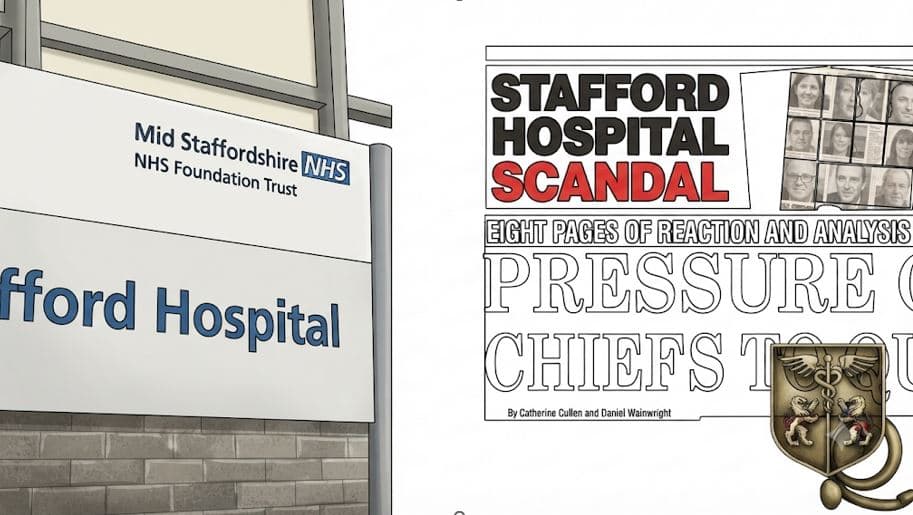
Mid Staffordshire NHS Trust Scandal & Francis Reports
Mid Staffordshire NHS Trust Scandal & Francis Reports
1. Overview (What happened?)
The Mid Staffordshire NHS Foundation Trust scandal was one of the most serious care failings in NHS history, involving systemic neglect at Mid Staffordshire NHS Foundation Trust, particularly Stafford Hospital, during the mid-2000s.
It was formally investigated in the Francis Reports, led by Sir Robert Francis QC.
2. Scale of harm
Between 2005–2008, estimates suggest:
- ~400–1,200 excess deaths
- Widespread poor care across wards
- Thousands of patients affected by neglect
👉 Key message: This was systemic neglect, not isolated incidents.
3. What went wrong? (Core failings)
A. Severe neglect of basic care
Patients experienced:
- Lack of food and water
- Poor hygiene (left in soiled bedding)
- Untreated pain and distress
- Inability to access call bells or help
B. Communication failures
- Poor communication with families
- Families not informed about deterioration or falls
- Lack of transparency and honesty
C. Staffing shortages
- Insufficient nurses and doctors
- Junior staff left unsupported
- Inadequate senior supervision
D. Unsafe hospital environment
- Missed basic care needs
- Delayed responses to emergencies
- Poor monitoring of deteriorating patients
E. Organisational culture of failure
- Focus on targets over patient care
- Management ignoring complaints
- Fear and silence culture among staff
4. Why did it happen? (Root causes)
1. Target-driven culture
Hospitals prioritised performance metrics over care quality.
2. Leadership failure
Senior management failed to act on warning signs.
3. Weak accountability
- Poor escalation of concerns
- Lack of consequences for poor care
4. Culture of silence
Staff feared speaking up due to:
- Job insecurity
- Lack of whistleblowing protection
- Normalisation of poor care
5. Key individuals & activism
A major catalyst for exposure was:
- Julie Bailey
- Campaign group: “Cure the NHS”
Her mother’s care and death highlighted systemic neglect and helped trigger national inquiry.
6. The Francis Reports (what they concluded)
The inquiry produced two major reports:
Francis Report (2010)
Focused on:
- Failings at Stafford Hospital
- Detailed accounts of neglect
- Identification of systemic problems
Francis Report (2013)
Focused on:
- Wider NHS system failures
- National recommendations for reform
7. Major conclusions
The reports found:
- A culture of institutional neglect
- Lack of compassion in care delivery
- Failure of governance systems
- Weak regulation and oversight
- Failure to listen to patients and families
8. Key recommendations (very high yield)
A. Patient-centred care
Patients and families must always be central to decision-making.
B. Staffing & safety
- Safe staffing levels
- Better training and supervision
C. Whistleblowing protection
Staff must feel safe to raise concerns.
D. Transparency
- Openness about errors
- Duty of candour strengthened
E. Stronger regulation
Improved role of regulators such as the Care Quality Commission (CQC)
9. The “6 Cs” of NHS care
- Care – core purpose of the NHS
- Compassion – dignity and kindness
- Competence – clinical skill and knowledge
- Communication – clear MDT and patient communication
- Courage – speaking up about unsafe care
- Commitment – dedication to patients
10. Ethical analysis
Autonomy
- Patients were not informed properly
- Lack of transparency undermined consent
Beneficence
- Care did not prioritise patient wellbeing
Non-maleficence
- Harm caused through neglect and delay
Justice
- Unequal and unsafe standard of care delivery
11. Key lessons for the NHS
1. Basic care is fundamental
Even simple tasks (hydration, hygiene, pain relief) are critical.
2. Culture matters more than systems
Unsafe culture leads to systemic harm.
3. Listening saves lives
Patient and family concerns must be acted upon.
4. Whistleblowing is essential
Staff must be empowered and protected.
12. High-yield summary (exam-ready)
The Mid Staffordshire scandal demonstrated:
- Severe neglect of basic patient care
- System-wide failure in leadership and governance
- A harmful target-driven culture
- Failure to listen to patients and staff
- Breakdown of communication and accountability
When healthcare systems prioritise targets over patients, harm becomes systemic rather than accidental.
Mid Staffordshire (Francis Reports) — Questions & Answers
1. What happened at Mid Staffordshire NHS Trust?
Answer:
The Mid Staffordshire NHS Foundation Trust, particularly Stafford Hospital, was found to have provided dangerously poor care between roughly 2005–2008. Patients experienced neglect such as lack of basic hygiene, hydration, pain relief, and delayed treatment. This contributed to an estimated hundreds of excess deaths. The Francis Inquiry later confirmed that these failures were systemic rather than isolated incidents.
2. What were the Francis Reports?
Answer:
The Francis Reports were two major public inquiries led by Sir Robert Francis into failings at Mid Staffordshire NHS Foundation Trust. The first report (2010) focused on poor care at Stafford Hospital, while the second (2013) examined wider NHS system issues. They made over 200 recommendations to improve patient safety, governance, and transparency across the NHS.
3. What were the main causes of the failings?
Answer:
The main causes included a toxic organisational culture, poor leadership, staffing shortages, and an overemphasis on meeting performance targets rather than delivering safe, compassionate care. There was also weak governance and failure to act on warning signs or patient complaints.
4. What ethical principles were violated?
Answer:
Several key ethical principles were breached:
- Non-maleficence: patients were harmed through neglect
- Beneficence: failure to act in patients’ best interests
- Autonomy: patients and families were not properly informed
- Justice: inconsistent and unsafe standards of care were provided
5. What role did targets play in the scandal?
Answer:
Targets contributed to the failures by shifting focus away from patient care. Staff and management prioritised performance indicators over safety and dignity, leading to neglect of basic needs. However, targets themselves are not inherently harmful; the issue was their misuse without balancing clinical judgement and patient-centred care.
6. What is whistleblowing and why was it important here?
Answer:
Whistleblowing is when healthcare staff raise concerns about unsafe or unethical practice. In Mid Staffordshire, many staff were afraid to speak up due to fear of blame or lack of protection. The Francis Reports highlighted the importance of strengthening whistleblowing systems to prevent future harm.
7. Who was responsible for the failings?
Answer:
Responsibility was shared across multiple levels. The organisation and leadership were primarily responsible for creating a culture that prioritised targets over care and failed to act on warnings. Some individual staff also failed to escalate concerns, although systemic pressures and fear limited their ability to act. Overall, it was a system-wide failure rather than one group alone.
8. What were the key recommendations of the Francis Reports?
Answer:
Key recommendations included:
- Stronger focus on patient-centred care
- Improved staffing levels and training
- Better regulation and oversight of hospitals
- Protection for whistleblowers
- Greater transparency and honesty with patients
- Embedding a culture of compassion and accountability
9. What lessons should future doctors learn from this case?
Answer:
Future doctors should prioritise patient safety and dignity above targets or pressure. They should always escalate concerns, act on poor care, and communicate clearly with patients and families. It also highlights the importance of teamwork, professionalism, and speaking up even in challenging environments.
10. Could this scandal happen again today?
Answer:
While NHS safeguards such as the CQC, duty of candour, and whistleblowing policies have improved since then, similar risks still exist if culture and staffing issues are not addressed. Therefore, ongoing vigilance, strong leadership, and a patient-centred culture remain essential to prevent repetition.
Useful Links
Primary official report (Francis Report)
Government response (“Hard Truths”)
Parliamentary briefing
House of Commons Library briefing
https://commonslibrary.parliament.uk/research-briefings/sn06690/
Regulatory / professional interpretation
NMC Francis Report page
https://www.nmc.org.uk/about-us/policy/position-statements/francis-report/