
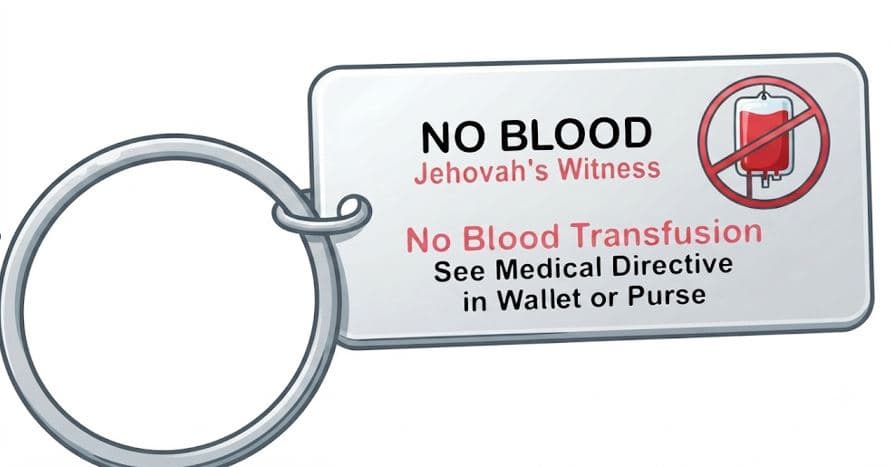
Medical Ethics- Jehovah's Witness
Jehovah’s Witnesses, Blood Transfusions, and Medical Ethics
What Are Jehovah’s Witnesses’ Beliefs About Blood Transfusions?
Jehovah's Witnesses are a Christian religious group known for refusing blood transfusions based on their interpretation of biblical teachings.
For UCAT Situational Judgement Test (SJT) questions and medical school interviews, this topic is important because it tests your understanding of:
- Patient autonomy
- Capacity and consent
- Non-maleficence
- Beneficence
- Cultural sensitivity
- GMC guidance
- Ethical decision-making
Key Takeaways for UCAT & Medical Interviews
- Competent adults have the legal right to refuse blood transfusions.
- Respecting patient autonomy is essential in UK medical ethics.
- Doctors must ensure:
- Capacity
- Informed consent/refusal
- Freedom from coercion
- Refusing blood may create conflict between:
- Autonomy
- Beneficence
- Non-maleficence
- Children and patients lacking capacity are treated differently under UK law.
- These scenarios commonly appear in:
- UCAT SJT
- MMI ethics stations
- NHS ethics discussions
Why Do Jehovah’s Witnesses Refuse Blood Transfusions?
Jehovah’s Witnesses believe that accepting blood transfusions violates biblical teachings.
Many Jehovah’s Witnesses refuse:
- Whole blood
- Red blood cells
- White blood cells
- Platelets
- Plasma
However:
- Individual beliefs may vary
- Some may accept certain blood products or procedures
- Doctors should never make assumptions
This is why clear communication and informed discussions are essential.
Ethical Principles Involved
1. Autonomy
Autonomy means respecting a patient’s right to make informed decisions about their own healthcare.
If an adult patient:
- Has capacity
- Understands the risks
- Makes a voluntary decision
Their refusal must usually be respected — even if it may lead to death.
2. Beneficence
Doctors want to:
- Save life
- Improve health
- Act in the patient’s best interests
This can conflict with a patient refusing life-saving treatment.
3. Non-Maleficence
Doctors must avoid harm.
Giving blood against a patient’s wishes may:
- Cause emotional distress
- Violate dignity
- Breach trust
4. Justice
Patients should be treated fairly regardless of religion or beliefs.
Doctors must avoid discrimination and respect cultural diversity.
Blood Transfusions and Capacity
Under the Mental Capacity Act 2005, adults are presumed to have capacity unless proven otherwise.
A patient has capacity if they can:
- Understand information
- Retain information
- Weigh risks and benefits
- Communicate a decision
If these criteria are met:
- Their refusal must generally be respected
Adult Jehovah’s Witness Refusing Blood — MMI Scenario
Example Scenario
A 35-year-old Jehovah’s Witness urgently requires a blood transfusion after a major accident but refuses treatment.
How to Approach the Scenario
Step 1: Assess Capacity
Ensure the patient can:
- Understand consequences
- Make an informed choice
- Communicate clearly
Step 2: Confirm Informed Refusal
Explain:
- Risks
- Benefits
- Alternatives
- Possible outcomes
Step 3: Respect Autonomy
If the patient has capacity:
- Their decision should usually be respected
- Even if refusal may result in death
Step 4: Explore Alternatives
Doctors may consider:
- Blood conservation techniques
- Cell salvage
- Alternative treatments acceptable to the patient
Step 5: Involve Seniors and MDT
Complex ethical decisions should involve:
- Senior doctors
- Haematology teams
- Ethics committees
- Legal teams if needed
Children and Blood Transfusions
Children are treated differently under UK law.
If refusing treatment places a child at serious risk:
- Courts may override parental wishes
- Doctors act in the child’s best interests
This creates tension between:
- Parental autonomy
- Beneficence
- Non-maleficence
Gillick Competence and Young People
Gillick v West Norfolk established that some under-16s can consent to treatment if sufficiently mature.
However:
- Refusing life-saving treatment is more legally complex
- Courts may still intervene to protect the child
Question and Answers
SJT Type Question
A competent adult Jehovah’s Witness refuses a life-saving blood transfusion after surgery.
What is the MOST appropriate response?
A.
Administer blood immediately because saving life is the priority.
B.
Respect the patient’s decision after confirming capacity and informed refusal.
C.
Ask the family to override the patient’s wishes.
D.
Ignore the refusal because religious beliefs should not affect treatment.
Correct Answer: B
Explanation
This scenario primarily tests:
- Autonomy
- Capacity
- Consent
A competent adult has the legal and ethical right to refuse treatment.
Doctors should:
- Ensure capacity
- Explain risks
- Respect the patient’s wishes
- Explore alternatives
Questions and Answers
1. Define the Ethical Principles
This scenario involves:
- Autonomy
- Beneficence
- Non-maleficence
2. Assess Capacity
I would first ensure the patient:
- Understands the consequences
- Can weigh information
- Is making a voluntary decision
3. Respect Autonomy
If the patient has capacity, I would respect their informed refusal even if it may lead to serious harm or death.
4. Communicate Empathetically
I would:
- Speak calmly
- Explore concerns
- Ensure the patient feels respected and supported
5. Escalate Appropriately
I would involve:
- Senior colleagues
- Specialists
- Ethics teams where appropriate
6. Conclude Safely
Although emotionally difficult, respecting a capacitous patient’s informed refusal is both an ethical and legal duty.
Common Themes
Refusal of Treatment
Can competent adults refuse life-saving care?
Capacity
Does the patient fully understand the consequences?
Religion and Cultural Sensitivity
Can doctors respect beliefs while providing safe care?
Best Interests
What happens when children are involved?
Jehovah’s Witnesses and Blood Transfusions: Can adults refuse blood transfusions in the UK?
Yes. Competent adults have the legal right to refuse treatment, even if refusal may lead to death.
Why do Jehovah’s Witnesses refuse blood?
Their beliefs are based on religious interpretations of biblical teachings regarding blood.
Can doctors force treatment?
Not usually if the adult patient has capacity and has made an informed refusal.
What happens if a child needs blood?
Courts may override parental refusal if treatment is necessary to save the child’s life.
What ethical principles are involved?
Common principles include:
- Autonomy
- Beneficence
- Non-maleficence
- Justice
Why is this topic important for UCAT and MMIs?
It tests:
- Ethical reasoning
- Communication
- Professionalism
- Capacity and consent
- Balancing conflicting ethical principles
Tips and Mistakes for Jehovah’s Witness Scenarios
Always Mention:
- Capacity assessment
- Autonomy
- Informed consent/refusal
- GMC guidance
- Best interests
- Communication and empathy
- Senior escalation
Mistakes to Avoid
Assuming doctors can override refusal automatically
Ignoring patient autonomy
Forgetting capacity assessment
Being judgemental about religious beliefs
Forgetting safeguarding in children
Eight Questions and Answers
Question 1 – Competent Adult Refusing Blood
A 42-year-old patient with severe blood loss refuses a life-saving blood transfusion because they are a Jehovah’s Witness.
What should the doctor do?
Answer
The doctor must first assess whether the patient has capacity. Under the Mental Capacity Act 2005, adults are presumed to have capacity unless proven otherwise.
If the patient can:
- understand the information,
- retain it,
- weigh up risks and benefits,
- and communicate their decision,
then their refusal must be respected — even if refusing treatment could result in death.
The doctor should:
- explain the risks clearly,
- explore alternative treatments where possible,
- ensure the patient is not being coerced,
- document the discussion carefully,
- and involve senior colleagues if needed.
This scenario primarily involves the ethical principle of autonomy, although beneficence and non-maleficence are also relevant.
Question 2 – Unconscious Jehovah’s Witness Patient
An unconscious patient arrives in A&E after a road traffic collision. A wallet card states they are a Jehovah’s Witness and refuse blood transfusions.
What should happen?
Answer
The healthcare team should first determine whether the refusal card is valid and applicable.
If there is evidence of a valid Advance Decision to Refuse Treatment (ADRT), this must legally be respected under UK law.
Doctors should:
- review medical records,
- check whether the document is signed and witnessed,
- involve senior clinicians,
- and seek legal advice if uncertainty exists.
If no valid refusal is found and treatment is urgently required to save life, doctors may proceed in the patient’s best interests.
This scenario tests:
- autonomy,
- legal awareness,
- and decision-making under uncertainty.
Question 3 – Parents Refusing Blood for Their Child
Parents who are Jehovah’s Witnesses refuse a blood transfusion for their 6-year-old child who is critically unwell.
What are the ethical issues?
Answer
This situation involves balancing:
- parental autonomy,
- the child’s welfare,
- beneficence,
- and non-maleficence.
Parents usually make decisions for children, but doctors must act in the child’s best interests.
If refusing blood places the child at significant risk of serious harm or death, doctors may seek a court order to provide treatment.
The medical team should:
- communicate sensitively,
- explain risks and alternatives,
- involve paediatric specialists,
- and escalate to senior clinicians and legal teams where necessary.
The child’s safety remains the priority.
Question 4 – UCAT SJT Style
A patient calmly states they do not want blood products due to their religious beliefs. A junior doctor says:
“We should just transfuse them anyway because saving life is more important.”
How appropriate is this response?
Answer
Very inappropriate.
Explanation
This response ignores:
- patient autonomy,
- informed refusal,
- GMC guidance,
- and legal rights.
Competent adults have the right to refuse treatment, even if others disagree with the decision.
Doctors should respect beliefs while ensuring patients understand risks and alternatives.
Question 5 – Alternative Treatments
A Jehovah’s Witness patient refuses blood but agrees to alternative strategies.
What alternatives might doctors discuss?
Answer
Doctors should explore blood-sparing treatments where clinically appropriate, such as:
- iron therapy,
- erythropoietin,
- cell salvage techniques,
- tranexamic acid,
- or minimally invasive surgery.
This demonstrates:
- respect for autonomy,
- shared decision-making,
- and compassionate care.
The goal is to balance patient wishes with safe medical treatment.
Question 6 – Capacity and Pressure
A patient refuses blood transfusion while surrounded by family members strongly encouraging refusal.
What should the doctor consider?
Answer
The doctor should ensure the decision is voluntary and free from coercion.
Capacity alone is not enough — autonomous decisions must also be made without undue pressure.
The doctor may:
- speak to the patient privately,
- assess whether they genuinely understand the consequences,
- and confirm the refusal reflects their own wishes.
This scenario tests understanding of:
- autonomy,
- informed consent,
- and safeguarding.
Question 7
“Should doctors always respect religious beliefs, even if refusing treatment may lead to death?”
Answer
Doctors should respect competent patients’ religious beliefs because autonomy is a core principle of medical ethics.
However, this must be balanced with:
- beneficence,
- non-maleficence,
- and legal responsibilities.
If the patient has capacity and fully understands the risks, doctors generally must respect their decision, even if it could result in death.
In children or patients lacking capacity, doctors must act in the patient’s best interests, which may involve legal intervention.
I would also ensure clear communication, empathy, and involvement of senior colleagues in difficult situations.
Question 8
Emergency Situation
A patient urgently needs surgery. There is no documentation regarding blood refusal, but family members say the patient is a Jehovah’s Witness.
What should happen?
Model Answer
Family members cannot legally refuse treatment on behalf of a competent adult unless formally authorised.
If there is no valid ADRT and treatment is urgently needed, doctors may provide life-saving treatment in the patient’s best interests.
The team should:
- continue searching for documentation,
- involve senior clinicians,
- and carefully document decision-making.
This highlights the importance of:
- evidence,
- legal frameworks,
- and acting proportionately during emergencies.
Other Questions
- A Jehovah’s Witness refuses a blood transfusion after childbirth. How would you approach the situation?
- Parents refuse blood transfusions for their child. What ethical issues arise?
- Can autonomy override beneficence?
- What would you do if you disagreed personally with a patient’s religious beliefs?
- How should doctors balance respect for religion with patient safety?
Useful Links
https://www.nhs.uk/conditions/consent-to-treatment/
https://www.gmc-uk.org/ethical-guidance/ethical-guidance-for-doctors/0-18-years
https://www.bma.org.uk/advice-and-support/ethics/children-and-young-people/children-and-young-people
https://www.rcpch.ac.uk/resources/consent
https://www.nspcc.org.uk/keeping-children-safe/
https://pmc.ncbi.nlm.nih.gov/articles/PMC3369324/
https://www.jw.org/en/medical-library/blood-transfusions/