
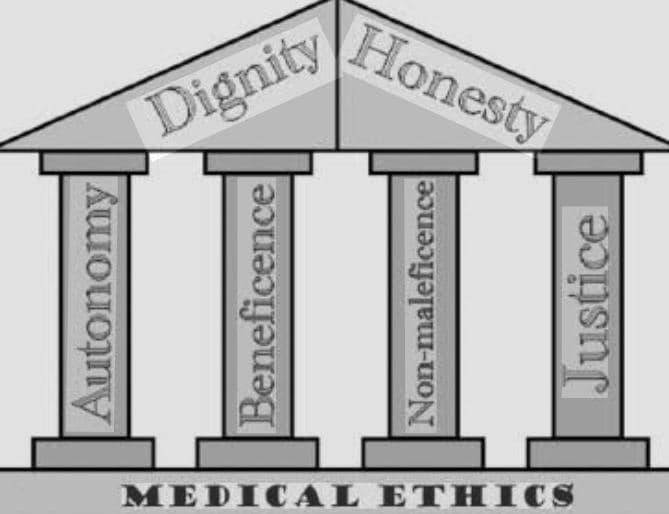
Medical Ethics - The 4 Pillars
The 4 Pillars of Medical Ethics
The 4 pillars of medical ethics are one of the most frequently tested frameworks in UCAT Situational Judgement Test (SJT) and MMI interviews. They help you justify decisions logically when facing ethical dilemmas.
The 4 Pillars of Medical Ethics
1. Autonomy (Patient Choice)
Patients have the right to make informed decisions about their own healthcare.
Key idea: Respect the patient’s decision, even if you disagree.
- Requires capacity + informed consent
- Patients can refuse treatment
- Doctors cannot force treatment (unless exceptional legal grounds apply)
2. Beneficence (Acting in the Patient’s Best Interests)
Doctors must act to benefit the patient and promote wellbeing.
Key idea: Do what helps the patient most medically and clinically.
- Recommend effective treatments
- Promote recovery and quality of life
- Prevent harm where possible
3. Non-Maleficence (Do No Harm)
Avoid causing unnecessary harm or suffering.
Key idea: “First, do no harm.”
- Avoid risky or futile treatment
- Consider side effects and complications
- Balance benefit vs harm
4. Justice (Fairness)
Treat patients fairly and allocate healthcare resources appropriately.
Key idea: Equal access and non-discriminatory decisions.
- No discrimination (age, disability, ethnicity, etc.)
- Fair use of resources (ICU beds, time, funding)
- Prioritisation based on clinical need
How UCAT Tests the 4 Pillars
In UCAT SJT, you are often asked to:
- Rank responses (Most → Least appropriate)
- Decide best actions in dilemmas
- Identify professionalism issues
You are expected to balance the pillars, not just pick one.
Worked Example 1: Refusal of Treatment
Scenario:
A competent adult refuses a life-saving blood transfusion due to personal beliefs.
Analysis:
- Autonomy: Respect the patient’s informed refusal
- Beneficence: Treatment would benefit medically
- Non-maleficence: Without treatment, harm may occur, but forcing treatment also causes harm (ethical/legal violation)
- Justice: Not directly relevant here
Best UCAT approach:
Respect autonomy if the patient has capacity
Ensure informed decision-making
Do not coerce or override
Key takeaway:
Even if medically harmful, autonomy usually prevails if capacity is intact.
Worked Example 2: Family Demands Futile Treatment
Scenario:
A terminally ill patient is unlikely to benefit from CPR, but family insist “do everything”.
Analysis:
- Autonomy: Check patient wishes first (if known)
- Beneficence: CPR is unlikely to help
- Non-maleficence: CPR may cause suffering (rib fractures, distress)
- Justice: Resources should not be used for futile care
Best UCAT approach:
Do not provide futile treatment
Communicate sensitively with family
Escalate to senior clinician if conflict continues
Key takeaway:
Doctors are not obliged to provide treatment that is clinically inappropriate.
Worked Example 3: Confidentiality vs Safety
Scenario:
A 15-year-old patient discloses drug use but asks you not to tell anyone.
Analysis:
- Autonomy: Respect confidentiality
- Beneficence: Patient may need help/support
- Non-maleficence: Risk of harm if drug use continues
- Justice: Safeguarding responsibilities apply
Best UCAT approach:
Maintain confidentiality unless risk of serious harm exists
Encourage patient to disclose voluntarily
Escalate if safeguarding concern
Key takeaway:
Confidentiality is strong but not absolute when safety is at risk.
Worked Example 4: Resource Allocation
Scenario:
Only one ICU bed is available. Two patients need it: a young trauma patient and an elderly patient with multiple conditions.
Analysis:
- Autonomy: Not primary factor here
- Beneficence: Choose who benefits most
- Non-maleficence: Avoid futile ICU admission
- Justice: Fair allocation based on clinical need and prognosis
Best UCAT approach:
Prioritise based on clinical benefit and survival likelihood, not age alone
Key takeaway:
Justice = fairness, not equality.
Worked Example 5: Consent in Emergency
Scenario:
An unconscious patient arrives in A&E requiring immediate surgery.
Analysis:
- Autonomy: Cannot be obtained
- Beneficence: Immediate treatment required
- Non-maleficence: Delaying care increases harm
- Justice: Emergency care applies equally to all patients
Best UCAT approach:
Proceed under implied consent
Key takeaway:
In emergencies, life-saving treatment can proceed without explicit consent.
UCAT Exam Strategy: How to Use the 4 Pillars
When stuck in SJT questions, ask:
- Is the patient able to decide? (Autonomy / Capacity)
- What benefits the patient medically? (Beneficence)
- What could cause harm? (Non-maleficence)
- Is the decision fair and non-discriminatory? (Justice)
Common UCAT Trap Answers
Avoid:
- Overriding competent patients “for their own good”
- Ignoring patient wishes without capacity concerns
- Assuming family always decides
- Treating all patients equally when needs differ (confusing justice with equality)
- Delaying urgent care unnecessarily
Summary
The 4 pillars are not separate rules — they must be balanced together:
- Autonomy → respect patient choice
- Beneficence → do what helps
- Non-maleficence → avoid harm
- Justice → be fair and unbiased
In UCAT SJT, top-scoring answers usually:
✔ respect autonomy where possible
✔ avoid harm
✔ prioritise clinical reasoning
✔ communicate clearly and empathetically
Questions and Answers
1. Refusal of Life-Saving Treatment
Question:
A 40-year-old patient refuses a blood transfusion for religious reasons, despite understanding they may die without it. What should you do?
Answer:
Assess capacity and ensure the patient is fully informed about risks, benefits, and alternatives. If the patient has capacity, their autonomy must be respected even if the decision may lead to harm. Do not coerce or override their decision.
2. Family Demands Futile CPR
Question:
A patient is terminally ill and CPR would be clinically futile, but the family insists you “do everything”.
Answer:
Explain sensitively that CPR would not provide benefit and may cause harm (non-maleficence).
The decision should be based on clinical judgement and patient best interests (beneficence).
Escalate to a senior doctor if needed and provide emotional support to the family.
3. Breaking Confidentiality
Question:
A 16-year-old tells you they are taking illegal drugs but refuses to tell their parents. What do you do?
Answer:
Maintain confidentiality initially to respect autonomy.
Explore the situation and encourage the patient to seek help.
Only breach confidentiality if there is significant risk of serious harm, following safeguarding protocols.
4. Emergency Without Consent
Question:
An unconscious patient requires immediate surgery to save their life. No relatives are present.
Answer:
Proceed under implied consent. Acting in beneficence and non-maleficence, immediate treatment is justified as delaying care would cause serious harm or death.
5. Resource Allocation
Question:
Two patients need one ICU bed: a young trauma patient and an older patient with multiple conditions. How do you decide?
Answer:
Allocate based on clinical need and likelihood of benefit, not age alone.
This reflects justice and beneficence. Decisions must be fair, unbiased, and evidence-based.
6. Patient Demands Antibiotics
Question:
A patient insists on antibiotics for a viral infection despite being told they are ineffective.
Answer:
Explain clearly why antibiotics are not appropriate and the risks of unnecessary use (non-maleficence).
Respect autonomy but do not prescribe inappropriate treatment. Offer symptom relief and safety-net advice.
7. Suspected Child Neglect
Question:
You suspect a child is being neglected at home but the parents deny it.
Answer:
Prioritise safeguarding duties. Document concerns and escalate to senior staff and safeguarding teams.
In this case, beneficence and non-maleficence override confidentiality if the child is at risk.
8. Patient Refuses Treatment Due to Misunderstanding
Question:
A patient refuses surgery because they misunderstand the risks involved.
Answer:
Provide clear, simple, and repeated explanations to ensure informed consent. Check understanding and correct misconceptions. If capacity is intact, respect the final decision.
9. Doctor Makes a Mistake
Question:
You notice a senior doctor has made a prescribing error that could harm the patient. What do you do?
Answer:
Patient safety comes first (non-maleficence). Politely raise concerns with the doctor, and escalate to a senior or supervisor if necessary. This reflects professionalism and duty of care.
10. Cultural Beliefs Affecting Treatment
Question:
A patient refuses a treatment due to cultural beliefs that differ from medical advice.
Answer:
Respect autonomy and explore the patient’s beliefs without judgement. Provide balanced information and ensure informed decision-making. Do not pressure the patient; support their right to choose.
Key Takeaways
- Respect autonomy if capacity is present
- Avoid harm (non-maleficence)
- Focus on patient best interests (beneficence)
- Ensure fairness and escalation when needed (justice)
- Communicate clearly and empathetically
Useful Links
https://www.bmj.com/careers/article/ethical-guidance-for-doctors?utm_source=chatgpt.com
https://www.gmc-uk.org/ethical-guidance/ethical-guidance-for-doctors
https://www.bma.org.uk/advice-and-support/ethics