
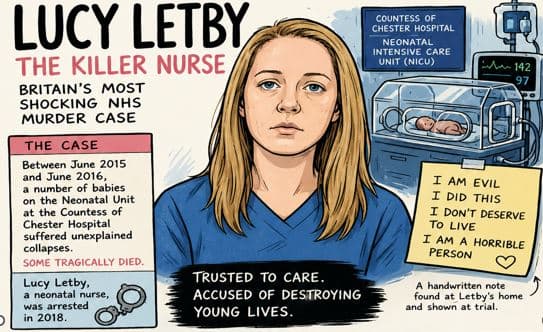
Lucy Letby Case
Lucy Letby Case
Introduction
The Lucy Letby case is one of the most significant NHS scandals in recent years and is an important topic for students preparing for UCAT interviews, medicine interviews, and discussions around medical ethics.
The case raised serious concerns about patient safety, whistleblowing, hospital leadership, clinical governance, and public trust in healthcare professionals. It also highlighted the importance of listening to staff concerns and acting quickly to protect vulnerable patients.
Understanding this case can help applicants demonstrate awareness of NHS hot topics, ethical reasoning, and the ability to discuss difficult healthcare issues in a balanced and professional manner.
Lucy Letby Case Summary
Lucy Letby was a neonatal nurse working at the Countess of Chester Hospital between 2015 and 2016. During this period, there was an unusual rise in collapses and deaths of babies on the neonatal unit.
Doctors working on the ward noticed concerning patterns and repeatedly raised concerns with hospital management. However, these warnings were not acted upon quickly.
Following a lengthy police investigation and one of the longest murder trials in UK history, Lucy Letby was convicted in 2023 of murdering seven babies and attempting to murder several others.
The case shocked the public and led to national discussions about:
Patient safety
NHS leadership and accountability
Whistleblowing culture
Hospital governance
Trust in healthcare professionals
Monitoring systems within hospitals
A public inquiry was later launched to investigate how concerns were handled by hospital management.
Key Facts You Should Know
Lucy Letby worked as a neonatal nurse at the Countess of Chester Hospital.
Consultants noticed an increased number of unexplained infant deaths.
Concerns about patient safety were repeatedly raised by senior doctors.
Hospital management initially failed to remove Letby from clinical duties.
Letby was eventually arrested after a police investigation known as Operation Hummingbird.
In 2023, she was convicted of multiple counts of murder and attempted murder.
The case led to a major inquiry into NHS leadership and patient safety systems.
Timeline of the Lucy Letby Case
Summer 2015
Three babies died within a short period on the neonatal ward. Consultants noticed that Lucy Letby had been on duty during each incident.
October 2015
Further unexplained baby collapses and deaths occurred. Senior doctors raised concerns with hospital management and requested an investigation.
June 2016
After additional incidents, Lucy Letby was finally removed from the neonatal unit.
2017
Doctors escalated concerns to Cheshire Police after feeling that hospital management had not acted appropriately.
2018–2020
Police investigations examined medical records, staffing patterns, insulin results, and clinical evidence.
October 2022
The trial began at Manchester Crown Court.
August 2023
Lucy Letby was convicted of multiple counts of murder and attempted murder.
Ethical Issues Raised by the Lucy Letby Case
The Lucy Letby case highlights several major ethical principles that are highly relevant to medicine and healthcare.
1. Patient Safety
Patient safety is one of the most fundamental responsibilities in healthcare.
Healthcare professionals must always act to protect patients from harm. In this case, concerns were raised early, but delays in responding may have allowed further harm to occur.
This case demonstrates the importance of:
Escalating concerns promptly
Investigating unusual clinical patterns
Protecting vulnerable patients
Maintaining safe staffing and oversight
Ethical Principle:
Non-maleficence — healthcare professionals must avoid causing harm.
2. Trust in Healthcare Professionals
Doctors and nurses are among the most trusted professionals in society. The Lucy Letby case severely damaged public trust because the crimes occurred in a setting where patients and families expected compassionate care.
Healthcare systems rely heavily on trust, professionalism, honesty, and accountability.
Ethical Principle:
Beneficence — acting in the patient’s best interests.
3. Whistleblowing in Healthcare
Whistleblowing refers to raising concerns about unsafe practice or wrongdoing in order to protect patients.
Several consultants repeatedly raised concerns about unusual deaths and collapses. However, they reportedly felt ignored or dismissed by management.
This case demonstrates why healthcare systems must create environments where staff feel safe to speak up.
Important Lessons:
Concerns should always be taken seriously
Staff should not fear punishment for speaking up
Hospitals should promote open communication
Patient welfare must always come first
4. Leadership and Hospital Management
One of the major criticisms surrounding the case involved the hospital leadership response.
Questions were raised about:
Why concerns were not acted upon earlier
Whether communication failures occurred
Whether management prioritised reputation over patient safety
Whether systems for investigating incidents were adequate
This highlights the importance of effective leadership, transparency, and accountability within the NHS.
5. Clinical Governance
Clinical governance refers to the systems used to maintain and improve patient safety and quality of care.
The case raised concerns about whether systems for reviewing deaths, incident reporting, and escalation procedures were sufficiently robust.
Good clinical governance includes:
Auditing outcomes
Learning from mistakes
Reviewing serious incidents
Encouraging multidisciplinary communication
Maintaining accountability
Whistleblowing: Why It Matters in Medicine
The Lucy Letby case is often discussed alongside the topic of whistleblowing.
As a future healthcare professional, it is important to understand that patient safety must always come before hierarchy, reputation, or personal discomfort.
If you suspect unsafe practice, appropriate steps may include:
Gathering objective information
Escalating concerns to a senior colleague
Following local reporting procedures
Documenting concerns appropriately
Seeking guidance from supervisors or regulatory bodies if needed
The GMC’s Good Medical Practice guidance emphasises that doctors have a duty to raise concerns where patient safety may be compromised.
Lessons for Future Doctors
The Lucy Letby case teaches several important lessons for aspiring medics:
Communication Matters
Healthcare professionals must communicate concerns clearly and effectively.
Teamwork Is Essential
Strong multidisciplinary teamwork improves patient safety.
Patient Safety Comes First
Protecting patients must always remain the top priority.
Speak Up Early
Ignoring concerns can have devastating consequences.
Leadership Is Important
Healthcare leaders must create safe cultures where concerns are heard and acted upon.
When discussing sensitive NHS scandals, it is important to:
Remain balanced and respectful
Avoid emotional or sensational language
Focus on patient safety and learning points
Discuss systems and ethics rather than personal opinions
Demonstrate insight into professional responsibilities
Medical schools are not looking for extreme opinions. Instead, they want applicants who can think critically, empathise with those affected, and discuss ethical challenges maturely.
Wider NHS Themes Linked to the Lucy Letby Case
This case connects to several wider NHS hot topics:
NHS patient safety culture
Clinical governance
Duty of candour
GMC Good Medical Practice
Hospital accountability
Leadership in healthcare
Staff wellbeing and speaking-up culture
Public trust in healthcare systems
Important Ethical Principles
The Lucy Letby case can also be linked to the four pillars of medical ethics:
Autonomy
Patients and families must be respected and kept informed.
Beneficence
Healthcare professionals must act in patients’ best interests.
Non-maleficence
Professionals must avoid causing harm.
Justice
Patients deserve fair, safe, and high-quality care.
Conclusion
The Lucy Letby case is one of the most significant modern NHS scandals and remains highly relevant for UCAT preparation and medical interviews.
It highlights the importance of patient safety, whistleblowing, leadership, teamwork, and accountability within healthcare.
For aspiring healthcare professionals, the case serves as a reminder that medicine is not only about scientific knowledge, but also professionalism, ethics, communication, and the responsibility to protect vulnerable patients.
By understanding the ethical and systemic lessons from this case, applicants can demonstrate maturity, insight, and awareness of important issues affecting modern healthcare.
8 Model UCAT & Medicine Interview Questions and Answers: Lucy Letby Case
Question 1
What happened in the Lucy Letby case?
Model Answer
Lucy Letby was a neonatal nurse working at the Countess of Chester Hospital between 2015 and 2016. During this time, there was an unusual rise in infant deaths and collapses on the neonatal unit. Senior doctors became concerned because Letby was present during many of the incidents and raised concerns with hospital management.
However, these concerns were not acted upon quickly, and Letby continued working on the ward for some time. Following a police investigation known as Operation Hummingbird, Letby was charged and later convicted in 2023 of multiple counts of murder and attempted murder involving babies under her care.
The case raised major concerns about whistleblowing, patient safety, hospital leadership, and NHS accountability. It also highlighted the importance of acting promptly when healthcare professionals raise concerns about patient harm.
Question 2
What ethical issues does the Lucy Letby case raise?
Model Answer
The Lucy Letby case raises several important ethical issues. The first is patient safety, which is one of the core responsibilities of healthcare professionals. Hospitals have a duty to protect vulnerable patients and respond quickly when concerns arise.
Another major issue is whistleblowing. Consultants reportedly raised concerns multiple times, but these concerns were not escalated effectively. This demonstrates the importance of creating a culture where healthcare staff feel safe to speak up without fear of being ignored or criticised.
The case also raises questions about leadership, accountability, and public trust in healthcare professionals. Patients and families place enormous trust in doctors and nurses, so breaches of this trust can have devastating consequences.
Finally, the case links strongly to the ethical principle of non-maleficence, meaning healthcare professionals should avoid causing harm to patients.
Question 3
Why is whistleblowing important in healthcare?
Model Answer
Whistleblowing is important because it helps protect patient safety. Healthcare professionals have a professional and ethical duty to raise concerns if they believe patients may be at risk.
In the Lucy Letby case, doctors noticed concerning patterns and tried to escalate these issues. The case demonstrates how failing to act on concerns early can potentially allow harm to continue.
A strong whistleblowing culture encourages openness, transparency, and accountability within healthcare organisations. Staff should feel supported when raising concerns and should know that patient welfare is the highest priority.
As a future doctor, I think it is important to approach concerns professionally by gathering objective evidence, following appropriate reporting pathways, and escalating concerns respectfully and promptly.
Question 4
How can the NHS prevent similar cases from happening again?
Model Answer
I think preventing similar cases requires improvements at multiple levels of the healthcare system. Firstly, hospitals need stronger systems for monitoring patient outcomes and identifying unusual clinical patterns early.
Secondly, staff concerns must be taken seriously and investigated thoroughly. Hospitals should promote open communication and create supportive environments where staff feel comfortable speaking up.
Thirdly, leadership and accountability are extremely important. Managers should prioritise patient safety above organisational reputation and ensure that concerns are escalated appropriately.
Finally, regular training in patient safety, clinical governance, and professional ethics can help healthcare professionals recognise risks and respond effectively.
Overall, maintaining a culture focused on transparency, teamwork, and patient welfare is essential.
Question 5
How would you respond if you suspected wrongdoing by a colleague?
Model Answer
If I suspected wrongdoing by a colleague, my first priority would be patient safety. I would remain professional and avoid making assumptions without evidence, but I would carefully document any concerns or unusual observations.
I would then follow the appropriate escalation procedures, such as discussing the issue with a senior colleague or supervisor according to local policies.
It is important to approach situations objectively and respectfully, because false accusations can also cause harm. However, healthcare professionals have a duty of candour and a responsibility to protect patients from harm.
The Lucy Letby case demonstrates why concerns should never be ignored, even if they are difficult to raise.
Question 6
What lessons can future doctors learn from the Lucy Letby case?
Model Answer
One major lesson is the importance of always prioritising patient safety. Future doctors must be willing to raise concerns when something does not seem right, even if it feels uncomfortable.
The case also highlights the importance of teamwork and communication. Healthcare relies on multidisciplinary collaboration, and concerns should be shared openly and respectfully.
Another lesson is the importance of professionalism and accountability. Doctors and nurses are trusted by patients and society, so maintaining ethical standards is essential.
Finally, the case shows the importance of effective leadership and strong clinical governance systems within hospitals to ensure that patient welfare always comes first.
Question 7
How would you discuss the Lucy Letby case professionally in an interview?
Model Answer
I would approach the topic in a balanced and respectful way because it is a highly sensitive case involving vulnerable patients and grieving families.
I would focus on the wider lessons for healthcare, such as patient safety, whistleblowing, leadership, and clinical governance, rather than discussing the details in a sensational way.
I would also demonstrate understanding of the ethical principles involved, particularly non-maleficence, beneficence, and professional accountability.
Most importantly, I would reflect on what future healthcare professionals can learn from the case and how the NHS can strengthen systems to better protect patients.
Question 8
What lessons can the NHS learn from the Lucy Letby case?
Model Answer
The Lucy Letby case highlights the importance of patient safety, effective communication, and responding quickly to staff concerns. One major lesson is that healthcare organisations must create a culture where whistleblowing is encouraged and concerns are investigated thoroughly.
The case also demonstrates the importance of strong leadership and clinical governance systems. Hospitals need clear procedures for identifying unusual clinical patterns and escalating serious incidents appropriately.
In addition, the case reminds healthcare professionals that maintaining public trust is essential. Patients and families place enormous trust in doctors and nurses, so healthcare systems must ensure accountability, transparency, and high professional standards.
Overall, I think the NHS can learn from this case by improving communication, supporting staff who raise concerns, and strengthening systems designed to protect patients.
Useful Links
https://thirlwall.public-inquiry.uk/
https://thirlwall.public-inquiry.uk/evidence/
https://thirlwall.public-inquiry.uk/help-and-information/faqs/
https://www.judiciary.uk/judgments/r-v-letby/
https://www.judiciary.uk/judgments/r-v-letby-2/
https://www.gov.uk/government/news/government-agrees-scope-of-inquiry-into-lucy-letbys-crimes
https://www.gov.uk/government/publications/thirlwall-inquiry-terms-of-reference
https://www.lucyletbyfacts.com/