
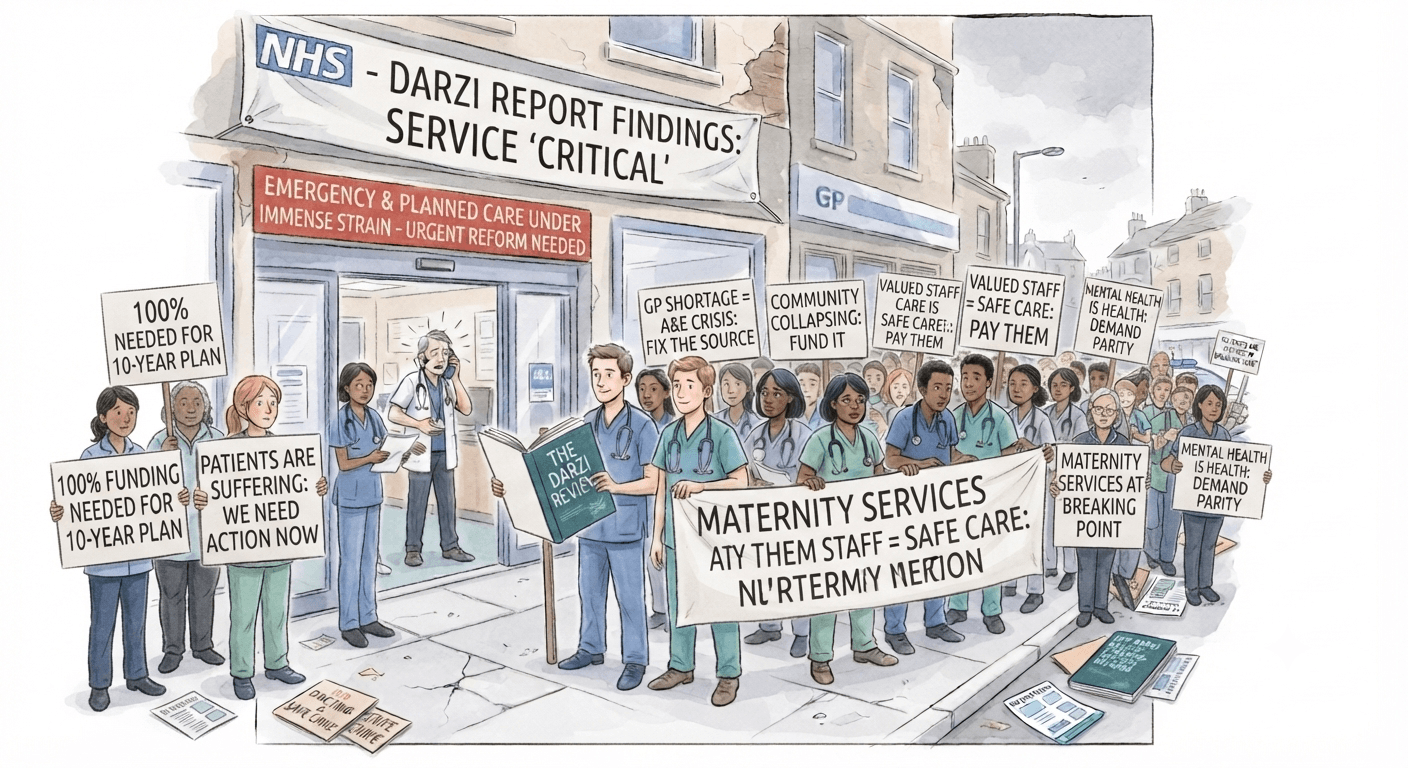
Lord Darzi NHS Report 2024
1. What Is the Lord Darzi Report?
The Lord Darzi Report (2024) is an independent review of the NHS in England commissioned by the UK government to evaluate:
• NHS performance
• Workforce pressures
• Funding and productivity
• Waiting times
• Impact of COVID-19
• Future sustainability
The report concludes that the NHS is under severe pressure but can recover through major long-term reform.
________________________________________
2. Who Is Lord Darzi?
Ara Darzi is:
• a surgeon
• Professor at Imperial College London
• former health minister
• major NHS policy expert
He previously authored the influential 2008 NHS review:
• “High Quality Care for All”
________________________________________
3. Why Was the Report Commissioned?
The government commissioned the report because of worsening NHS pressures:
COVID-19 pressures
+
Staff shortages
+
Long waiting lists
+
Underinvestment
+
Poor productivity
↓
Independent NHS review commissioned
The aim was to:
• identify systemic problems
• evaluate previous reforms
• recommend future NHS changes
________________________________________
4. Main Problems Identified in the NHS
A. Long Waiting Times
The report found:
• rising A&E delays
• GP access difficulties
• long elective surgery waits
• delayed cancer treatment
The NHS repeatedly missed:
• 4-hour A&E targets
• cancer treatment targets
• elective treatment targets
B. Workforce Crisis
Problems include:
• staff burnout
• poor morale
• GP shortages
• retention difficulties
• disengagement after COVID-19
Low staff morale directly affects:
• patient safety
• productivity
• continuity of care
C. Outdated Infrastructure
The report identified:
• ageing hospitals
• poor IT systems
• outdated equipment
• lack of digital integration
D. Funding & Productivity Problems
The report argues:
• funding increases alone are insufficient
• productivity has stagnated
• resources are often inefficiently allocated
“More money without reform will not solve systemic inefficiency.”
5. NHS Pressure Diagram
Ageing population
+
Chronic disease increase
+
Workforce shortages
+
COVID backlog
↓
NHS demand exceeds capacity
↓
Long waits + poorer outcomes
6. Key Recommendations
A. Shift Care Into The Community
Hospital-centred care
↓
More GP + community-based care
↓
Reduced hospital pressure
The report strongly supports:
• primary care
• prevention
• community services
• mental health expansion
Starmer’s phrase:
“Hospital to community”
B. Digital Transformation & AI
Recommendations:
• better NHS IT systems
• AI integration
• electronic records
• telemedicine expansion
• digital diagnostics
Technology seen as:
• productivity booster
• workforce support tool
C. Improve Staff Morale
Recommendations include:
• reducing bureaucracy
• improving wellbeing support
• increasing staff engagement
• valuing frontline workers
D. Prevention-Focused Healthcare
The report emphasises:
• preventing illness
rather than only
• treating disease
Examples:
• obesity prevention
• smoking reduction
• community screening
• vaccination
7. Ethical Themes
Justice
Unequal access and postcode variation.
Beneficence
Need to improve patient outcomes.
Non-maleficence
Delays in care can directly harm patients.
Autonomy
Patients should be more involved in care decisions.
8. NHS Reform Model
Technology
+
Prevention
+
Community Care
+
Staff Support
+
Efficiency Reform
↓
Sustainable NHS
9. Keir Starmer’s Response
Keir Starmer described the NHS as:
“Broken but not beaten.”
Key priorities:
• community care expansion
• digitisation
• prevention
• long-term reform over short-term spending
10. High-Yield Themes
The Darzi Report links strongly to:
Theme Example
Resource allocation NHS funding
Ethics Fair access to care
Public health Prevention focus
Systems thinking Community vs hospital care
Workforce pressures Burnout + retention
Technology AI + digitisation
11. Common NHS Problems Mentioned in Interviews
Strong applicants should know
• waiting lists
• GP shortages
• ageing population
• chronic disease burden
• social care pressures
• mental health demand
• funding pressures
• staff burnout
Ultimate High-Yield Summary
The Lord Darzi Report 2024 describes the NHS as being under major strain from workforce shortages, long waiting times, outdated infrastructure, and rising demand. It recommends long-term reform focused on prevention, digital transformation, community care, and improved staff engagement to create a sustainable NHS.
12. Final Interview Insight
Top candidates:
• avoid blaming individuals
• think systemically
• balance funding with reform
• discuss prevention
• mention workforce wellbeing
• understand NHS pressures are interconnected
Medical School Interview Questions
Eight Questions and Answers
Question 1
“What do you know about the Lord Darzi Report?”
Answer
The Lord Darzi Report is an independent review of the NHS in England commissioned in 2024. It examines major challenges facing the NHS, including long waiting times, staff shortages, outdated infrastructure, and the long-term impact of COVID-19.
The report concludes that the NHS remains a highly valued institution but requires major reform to improve sustainability and patient care. Key recommendations include expanding community care, improving staff engagement, increasing digital and AI integration, and focusing more on prevention rather than reactive treatment.
Question 2
“What do you think is the biggest issue facing the NHS?”
Answer
I think workforce shortages are one of the biggest challenges because staffing affects almost every aspect of healthcare delivery, including waiting times, continuity of care, and patient safety.
Burnout following the COVID-19 pandemic has worsened recruitment and retention problems. However, this issue is interconnected with wider pressures such as rising demand from an ageing population and increasing chronic disease burden.
I think long-term investment in workforce wellbeing, training, and community care will be essential to improve sustainability.
Question 3
“Why does the report focus on prevention?”
Answer
The report emphasises prevention because many major health conditions, such as obesity, cardiovascular disease, and type 2 diabetes, are strongly influenced by preventable risk factors.
A prevention-focused approach can reduce future NHS demand, improve quality of life, and reduce healthcare costs over time. I think this reflects an important shift from treating illness reactively to maintaining population health proactively.
Question 4
“What are the advantages of shifting care into the community?”
Answer
Community-based care can improve accessibility, reduce pressure on hospitals, and allow earlier intervention for chronic conditions. It may also provide more holistic and patient-centred care closer to home.
However, successful implementation would require sufficient GP staffing, investment in community services, and effective coordination between primary and secondary care.
Question 5
“What role could AI play in improving the NHS?”
Answer
AI could improve NHS efficiency by supporting diagnostics, predicting patient deterioration, automating administrative tasks, and improving resource allocation.
However, AI should support rather than replace clinical judgement, and ethical concerns such as data privacy, bias, and patient trust would need careful management.
Question 6
“Do you think more NHS funding alone is enough?”
Answer
I don’t think funding alone is sufficient. While investment is clearly necessary, the Darzi Report highlights that structural reform, workforce engagement, improved productivity, and technological modernisation are equally important.
Without addressing inefficiencies and workforce pressures, simply increasing funding may not produce sustainable long-term improvements.
Question 7
“What do you know about the Darzi Report?”
Answer
The Darzi Report is an independent review of the NHS in England commissioned in 2024 to evaluate major challenges facing the health service, including long waiting times, workforce shortages, low staff morale, and outdated infrastructure.
The report argues that while funding is important, reform is equally necessary. It recommends shifting more care into the community, improving digital systems and AI integration, focusing on prevention, and improving staff engagement to create a more sustainable NHS.
I think the report is important because it highlights that healthcare systems must adapt to increasing demand, ageing populations, and workforce pressures while still maintaining patient-centred care.
Question 8
“What do you think is the biggest issue facing the NHS?”
Answer
1. Identify issue
2. Explain consequences
3. Consider wider causes
4. Suggest balanced solution
Example:
“I think workforce shortages are one of the biggest issues because staffing affects waiting times, continuity of care, and patient safety. Burnout following COVID-19 has worsened retention problems. However, this also links to wider issues such as funding, ageing populations, and rising chronic disease burden. I think long-term investment in staff wellbeing, training, and community care is essential.”
High-Yield Interview Phrases
• “multifactorial pressures”
• “system-wide reform”
• “prevention over reactive treatment”
• “patient-centred care”
• “community-based healthcare”
• “long-term sustainability”
• “workforce wellbeing”
• “digital transformation”
Useful Links:
https://www.longtermplan.nhs.uk?utm_source=chatgpt.com
https://www.kingsfund.org.uk?utm_source=chatgpt.com
https://www.health.org.uk?utm_source=chatgpt.com
https://transform.england.nhs.uk?utm_source=chatgpt.com