
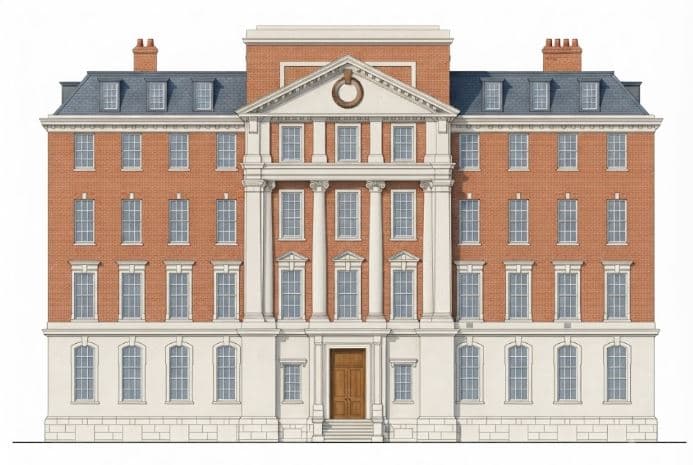
King's College London Medicine GKT
King's College London Medicine: The Complete Applicant's Guide
A Cambridge Clinical admissions guide
King's (delivered through the GKT School of Medical Education, based at Guy's & St Thomas') runs a shortlisting process that combines UCAT and GCSEs together rather than treating either as a standalone gate, and — unusually among the most competitive London schools — genuinely uses your personal statement in that shortlisting decision, not just as interview material. King's is also explicit that it won't consider mitigating circumstances for UCAT or interview performance, and applies an age rule that catches some applicants off guard because it's measured differently from most other UK medical schools.
This guide covers entry requirements, how UCAT and GCSEs combine for shortlisting, the MMI, and King's three distinct entry routes.
Quick facts
Course | MBBS Medicine (5-year, A100), plus Graduate Entry (4-year, A102) and Extended Medical Degree Programme (6-year, A101, widening participation) |
Delivered at | GKT School of Medical Education, based at Guy's & St Thomas' |
Admissions test | UCAT — no fixed published threshold |
Interview format | Online MMI via Microsoft Teams, 7 stations, one question per station |
Personal statement | Genuinely used in shortlisting — must be clearly medicine-focused |
Age rule | Must turn 18 before the second year of the course starts, not the first |
Why applicants choose King's
King's was one of the two founding colleges of the University of London and is among the oldest higher-education institutions in England, with medical education based at the Guy's & St Thomas' site in central London — giving students exposure to one of the country's largest and busiest NHS trusts from early in the course. The standard course runs five years, with an optional additional year for students who choose to intercalate.
Entry requirements
A-level: A*AA, including grade A in both Biology and Chemistry. Reported guidance suggests the A* is most commonly expected in Biology, Chemistry, or Mathematics specifically, though King's own phrasing on this point is less explicit than some secondary sources suggest — it's worth checking King's current requirements page directly for the precise breakdown of which subject the A* needs to sit in. General Studies, Critical Thinking, Thinking Skills and Global Perspectives are not accepted as one of your A-levels, and — distinctively — King's does not consider the EPQ at any point in the assessment process, so don't expect it to strengthen a borderline application here the way it might elsewhere. If you're taking linear A-levels in England, you'll need to pass the practical endorsement in all science subjects (private candidates unable to complete the practical component are exempted).
GCSE: Grade 6/B or above in both English Language and Mathematics.
International Baccalaureate: 38 points overall, or an aggregate of 19 across three Higher Level subjects, including grade 6 in both Higher Level Biology and Higher Level Chemistry (the 38-point total includes TOK and Extended Essay). If you're an IB student, King's GCSE Maths requirement can also be satisfied through IB Mathematics: Analysis and Approaches, or Mathematics: Applications and Interpretation, at Standard or Higher Level grade 2, or through Middle Years Mathematics grade 5 — useful to know if you didn't sit UK GCSEs.
Age requirement: This one catches people out — King's requires applicants to turn 18 before the second year of the Medicine degree begins, not the first. If you won't meet this by the relevant date, King's advises applying the following year instead rather than assuming the standard course-start age rule most other schools apply.
International Foundation Programme route: International students without A-levels or an IB Diploma — because their school curriculum wouldn't otherwise allow direct entry to a UK university — can apply via King's International Foundation Programme (Health, Life & Biosciences Pathway). You'll still need to meet Medicine MBBS's academic and UCAT requirements, but successful completers who go on to apply to Medicine are guaranteed an interview for the 5-year MBBS.
Occupational Health clearance: Compulsory for all successful applicants, and continued enrolment is conditional on it — standard across UK medical schools, but worth building into your post-offer timeline.
How UCAT and GCSEs combine for shortlisting
This is where King's differs from most other London medical schools: King's does not operate a fixed UCAT threshold in any given year — its own admissions pages state this explicitly, both for the standard route and for graduate entry. Instead, the overall UCAT score (averaged across the four cognitive subtests, with more weight given to the overall figure than to any single subtest) is used in conjunction with your GCSE profile to shortlist candidates, alongside the SJT result.
Practically, this means there's no single number to aim for that guarantees anything — but the absence of a published threshold doesn't mean the bar is low. For 2023 entry, the reported average UCAT score among interviewed domestic students was 2,930 on the old 3,600-point scale, which converts to roughly 2,200 on the current 2,700-point scale following the UCAT Consortium's removal of Abstract Reasoning from the 2026 sitting onward. Some tutoring-industry sources put competitive scores meaningfully higher than that, in the 2,600–2,700 range — treat all of these as reported estimates rather than official figures, since King's itself doesn't publish one, but they should give you a realistic sense that King's genuinely does demand a strong all-round UCAT performance despite having no fixed cut-off.
King's does not consider mitigating circumstances for UCAT (or LNAT) performance issues. This is a firm, explicitly stated policy — if something affects you on test day, it needs to be resolved through the UCAT provider's own official channels before or during the test, not raised with King's afterward.
Personal statement: genuinely used, and it needs to be about medicine
Unlike several other UK medical schools in this guide series that explicitly don't score the personal statement, King's uses it as part of the interview shortlisting process — this is confirmed directly through King's own guidance. You're expected to demonstrate genuine commitment to medicine, your ability to communicate and work well in a team, and your interests, achievements and contribution to your wider community.
One point worth taking seriously: King's states it is unable to consider applicants whose personal statement isn't focused on Medicine. If you're applying to a mix of courses through UCAS and have written a more generic, multi-subject-spanning personal statement, that's a real risk specifically at King's, in a way it might not be at schools that don't factor the personal statement into shortlisting at all.
The interview: King's MMI
If shortlisted, you'll sit an online Multiple Mini Interview via Microsoft Teams — for 2027 entry, this applies to both home and overseas applicants. Historically, King's MMI has run as 7 stations, each asking a single question, assessing communication, social and ethical awareness, suitability for medicine, and — a theme King's is reported to emphasise more distinctly than several other schools — your potential contribution to university and community life, not just clinical or academic suitability. Interviews are typically held between November and May, and, consistent with King's broader test-day policy, mitigating circumstances affecting your interview performance on the day generally aren't taken into account once you've attended — so treat the interview date itself as fixed and non-negotiable once confirmed.
Commonly reported MMI themes include personal attributes (teamwork and communication come up repeatedly), your own strengths and weaknesses, awareness of the wider doctor training pathway, role-play scenarios (a format unique to MMI-style interviews rather than traditional panels — breaking bad news is a frequently cited example), and general Good Medical Practice values. As with most MMI-format interviews, over-rehearsed answers are reported to be fairly obvious to trained assessors — prepare your structure and content thoroughly, then let delivery happen naturally rather than reciting something memorised word for word.
The three routes into King's Medicine
Standard entry (A100): The 5-year route described above, open to school-leaver and graduate applicants alike who meet the standard academic requirements.
Graduate Entry Programme (A102): A 4-year accelerated route specifically for graduates holding (or predicted) a 2:1 or above in a Biosciences degree that includes both Biology and Chemistry content. Selection considers your degree classification, personal statement, reference, and UCAT score holistically — again, with no fixed UCAT threshold — and, as with the standard route, no offers are made without an interview.
Extended Medical Degree Programme (A101): A 6-year widening-participation route for eligible applicants. Reported to exist alongside the standard and graduate routes, though specific eligibility criteria and entry grades for this programme weren't clearly available in the sources used for this guide — if you think you might be eligible, check King's own admissions pages directly for current criteria rather than relying on a secondary estimate.
Admissions volume (for context)
King's is one of the larger UK medical schools by intake, with reported figures suggesting somewhere in the region of 300–360 places across its programmes each year, against several thousand applications — commonly cited estimates put the overall acceptance rate somewhere around 10%, though exact figures vary by source and by which programmes are included in the count, so treat this as a general sense of competitiveness rather than a precise annual statistic.
Worth Flagging
- No fixed UCAT threshold (confirmed directly on King's own pages, matching HYMS/St George's philosophy), but historical data shows interviewed students average notably high — so "no threshold" doesn't mean "low bar."
- King's genuinely uses the personal statement in shortlisting, unlike most schools in this series, and is explicit it can't consider statements that aren't clearly medicine-focused — a real risk for anyone recycling a generic multi-course statement.
How Cambridge Clinical can help
Because King's genuinely factors your personal statement into shortlisting — unlike several other competitive London schools — and combines UCAT with your GCSE profile rather than using either as a standalone gate, a strong application here needs every component pulling its weight, not just a strong UCAT score in isolation. We help applicants build a personal statement that's unmistakably medicine-focused, alongside UCAT preparation aimed at the genuinely competitive scores King's interviewed applicants tend to have, and mock MMI practice built around King's specific emphasis on community and university contribution.
If you'd like a hand with any stage, visit cambridgeclinical.co.uk to find out more about our UCAT tuition, personal statement support, and King's-specific interview coaching.
Figures and thresholds in this guide reflect recent application cycles and King's College London's own published admissions information, alongside reported secondary analysis where King's itself doesn't publish a specific figure. Entry requirements, UCAT expectations, and interview format can and do change year to year — always confirm current details against King's College London's official Medicine MBBS entry requirements page before finalising your application.