
Hertfordshire Medical School
Hertfordshire Medical School: The Complete Applicant's Guide
A Cambridge Clinical admissions guide
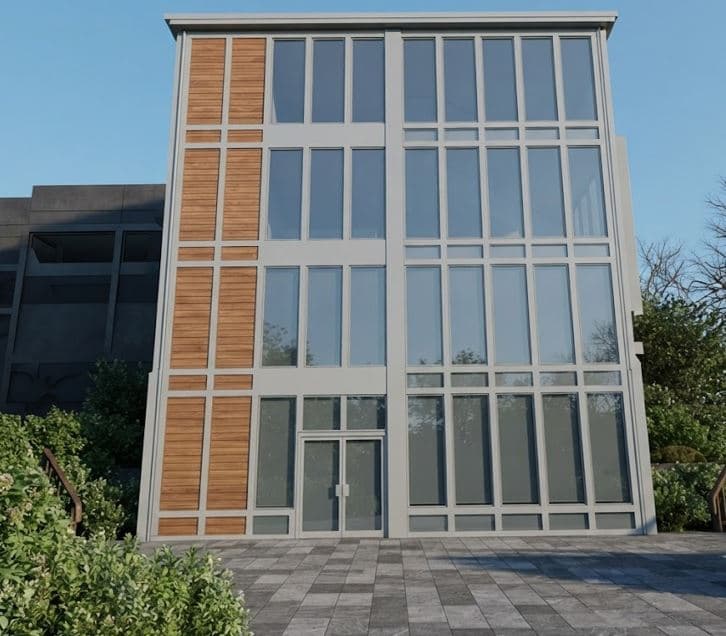
Hertfordshire Medical School is the newest medical school in England, welcoming its first cohort onto a new five-year Medicine MBBS degree (A100) in September 2026. The course is based at the University of Hertfordshire's College Lane campus in Hatfield, in a newly built medical school building, and is delivered with support from City St George's, University of London. Because the school is brand new, there's an important structural point every applicant needs to understand before anything else: the MBBS is currently open to international and EU applicants only, with home (UK) student places dependent on government funding for additional medical school places being secured, and the degree itself is not yet GMC-accredited.
This guide covers entry requirements, the three-stage UCAT-driven selection process, the online asynchronous MMI format, and the practical realities of applying to a school in its first admissions cycle.
Quick facts
Course | Medicine MBBS (A100), institution code H36 |
Location | Hatfield, Hertfordshire, England |
Status | First cohort entering September 2026 — international/EU applicants only at present; GMC accreditation pending |
Admissions test | UCAT — mandatory for every applicant, sat July–September before applying |
Interview format | Fully online, asynchronous recorded MMI via the SAMMI® platform — 7 questions, 4 minutes each |
Shortlisting | Academic screening, then ranked by UCAT score once minimum requirements are met — no fixed cut-off |
Fees (2026/27) | £42,000 per year (international/EU); £10,000 tuition fee deposit required before CAS issuance |
Why applicants consider Hertfordshire
Hertfordshire's MBBS builds in clinical placements from Year 1, using a case-based curriculum blending Basic Clinical Sciences, Professional Skills, and Patients, Populations and Society themes, taught through lectures, small-group teaching and clinical placements across both urban hospitals and rural practices in the East of England. The school's facilities are genuinely new: digital anatomy suites, immersive VR/AR technology, high-fidelity simulation wards and AI-supported teaching tools, all housed in a purpose-built medical school building. Students who pass Years 1–3 can intercalate for an additional qualification between Years 4 and 5, and all MBBS students are guaranteed on-campus accommodation for the full five years, subject to meeting application deadlines. Being 25 minutes from central London by train also gives access to London teaching hospitals, conferences and networking without London living costs.
GMC accreditation — the one thing to understand before applying
Hertfordshire is working with the General Medical Council to gain accreditation, a process the GMC runs by following a new medical school's first cohort from Year 1 through to graduation before deciding whether to approve it as a body that can award UK primary medical qualifications. In the unlikely event that accreditation isn't granted, Hertfordshire's contingency arrangement is that students would transfer to City St George's, University of London to complete their studies and receive a GMC-recognised qualification. This is a standard approach for newly established UK medical schools, but it's a materially different risk profile from an established, already-accredited school, and worth weighing seriously if you're considering Hertfordshire as one of your four UCAS medicine choices.
Entry requirements
A-level: AAA (144 UCAS points), with Chemistry and Biology (or Human Biology) at grade A mandatory, plus a third subject at grade A, all completed in one sitting across a maximum of two years. Applicants are actively encouraged to choose a wide range of third subjects, including arts and humanities — General Studies, Critical Thinking, Thinking Skills, and Global Perspectives are the only subjects excluded.
International Baccalaureate: 36 points overall (144 UCAS points equivalent), with Higher Level 6 in Chemistry or Biology and Higher Level 5 in a second science (Chemistry, Biology or Physics) or Mathematics.
Scottish qualifications: Advanced Highers at AAB including Chemistry and Biology, or Highers at AAAAB or above including Biology, Chemistry and three other subjects.
Cambridge Pre-U Diploma: D3D3D3, including Biology, Chemistry and one other subject.
Access to Medicine Diploma: 39 credits at distinction and 6 credits at merit, with all Biology and Chemistry credits specifically required at distinction.
GCSE: A minimum of five subjects at grade 6 or above, including English, Mathematics, and double or triple science (or equivalent).
Graduate applicants: A minimum 2:1 Honours degree in any discipline, or an MSc, MPhil or PhD — notably more flexible than schools requiring a science-specific degree, since Hertfordshire doesn't currently run a separate graduate-entry course and instead considers graduates against the same standard A100 entry criteria.
English language: IELTS 7.0 overall with 7.0 in every component (a higher bar than the standard UK medical-school norm of 7.0 overall with 6.5 per component), or an accepted equivalent.
Age and recency: Applicants must be at least 18 by the start of the course, and your highest qualification should normally have been completed within five academic years of applying.
Work experience: Required of all applicants — research and/or actual or virtual work-based experience in a healthcare setting that has helped you explore the realities of the profession. You'll be expected to discuss this directly at interview.
How the three-stage selection process works
Hertfordshire's MBBS entry requirements page sets out three stages:
- Academic requirements screening — every application is checked against the minimum entry requirements above.
- Candidate shortlisting — applicants who meet the academic requirements (on predicted or achieved grades) are ranked by UCAT score.
- Interviews (MMIs) — shortlisted applicants are invited to complete an online MMI assessing motivation, communication and problem-solving.
As with several other UK medical schools, Hertfordshire does not publish a fixed UCAT cut-off. The UCAT is mandatory for every applicant and must be sat in the summer before applying (mid-July to late September), since results are valid for one cycle only. Hertfordshire ranks applicants by their score and invites a certain number to interview each year — a number that's explicitly expected to vary cycle to cycle, so there's no reliable historic threshold to calibrate against yet, given this is the school's first admissions round. Applicants in financial need can apply for a UCAT bursary covering the full test fee via the UCAT website.
Hertfordshire states it doesn't directly use the personal statement in shortlisting, but you should still expect to be asked to discuss it at interview — so treat it as something interviewers may probe rather than something that's ignored entirely.
The interview: online, asynchronous, recorded MMI
Hertfordshire's MMI is delivered entirely online through the SAMMI® platform, and it works differently from the live, real-time MMIs used at most other UK medical schools:
- The interview involves seven questions, each with 4 minutes to answer, plus a 1-minute break between questions — around 50 minutes in total.
- Once you receive your access code, you have a 14-day window to complete it, but once you press start you must finish in one continuous sitting — there's no pausing, saving, or coming back partway through.
- It's asynchronous: you're recorded answering pre-set questions with no interviewer present in real time, and that recording is what's assessed.
- Hertfordshire's interview guidance is explicit that using notes, prompts, off-camera help, multiple devices, or AI-generated answers during the recording counts as academic dishonesty and can lead to an application being rejected outright.
- If you need access arrangements (extra time, disability-related adjustments), you must request these before starting — once you begin without having flagged a need, you can't restart, and your submitted recording is what gets assessed.
Interview windows run from November through April for the current cycle. If you're used to a live, real-time MMI circuit, budget real preparation time for adjusting to speaking to a camera with no interviewer feedback or follow-up questions, since that's a genuinely different skill from a conversational panel or live MMI station.
Application process
Applications go through the standard UCAS medicine route (course code A100, institution code H36) or via Hertfordshire's own direct international application form, alongside the usual four-medical-school UCAS limit. A £10,000 tuition fee deposit is required before a Certificate of Acceptance of Studies (CAS) is issued for applicants needing a student visa. All offers carry conditions of satisfactory Enhanced DBS clearance and an occupational health check. Deferred entry isn't currently offered, and transfers from another medicine or science degree aren't normally considered. Fees for 2026/27 are £42,000/year for international and EU students, rising annually in line with RPIX (capped at 10% a year); a one-off £2,000 international scholarship applies automatically to eligible first-year entrants for September 2026 only.
Tips
Because this is Hertfordshire's first ever admissions cycle, there is genuinely no historic UCAT threshold or interview-invite pattern to benchmark against — don't let a "typical score" from another school anchor your expectations here, and don't assume forum chatter about Hertfordshire reflects verified data yet.
The asynchronous MMI format rewards a different kind of preparation than a live panel: practise speaking clearly and naturally into a camera with a hard 4-minute limit and no interviewer prompts to redirect you if you go off track, since there's nobody there to help you course-correct in the moment.
Read the GMC accreditation situation properly before applying. It's a standard pathway for new UK medical schools, but understanding the City St George's contingency arrangement matters for an informed decision about where to place one of your four UCAS choices.
If you're a UK applicant, note carefully that the course is international/EU-only for now — check Hertfordshire's own updates on home-student entry before assuming you're eligible to apply for the standard route.
How Cambridge Clinical can help
We help Hertfordshire applicants prepare for the specific demands of an asynchronous, camera-only MMI — a different skill from a live panel or in-person MMI circuit — alongside UCAT preparation and guidance on framing your work experience for a recorded interview format with no scope for follow-up questions.
If you'd like a hand with any stage, visit cambridgeclinical.co.uk to find out more about our UCAT tuition and Hertfordshire-specific interview coaching.
As Hertfordshire Medical School's very first admissions cycle, entry requirements, UCAT processes, GMC accreditation status, and the timeline for opening to home applicants are all more likely than usual to shift. Always confirm current requirements against The University of Hertfordshire's official MBBS course page before finalising your application.