
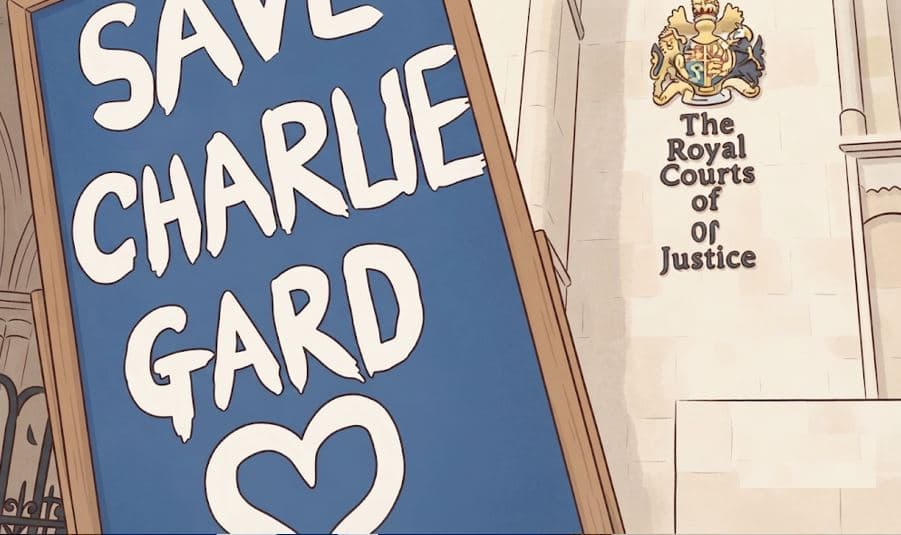
Charlie Gard Case
Charlie Gard Case Summary
Summary:
· Charlie Gard was born in 2016 with a rare, terminal condition called mitochondrial DNA depletion syndrome.
· His parents sought experimental treatment in the U.S. (nucleoside bypass therapy), but doctors at Great Ormond Street Hospital disagreed, believing it would not help Charlie and would only prolong his suffering.
· The case went to court, where a judge sided with the hospital, allowing life support to be withdrawn.
· Charlie's parents appealed the decision, but the courts upheld the ruling.
· On July 28, 2017, life support was withdrawn, and Charlie passed away shortly afterward.
· The case sparked a public debate on parental rights, medical decision-making, end-of-life care, and the role of the state in healthcare.
What happened in the Charlie Gard case?
1. Charlie’s condition
Charlie Gard was born in August 2016 with a rare genetic disorder called infantile-onset encephalomyopathic mitochondrial DNA depletion syndrome (MDDS).
- The condition caused severe and progressive muscle weakness
- He was unable to move, see, hear, or breathe independently
- He required continuous mechanical ventilation and intensive care support
2. Medical opinion (Great Ormond Street Hospital)
Doctors at Great Ormond Street Hospital (GOSH) concluded that:
- Charlie had suffered irreversible brain damage
- His condition was beyond meaningful recovery
- Continued intensive treatment would not improve outcome
- Ongoing intervention would likely prolong suffering
They therefore recommended withdrawal of life-sustaining treatment, focusing on palliative care.
3. Parents’ position
Charlie’s parents, Connie Yates and Chris Gard, disagreed.
They requested permission to take him to the United States for experimental nucleoside bypass therapy (NBT), which was:
- Theoretical and not proven in humans for Charlie’s condition
- Not expected by UK experts to reverse existing brain damage
- Seen by the parents as a possible last chance of improvement
Their position was driven by hope and the desire to exhaust all options.
4. Legal proceedings
The disagreement led to extensive court involvement:
- UK courts assessed what was in Charlie’s best interests
- The Court of Appeal and Supreme Court upheld the hospital’s position
- The European Court of Human Rights declined to intervene
The legal conclusion was that further treatment was not in Charlie’s best interests.
5. Outcome
- Life support was withdrawn in July 2017
- Charlie died shortly afterwards at Great Ormond Street Hospital
- The case attracted global media and ethical debate
6. Aftermath and significance
The case led to widespread discussion on:
- End-of-life decision-making in children
- Limits of parental autonomy
- Medical futility and experimental treatment
- Role of courts in medical disputes
- Communication breakdown between families and clinicians
Charlie’s parents later established the Charlie Gard Foundation to support research into rare diseases and experimental treatments.
Key improvement over original version
- More medically precise description of MDDS
- Clearer distinction between hope vs evidence-based medicine
- Neutral tone (important for interviews)
- Correct emphasis on legal “best interests” standard rather than “siding with doctors”
Key Players:
Summary
- Charlie’s Parents: Advocated for experimental treatment in the U.S. and the right to make medical decisions for their son.
- Doctors at GOSH: Believed further treatment was futile and would only cause suffering, recommending the withdrawal of life support.
- UK Courts: Supported the doctors’ recommendation and ruled that Charlie should be allowed to die peacefully, with the experimental treatment deemed ineffective.
Key Ethical Issues in the Charlie Gard Case
1. Parental rights vs state and medical authority
- Parents generally have primary decision-making authority for children
- Charlie’s parents believed they were morally obligated to pursue any possible treatment, including experimental options
- Clinicians at Great Ormond Street Hospital and UK courts argued that continued treatment was:
- Medically non-beneficial
- Likely to prolong suffering
- Not in Charlie’s best interests
Ethical tension:
- Parental autonomy and love vs professional duty to protect the child
- Limits of parental rights when decisions may cause harm
2. Best interests and medical futility
- Central ethical principle: the child’s best interests override all other considerations
- Doctors argued that treatment had become futile, meaning:
- No realistic prospect of meaningful improvement
- High burden of invasive intervention
- Continuing treatment raised concerns under:
- Non-maleficence (avoid harm)
- Beneficence (act in patient’s best interests)
Ethical tension:
- When does treatment shift from “worth trying” to “ethically inappropriate”?
3. Experimental treatment and the problem of hope
- Parents requested nucleoside bypass therapy (NBT) abroad
- Treatment was:
- Theoretical for this condition
- Unproven in human cases of Charlie’s severity
- Key issue: distinction between:
- Theoretical possibility
- Clinically realistic benefit
Ethical tension:
- Managing hope without creating false expectations
- Responsibility of clinicians to communicate uncertainty clearly
- Risk of prolonging suffering through experimental escalation
4. Distributive justice and resource allocation
- In a publicly funded system like the NHS, resources are finite
- Intensive care and experimental transfers involve significant cost and staffing burden
- Ethical concern:
- Whether it is justifiable to use extensive resources for treatment with no realistic benefit
- Potential opportunity cost for other patients with better prognosis
Ethical tension:
- Individual autonomy and advocacy vs fairness across the healthcare system
5. Judicial involvement and breakdown of trust
- Courts intervened under parens patriae to decide best interests
- Legal system acted as final arbiter when consensus failed
- Consequences included:
- Adversarial proceedings
- Public polarisation
- Breakdown of doctor–family trust
Ethical lesson:
- Early communication, mediation, and ethics consultation are essential to prevent escalation
Overall ethical takeaway
- The case highlights a deep conflict between:
- Parental hope and moral duty
- Medical evidence and professional responsibility
- Individual desire vs system-wide fairness
- The central professional challenge is balancing compassion with clinical honesty while prioritising the child’s welfare
Conclusion
The Charlie Gard case underscores the ethical complexities of medical decision-making, particularly when balancing parental rights, medical expertise, and resource allocation. It raises important questions about the role of the state in protecting a child’s best interests, the use of experimental treatments, and how to fairly allocate limited resources in healthcare.
Key Takeaways:
- Medical professionals must balance individual rights with the greater good.
- Ethical dilemmas in pediatric care and end-of-life decisions require careful reflection on autonomy, justice, and resource distribution.
1. Best interests vs parental autonomy
- In paediatric ethics, the child’s best interests are the paramount principle.
- Doctors at Great Ormond Street Hospital argued that ongoing treatment caused suffering with no realistic benefit.
- Parental autonomy is important but not absolute.
- Ethical implication:
- Clinicians have a duty to challenge parental decisions if they may harm the child
- The doctor becomes the advocate for a vulnerable patient who cannot decide for themselves
2. Medical futility and non-maleficence
- The case reinforces the concept of medical futility:
- Not all technically possible treatments are ethically appropriate
- Experimental treatment was unproven and unlikely to help given irreversible brain damage
- Ethical implication:
- “Do no harm” includes avoiding interventions that prolong suffering
- The goal may shift from prolonging life to ensuring comfort and dignity
3. Experimental treatment and the problem of “false hope”
- Raises difficult questions about novel or experimental therapies:
- Scientific plausibility
- Stage of disease progression
- Likelihood of meaningful benefit
- Ethical implication:
- Clinicians must carefully manage expectations
- Distinguish between theoretical possibility and clinical reality
- Avoid unintentionally creating false hope that may prolong distress
4. Justice and resource allocation
- Although not central to the court ruling, it raises distributive justice concerns:
- Intensive care resources are limited (ICU beds, staff time, funding)
- Ethical implication:
- Consideration of fairness in public healthcare systems like the NHS
- Resources used for non-beneficial care may impact other patients who could benefit more
5. Judicialisation of medicine and breakdown of trust
- When disagreement cannot be resolved, courts become the final decision-maker under parens patriae.
- Ethical implication:
- Legal processes are adversarial and can damage trust between families and clinicians
- Once escalated, relationships often become irreparably strained
- Key lesson for the profession:
- Early communication is critical
- Use of ethics committees, mediation, and second opinions can prevent escalation
- Empathy and transparency are as important as clinical evidence
Overall ethical takeaway
- The case highlights that modern medicine is not just clinical, but deeply ethical
- Key tension exists between:
- Hope vs evidence
- Parental love vs professional duty
- Life preservation vs avoidance of suffering
- The central professional responsibility is to navigate these conflicts with honesty, compassion, and early dialogue
Who was right in the Charlie Gard case – the parents or the doctors?
1. Two definitions of “best interests”
Medical / legal definition:
- Focus on objective clinical outcomes
- Weighing suffering vs benefit
- Very low chance of improvement with experimental treatment
- Emphasis on quality of life
- Priority on avoiding prolonged suffering
- Conclusion: continued treatment not beneficial
Parental definition:
- Focus on hope and possibility
- Value placed on preserving life at all costs
- Even minimal chance considered meaningful
- Willingness to accept burden of treatment
- Moral duty to “do everything possible”
- Conclusion: pursue experimental treatment
2. Two sources of authority
Doctors / clinical authority:
- Professional duty of care
- Principle of non-maleficence (“do no harm”)
- Obligation not to provide futile treatment
- Evidence-based decision-making
- Responsibility to the patient as a vulnerable child
Parents / moral authority:
- Parental rights and autonomy
- Emotional bond and lifelong responsibility
- Advocacy role for the child
- Moral belief in preserving life
- Hope-driven decision-making
3. Role of the state (court intervention)
- Triggered by unresolved disagreement
- Legal principle of parens patriae (state protection of children)
- Court acts as independent decision-maker
- Focus is solely “best interests of the child”
- Does not automatically side with either parents or doctors
- Ensures protection of a vulnerable patient
4. Key ethical principles involved
- Best interests of the child
- Beneficence (acting in patient’s good)
- Non-maleficence (avoiding harm)
- Parental autonomy
- Medical futility
- Justice (secondary consideration in this case)

How to Structure Your Answers (The "3 C's" Framework)
For any of these questions, a strong answer will often include:
- Clarify: Briefly state the ethical principles at stake (e.g., "This is a difficult situation that touches on the balance between parental autonomy and our primary duty to act in the child's best interests...").
- Communicate: Emphasize the central role of compassionate, repeated, and clear communication. Mention involving the multi-disciplinary team (nurses, senior colleagues, palliative care specialists).
- Collaborate: Describe a structured process. This includes seeking a second opinion, holding multi-disciplinary meetings with the family, and involving the Clinical Ethics Committee early to mediate before a conflict becomes a crisis.
12 Interview Questions and Answers
Question 1. What was the Charlie Gard case about?
Answer:
The case involved Charlie Gard, a baby born in the UK with a rare genetic condition called mitochondrial DNA depletion syndrome. He was on life support at Great Ormond Street Hospital. Doctors believed further treatment would not help and could cause suffering, while his parents wanted to try an experimental treatment abroad.
The disagreement escalated into a legal battle over what was in Charlie’s “best interests.”
Question 2. Why did the case go to court?
Answer:
Because the parents and the hospital could not agree on treatment. The hospital sought court permission to withdraw life support, arguing it was not in Charlie’s best interests to continue treatment. The parents disagreed and wanted to take him to the US for experimental therapy.
UK courts ultimately had to decide between parental rights and medical judgment.
Question 3. What ethical principles were involved?
Answer:
Key principles included:
- Best interests of the child (central legal and ethical standard)
- Beneficence vs non-maleficence (do good vs avoid harm)
- Parental autonomy (parents usually decide for children)
- Justice and resource use (public healthcare considerations, though secondary in this case)
Question 4. What was the final court decision?
Answer:
The UK courts ruled in favour of the hospital, stating that continued treatment was not in Charlie’s best interests. They allowed life support to be withdrawn. Appeals went up to the European Court of Human Rights, which upheld the decision.
Question 5. Why was the case controversial?
Answer:
It sparked debate because:
- The parents felt they were denied a chance to try treatment
- Some argued the state overruled parental rights
- Others supported doctors focusing on preventing suffering
- It raised questions about experimental treatments and hope vs medical futility
Question 6. How do doctors decide “best interests”?
Answer:
Doctors consider:
- Likelihood of recovery or improvement
- Pain and suffering caused by treatment
- Quality of life expectations
- Whether treatment is medically effective or futile
It is not just about survival, but overall wellbeing.
Question 7. Could the experimental treatment have helped?
Answer:
At the time, evidence was extremely limited. Experts testified that the treatment in the US had not shown benefit for Charlie’s condition. Courts accepted that it was unlikely to improve his condition and might prolong suffering.
Question 8. What are the legal principles in UK child medical cases?
Answer:
UK law prioritises:
- The child’s welfare as paramount (Children Act 1989)
- Courts can override parental decisions if necessary
- Doctors may apply to court if there is serious disagreement
Question 9. What lessons does the case teach about healthcare ethics?
Answer:
- Emotional and ethical complexity in end-of-life care
- Limits of parental decision-making in medical contexts
- Importance of early communication between doctors and families
- The role of courts in resolving medical disputes
Question 10. How would you handle a similar case as a healthcare professional?
Answer (good interview structure):
- Communicate early and transparently with the family
- Provide clear evidence-based prognosis
- Involve ethics committees early
- Seek second opinions if appropriate
- Focus on compassion and emotional support
- If disagreement persists, follow legal escalation pathways
Question 11. Was the hospital acting ethically?
Answer:
From a clinical ethics standpoint, the hospital acted within accepted principles of avoiding non-beneficial treatment and preventing suffering. However, ethically it was also a deeply distressing situation, showing that “correct” decisions can still cause moral disagreement.
Question 12. What broader impact did the case have?
Answer:
It influenced public discussion about:
- End-of-life decision-making in children
- Medical authority vs parental rights
- Experimental treatments and fundraising campaigns
- How courts intervene in healthcare disputes
Useful Links
Core case / legal judgments
https://www.bailii.org/ew/cases/EWCA/Civ/2017/410.html
https://www.supremecourt.uk/cases/docs/charlie-gard-190617.pdf
https://www.judiciary.uk/judgments/great-ormond-street-hospital-v-yates-and-gard/
https://www.judiciary.uk/judgments/great-ormond-street-hospital-v-yates-and-gard-24-july-2017/
https://hudoc.echr.coe.int/eng?i=001-175359
News coverage / summaries
https://www.bbc.co.uk/news/topics/cxw7x1xq9gdt/charlie-gard
https://www.theguardian.com/law/2017/jun/27/charlie-gard-european-court-rejects-appeal
https://www.telegraph.co.uk/news/2017/07/28/charlie-gard-tragic-case-short-life/
Hospital / official statements
https://www.gosh.nhs.uk/news/latest-press-releases/latest-statement-gosh-patient-charlie-gard