
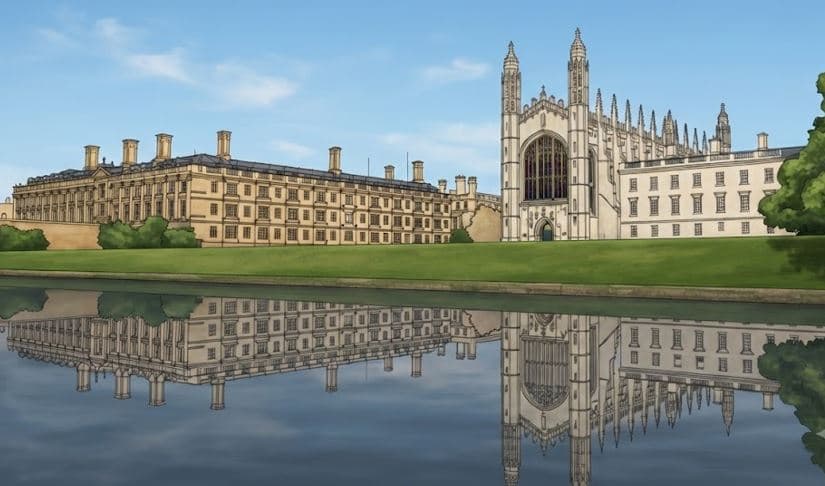
Cambridge Medical School
University of Cambridge Medicine: The Complete Applicant's Guide A Cambridge Clinical admissions guide
The University of Cambridge's MB BChir is one of the most scientifically rigorous medical courses in the world, built on a genuinely distinctive structure: three full years of medical sciences before you touch clinical practice, taught within Cambridge's collegiate system, where you apply to both the University and an individual college. Like several other UK medical schools, Cambridge has been through a significant recent change to its admissions test — the BMAT was discontinued, and Cambridge Medicine has used the UCAT since 2025 entry.
This guide covers entry requirements, how UCAT and the collegiate application process actually work together, the panel interview format and the "pooling" system, and the accelerated graduate course available at a specific subset of Cambridge's colleges.
Quick facts
Course | MB BChir Medicine (6-year, A100), plus Graduate Course MB BChir (4-year, A101) |
Location | Cambridge, with clinical placements across East Anglia |
Degree structure | 3 years pre-clinical medical sciences, then 3 years clinical medicine |
Admissions test | UCAT — used since 2025 entry, following the discontinuation of the BMAT |
Interview format | Panel interview(s) at your college, typically 2–3 academics including a clinician and a scientist |
Application system | Apply to a specific college, or make an open application |
Why applicants consider Cambridge
Cambridge's course structure is genuinely unusual among UK medical schools: rather than integrating basic science and clinical exposure from year one, Cambridge deliberately front-loads the science. The first three years focus on the scientific principles underlying medicine, including a full-body dissection opportunity that very few UK medical schools still offer, alongside a clinical strand running in parallel. The final three years then apply that scientific foundation directly in clinical practice, spending substantial time learning from patients in GP surgeries and hospitals, with genuine opportunities to pursue research and project work throughout.
Being part of the collegiate system also means a genuinely distinctive student experience: you belong to one of Cambridge's colleges throughout your degree, alongside access to the University's world-leading facilities, including one of the world's oldest university libraries.
Entry requirements
A-level: Typically A*A*A, including Chemistry and one of Biology, Mathematics or Physics — though the precise requirement varies meaningfully by college, and most colleges also expect a second science or maths subject beyond Chemistry and your first science. Because colleges set some of their own requirements, it's genuinely important to check your specific college's admissions page directly rather than relying on a single university-wide figure.
GCSE: Cambridge is explicit that there's no formal minimum GCSE requirement for entry. GCSE results are considered as a performance indicator, but specifically in the context of the performance of the school or college where they were achieved — this contextual framing matters. In practice, most successful applicants have a strong majority of grade 7s, 8s and 9s, but Cambridge doesn't require a specific minimum count of these grades, and there are always exceptions to the general pattern.
International Baccalaureate: 41–42 points overall, with 776 at Higher Level.
Work experience: Genuinely expected, though not tied to a specific number of hours or setting — paid or voluntary experience in a health or social care organisation is recommended, and Cambridge points applicants toward the Medical Schools Council's own work experience guidance and its "Key Criteria for Medical Admissions."
Contextual admissions: Contextual data — covering individual, socio-economic and educational disadvantage — is considered as part of a genuinely holistic admissions process, and relevant applications receive contextual flags. Cambridge is explicit that this does not result in systematically lower grade offers, unlike the more concrete reduced-offer schemes some other universities run; instead, context is factored into the overall judgement made about each application. Cambridge also runs a dedicated Medicine Summer School with the Sutton Trust, alongside other subject-specific outreach programmes, worth investigating if you might be eligible.
How UCAT is actually used — no minimum threshold
Since introducing the UCAT for 2025 entry (replacing the BMAT, which was discontinued), Cambridge has been explicit and consistent about how it uses the test: there is no minimum UCAT threshold. Your overall cognitive subtest score is considered alongside your full academic record as part of selection for interview, and results may also be referred to when offers are made — but always in the context of everything else Cambridge knows about you, not as a standalone pass/fail gate. Cambridge has also stated it will not use the Situational Judgement Test score as part of its assessment for 2027 entry, though individual colleges retain some discretion here, so it's worth checking your specific college's stated position if this matters to your preparation.
Because there's no published cut-off, and because Cambridge's applicant pool is exceptionally strong across the board, a genuinely competitive UCAT performance still matters enormously in practice even without a stated minimum — treat "no threshold" as meaning the judgement is holistic, not as meaning UCAT carries little weight.
You must register for and sit the UCAT in the same year you apply — late registration or missing the test window will disqualify your application outright, so this is worth prioritising early in your application timeline.
The collegiate application and interview process
This is the part of Cambridge's process most different from every other UK medical school, and it's worth understanding in some detail. You apply to a specific Cambridge college (or submit an open application, in which case a college is allocated to you), and that college plays a direct role in your selection alongside the University as a whole.
Shortlisted candidates are typically interviewed by their chosen college — often by more than one interview panel — usually in December, in a traditional panel format rather than an MMI circuit, generally involving two or three academics, often including both a clinician and a scientist. These interviews are designed to expand on what you've shown in your personal statement and UCAT results, and focus heavily on scientific reasoning tested aloud, your ability to think under pressure, and genuine engagement with the material in your personal statement. Interviews are held in person for the large majority of applicants, though some overseas applicants may be offered a remote interview by video call where travel genuinely isn't feasible.
The "pooling" system is a distinctive safety net worth understanding: if you're not successful at your chosen college, but your application is strong, you may be "pooled" — reconsidered by another college that has spare capacity that admissions cycle. This means a college with a lower typical offer rate doesn't necessarily disadvantage you relative to a more oversubscribed one, since the pool exists specifically to catch strong candidates who didn't secure a place at their first-choice college.
Alongside your UCAS personal statement, Cambridge's own supplementary application form (sometimes referred to as "My Cambridge Application") functions as a genuinely significant second piece of written material that tutors read carefully ahead of interview — it's worth taking this at least as seriously as your personal statement itself, not treating it as a formality.
Graduate Course (A101)
Cambridge's four-year accelerated Graduate Course MB BChir is available only at four specific colleges: Hughes Hall, Lucy Cavendish, St Edmund's, and Wolfson. It's designed for home-fee-status applicants who already hold an undergraduate degree with a 2:1 or above, and is a genuinely intense course — Cambridge is explicit that there's no time for an additional degree, optional study, or exchange programmes alongside it.
Entry requirements depend on your prior degree classification:
- 2:1, or a degree still in progress: A*A*A at A-level (or equivalent), or 41–42 IB points with 776 at Higher Level
- First-class degree: ABB at A-level (or equivalent), or 38–40 IB points with 665 at Higher Level
All applicants to the Graduate Course need A-level Chemistry at grade A or above, plus at least one of Biology, Physics or Mathematics at A-level or AS-level. As with the standard course, UCAT is required with no minimum threshold, and work experience plays a genuinely large role in selection — Cambridge notes that competitive candidates typically have a variety of experience, paid or voluntary, built up over several years rather than accumulated shortly before applying.
Pre-clinical teaching for graduate-course students takes place in Cambridge alongside standard-course students, while clinical teaching is based largely at West Suffolk Hospital in Bury St Edmunds, with general practice placements across East Anglia and specialist rotations at Cambridge University Hospital during the third year.
The affiliated route: If you already hold an undergraduate degree but aren't eligible or don't wish to apply for the four-year Graduate Course, you can instead apply to the standard MB BChir course as an "affiliate" student, completing it in five years rather than six — available specifically through Lucy Cavendish, St Edmund's, or Wolfson.
Fees
Recently published figures put the Home tuition fee at £9,535 (2025/26, subject to the UK government's regulated fee cap, with the maximum regulated rate expected to apply for 2026/27 pending confirmation). International tuition was around £70,554 per year for 2026/27 entry, with international students also required to pay a separate annual college fee, typically in the range of roughly £11,500 to £14,950 depending on your specific college. International places at Cambridge Medicine are limited each year, and — worth being aware of specifically — some colleges do not accept overseas students for Medicine at all, so it's genuinely important to check individual college policies if you're applying as an international student.
Tips
- Because Cambridge sets no formal minimum UCAT threshold, don't read "no cut-off" as "UCAT doesn't matter much" — in a pool this academically strong, a genuinely competitive score is still doing real work in a holistic judgement, even without a published bar to clear.
- Cambridge's own supplementary application form deserves the same care as your personal statement — tutors read it closely ahead of interview, and treating it as an afterthought is a common, avoidable mistake.
- The pooling system means your choice of college matters less for your overall odds than it might seem — a strong application pooled from an oversubscribed college can land at a less oversubscribed one with spare capacity, so don't over-optimise your college choice purely around perceived acceptance rates.
- Because Cambridge's panel interviews focus heavily on scientific reasoning tested aloud, practising explaining underlying mechanisms in your A-level subjects out loud — not just reading about them — is far more useful preparation than rehearsing likely question lists.
How Cambridge Clinical can help
We help Cambridge applicants prepare for a UCAT that's genuinely holistic rather than threshold-based, alongside panel-interview coaching focused specifically on live scientific reasoning under pressure — a different skill from MMI-style station preparation used at most other UK medical schools. We also help graduate applicants weigh the four-year Graduate Course against the five-year affiliated route based on their specific college eligibility and circumstances.
If you'd like a hand with any stage, visit cambridgeclinical.co.uk to find out more about our UCAT tuition and Cambridge-specific interview coaching.
Entry requirements, UCAT usage, and fees can and do shift between application cycles, and individual colleges may vary in their specific requirements. Always confirm current requirements against The University of Cambridge's official course page before finalising your application.