
Archie Battersbee Case
Introduction
The Archie Battersbee case was one of the most widely discussed UK medical ethics cases in recent years. It raised important questions about:
- Withdrawal of life-sustaining treatment
- Brainstem death
- Parental rights
- Best interests of the child
- The role of doctors and courts in medical decision-making
This case is highly relevant for UCAT preparation, medicine interviews, and medical ethics discussions because it demonstrates the balance between compassion, ethics, law, and patient-centred care.
Summary of the Archie Battersbee Case
Archie Battersbee was a 12-year-old boy who suffered severe brain injuries in April 2022 following an incident at home involving strangulation.
He was initially treated at Southend University Hospital before being transferred to the Royal London Hospital.
Doctors concluded that Archie had suffered catastrophic hypoxic brain injury and believed there was no realistic chance of recovery.
The medical team felt that continuing life support was not in Archie’s best interests and wished to withdraw treatment.
However, Archie’s parents disagreed and wanted treatment to continue.
This disagreement led to multiple legal appeals involving:
- The High Court
- Court of Appeal
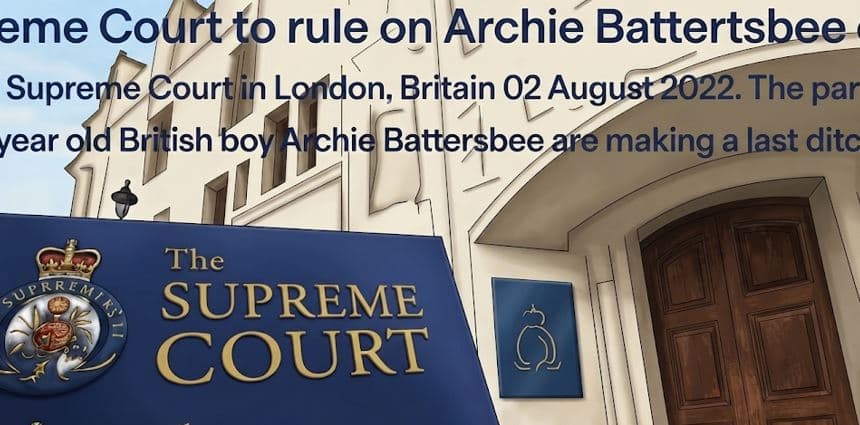
- Supreme Court
- European Court of Human Rights
- United Nations appeals
Ultimately, the courts ruled that withdrawing life support was lawful and in Archie’s best interests.
Life support was withdrawn in August 2022.
Key Ethical Issues Raised
1. Best Interests of the Child
The most important legal and ethical principle in this case was the idea of the child’s “best interests.”
In UK law, when a child cannot make decisions for themselves, healthcare professionals and courts must decide what is best for the child’s welfare.
This includes considering:
- Quality of life
- Pain and suffering
- Dignity
- Likelihood of recovery
- Burden of treatment
Even though parents normally make decisions for children, doctors and courts may intervene if treatment is believed to cause harm or offer no benefit.
Interview Point
“Doctors must balance respect for parental wishes with their professional duty to act in the child’s best interests.”
2. Parental Rights vs Medical Judgement
Archie’s parents wished to continue treatment because they hoped he might recover.
Doctors believed that further treatment would not improve his condition and would only prolong invasive treatment without meaningful recovery.
This created a conflict between:
- Family wishes and hope
- Clinical judgement and evidence
Ethical Discussion
This raises difficult questions:
- Who should make decisions for children?
- Should parents always have the final say?
- What happens when doctors and families disagree?
Interview Point
“Parents know their child best emotionally, but clinicians have a professional duty to provide evidence-based care and avoid unnecessary harm.”
3. Withdrawal of Life Support
One major ethical question was whether continuing treatment was beneficial or whether it had become medically futile.
Doctors are ethically required to:
- Preserve life where possible
- But also avoid causing unnecessary suffering
This relates to the ethical principle of:
Non-maleficence
“First, do no harm.”
Continuing invasive treatment without realistic hope of recovery may sometimes prolong suffering rather than help the patient.
Interview Point
“Withdrawal of treatment is ethically different from actively causing death. The intention is not to end life, but to avoid burdensome treatment that no longer benefits the patient.”
4. Autonomy and Capacity
Because Archie was unconscious, he could not make decisions for himself.
This introduces questions about:
- Capacity
- Consent
- Substitute decision-making
- Paediatric ethics
In children and teenagers, doctors may consider:
- Parental responsibility
- Gillick competence
- Fraser guidelines
Gillick Competence
Gillick competence refers to whether a child under 16 has enough maturity and understanding to make decisions about their own medical treatment.
However, Archie lacked capacity due to his condition.
5. Role of the Courts
The courts became involved because doctors and parents could not agree.
The role of the courts is to:
- Review medical evidence
- Consider ethical principles
- Protect the child’s welfare
- Decide what is in the patient’s best interests
The courts do not replace doctors or parents but act as an independent decision-maker in difficult disputes.
Communication and Compassion
The case also highlights the importance of:
- Compassionate communication
- Honesty
- Empathy
- Transparency
- Emotional support for families
These situations are extremely distressing for families and healthcare staff.
Doctors must communicate clearly while remaining sensitive and professional.
Interview Point
“In difficult end-of-life situations, communication is just as important as clinical decision-making.”
Wider Social Issues
The case also raised concerns about:
- Online safety
- Social media challenges
- Cyberbullying
- Adolescent mental wellbeing
- Safeguarding
This demonstrates how medicine often overlaps with wider social and public health issues.
What Can We Learn From the Case?
The Archie Battersbee case teaches several important lessons:
- Patient welfare must remain central
- Ethical decision-making is often complex
- Communication with families is critical
- Doctors must balance hope with realism
- Courts may be needed in difficult disputes
- Medicine involves ethical, emotional, and legal challenges as well as science
Possible UCAT & Medicine Interview Questions
- What is meant by “best interests” in healthcare?
- Should parents always make decisions for their children?
- When can doctors withdraw life support?
- What is the role of the courts in medical disputes?
- What is Gillick competence?
- How should doctors communicate with families during difficult decisions?
- Is withdrawing treatment ethically different from euthanasia?
- What ethical principles are involved in this case?
UCAT & Medicine Interview Model Answer
“What do you know about the Archie Battersbee case?”
“The Archie Battersbee case involved a 12-year-old boy who suffered catastrophic brain injury in 2022 and was placed on life support.
Doctors believed there was no realistic chance of recovery and felt that continuing treatment was not in his best interests, while his parents wished treatment to continue.
The disagreement led to several court hearings, and ultimately the courts ruled that withdrawal of life support was lawful and in Archie’s best interests.
The case raised important ethical issues including parental rights, best interests of the child, withdrawal of treatment, and the role of the courts in medical decision-making.
For me, one of the key lessons is the importance of compassionate communication and balancing respect for family wishes with evidence-based medical care and patient welfare.”
Possible UCAT & Medicine Interview Questions
- What is meant by “best interests” in healthcare?
- Should parents always make decisions for their children?
- When can doctors withdraw life support?
- What is the role of the courts in medical disputes?
- What is Gillick competence?
- How should doctors communicate with families during difficult decisions?
- Is withdrawing treatment ethically different from euthanasia?
- What ethical principles are involved in this case?
Key Ethical Principles to Mention in Interviews
Autonomy
Respecting a patient’s right to make decisions.
Beneficence
Acting in the patient’s best interests.
Non-maleficence
Avoiding harm.
Justice
Ensuring fair and ethical treatment.
Final Takeaway
The Archie Battersbee case is an important example of how medicine involves difficult ethical decisions where there may be no easy answers.
It highlights the importance of balancing:
- Compassion
- Clinical evidence
- Family wishes
- Ethical principles
- Legal responsibilities
Ultimately, the case reminds future doctors that medicine is not only about treating disease — it is also about communication, ethics, humanity, and patient-centred care.
Useful Links
https://www.judiciary.uk/judgments/barts-health-nhs-trust-v-dance-battersbee/?
https://en.wikipedia.org/wiki/Archie_Battersbee_case